
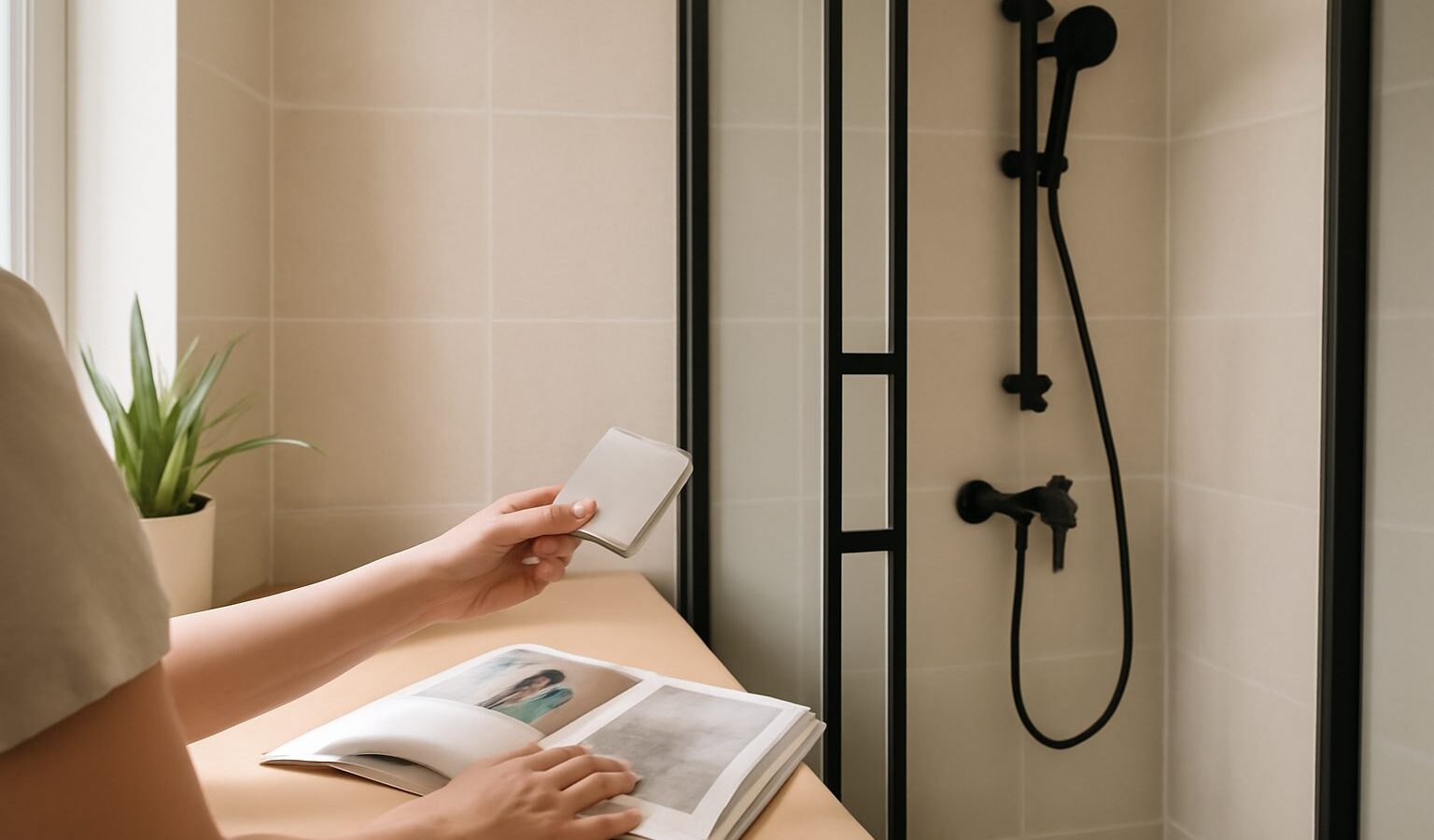
Most Singapore bathrooms are small, and the shower usually sits a step away from the toilet, the basin and sometimes the washing machine. That makes the shower screen one of the most practical choices in the room. Pick well and the rest of the bathroom stays dry. Pick badly and you get puddles, mould along the seals and a glass panel you dread wiping down. This guide to choosing a shower screen in Singapore focuses on the three main styles, framed, frameless and half wall, and the trade-offs that matter day to day: splash control, cleaning effort and safety.

Why the Shower Screen Matters More in a Small Bathroom
In a typical HDB or condo bathroom, the “wet” and “dry” zones are only a metre or two apart. Without a good barrier, water drifts onto the floor near the toilet, soaks bath mats and creates a slip risk, especially for children and older family members.
A shower screen does three jobs at once:
- Contains splash so the dry zone actually stays dry.
- Controls airflow, which affects how quickly the shower area dries after use.
- Sets the cleaning routine, since every frame, hinge and seal is another place for grime to collect.
Before choosing a style, measure the shower area, note where the floor trap (drain) sits and check the slope of the floor towards it. A screen cannot fix a floor that drains the wrong way, so if water already pools away from the trap, that is a renovation issue to raise with your contractor first.
Framed, Frameless and Half Wall: The Main Options
Framed shower screens
Framed screens use aluminium profiles around the glass edges. Because the frame supports the glass, the panels can be thinner and the overall cost is usually lower. Framed sliding doors are common in older flats and rental units.
The trade-off is maintenance. Water, soap and hair collect in the bottom track and in the corners where frame meets glass. In a humid climate, these joints are where black mould tends to appear first. Sliding tracks also need regular clearing or the rollers start to stick.
Frameless shower screens
Frameless screens use thicker tempered glass held by a few clamps, hinges or a single support bar. They look cleaner and are easier to wipe because there are fewer edges to trap dirt.
They do cost more, and installation needs to be precise. Small gaps are left between panels and along the walls so the door can swing, and these gaps can let some water escape. Good installers add clear seal strips or a low threshold to manage this. Ask how they will handle the gap at the bottom of a swing door, as this is where most leaks happen.
Half wall or fixed panel screens
A half wall setup is either a low built-up kerb with glass on top, or a single fixed glass panel that covers part of the shower opening with no door at all.
Fixed panels have no moving parts, so there are no hinges to adjust and no tracks to clean. The downside is splash. With an open side, water can escape if the shower head points the wrong way or the panel is too short. They work best in a longer shower area where the open end is far from the spray.
Comparing the Three Styles at a Glance
| Feature | Framed | Frameless | Half wall or fixed panel |
|---|---|---|---|
| Splash control | Good when doors close fully | Good, depends on seals and gaps | Fair, depends on panel length and shower head position |
| Cleaning effort | Highest, tracks and frame joints trap grime | Low, mostly flat glass | Lowest, no doors or tracks |
| Mould risk | Higher at frame joints and seals | Moderate at seal strips | Low, good airflow |
| Space needed | Works in tight spaces with sliding doors | Needs swing room or a slider | Needs a longer shower area |
| Relative cost | Usually lowest | Usually highest | Middle, varies with design |
| Best for | Rentals, budget upgrades | Owners wanting a clean look | Minimalists who hate cleaning |
Prices vary widely between suppliers and change over time, so get at least two or three written quotations covering glass thickness, hardware finish, installation and warranty.
Door Types and Splash Control
Once you have picked a style, the door mechanism affects how well water stays inside.
- Swing doors open outwards and need clear floor space. Check that the door will not hit the toilet bowl, basin cabinet or towel rail when fully open. Doors that swing inwards drip into the shower area, which is tidier, but need more room inside.
- Sliding doors suit narrow bathrooms because they do not need swing room. Look for top-hung rollers and a minimal or no bottom track, which makes cleaning much easier.
- Bi-fold doors fold in half and are useful in very tight corners, but they add more hinges and joints.
For splash, the position of the shower head matters as much as the screen. A rain shower mounted in the centre of the ceiling sprays wider than a handheld head pointing at the wall. If you are replacing fittings at the same time, our guide on how to replace a shower head explains what to check before you swap one.
Glass Safety and Coatings
Shower screen glass should be tempered (toughened) safety glass, which breaks into small blunt pieces rather than sharp shards. Ask the supplier to confirm this in writing. Tempered glass can very occasionally shatter on its own because of tiny impurities, so some suppliers offer a heat-soak treatment that reduces this risk. Ask whether it is included or available.
Other points to raise:
- Glass thickness: frameless screens use thicker glass than framed ones. Let the supplier recommend a thickness for your door size rather than going as thin as possible to save money.
- Easy-clean coatings: some glass comes with a factory-applied coating that helps water bead off. It slows down soap scum but does not remove the need to clean.
- Hardware finish: stainless steel or well-finished brass hinges resist rust better in a humid bathroom than cheap plated parts.
Cleaning Trade-Offs in a Humid Climate
Whichever style you choose, a simple routine keeps it in shape:
- Squeegee the glass after each shower. This takes under a minute and prevents most water spots.
- Leave the door or window open, or run the exhaust fan, so the area dries.
- Wipe seals and the base of the glass weekly with a mild cleaner.
- Clear sliding tracks and check hinge screws every few months.
Soap scum and body oils still build up over time. If you are also thinking about water quality, see how to choose a shower filter for Singapore homes.
Renters, HDB Owners and Renovation Timing
If you rent, ask your landlord before drilling into tiles or replacing a screen, and get permission in writing. A freestanding or tension-mounted shower curtain rod may be a simpler interim solution.
If you own an HDB flat, works in the bathroom can be subject to HDB renovation guidelines, especially anything that touches the waterproofing layer or the floor. Your contractor should know the current rules, but you can check HDB’s website for the latest guidance. It is usually cheaper and neater to install a shower screen as part of a wider renovation, after tiling and before the final clean. Our bathroom renovation guide for Singapore covers the bigger picture, and simple bathroom DIY upgrades has smaller projects you can do yourself.
Questions to Ask Before You Pay
- Is the glass tempered, and is heat-soak treatment available?
- How will gaps at the walls and floor be sealed?
- What does the warranty cover, glass, hardware and installation, and for how long?
- Who handles adjustments if the door drops or the seal peels?
- Will installation require drilling into wall tiles, and how will holes be sealed against water?
A shower screen is used daily for years, so choosing the right style for your layout and cleaning habits pays off more than chasing the lowest quote.
Frequently Asked Questions
Can I install a shower screen in a rented flat without drilling? Ask your landlord first and get permission in writing. A tension-mounted rod with a shower curtain is a simpler interim option that avoids drilling into tiles.
Why does my shower screen leak at the bottom of the door? The gap under a swing door is where most leaks happen. Good installers use clear seal strips or a low threshold, and the shower head position and floor slope also matter. Ask your contractor about the gap before installation.
Is a sliding door better than a swing door for a small bathroom? Usually, because a slider needs no swing room and will not hit the toilet bowl or basin cabinet. Look for top-hung rollers with a minimal bottom track, which makes cleaning much easier.
How do I get rid of black mould around my shower screen seals? Wipe the seals and the base of the glass weekly with a mild cleaner, squeegee after each shower and let the area dry with the door open or the exhaust fan on. Persistent mould may mean the seal needs replacing.
Is tempered glass enough or should I ask for heat-soak treatment? Shower glass should be tempered safety glass, and confirm that in writing. Heat-soak treatment reduces the small risk of spontaneous shattering, so ask whether it is included or available and what it adds to the quote.
Further reading: How to Choose a Bathroom Mirror Cabinet in Singapore