
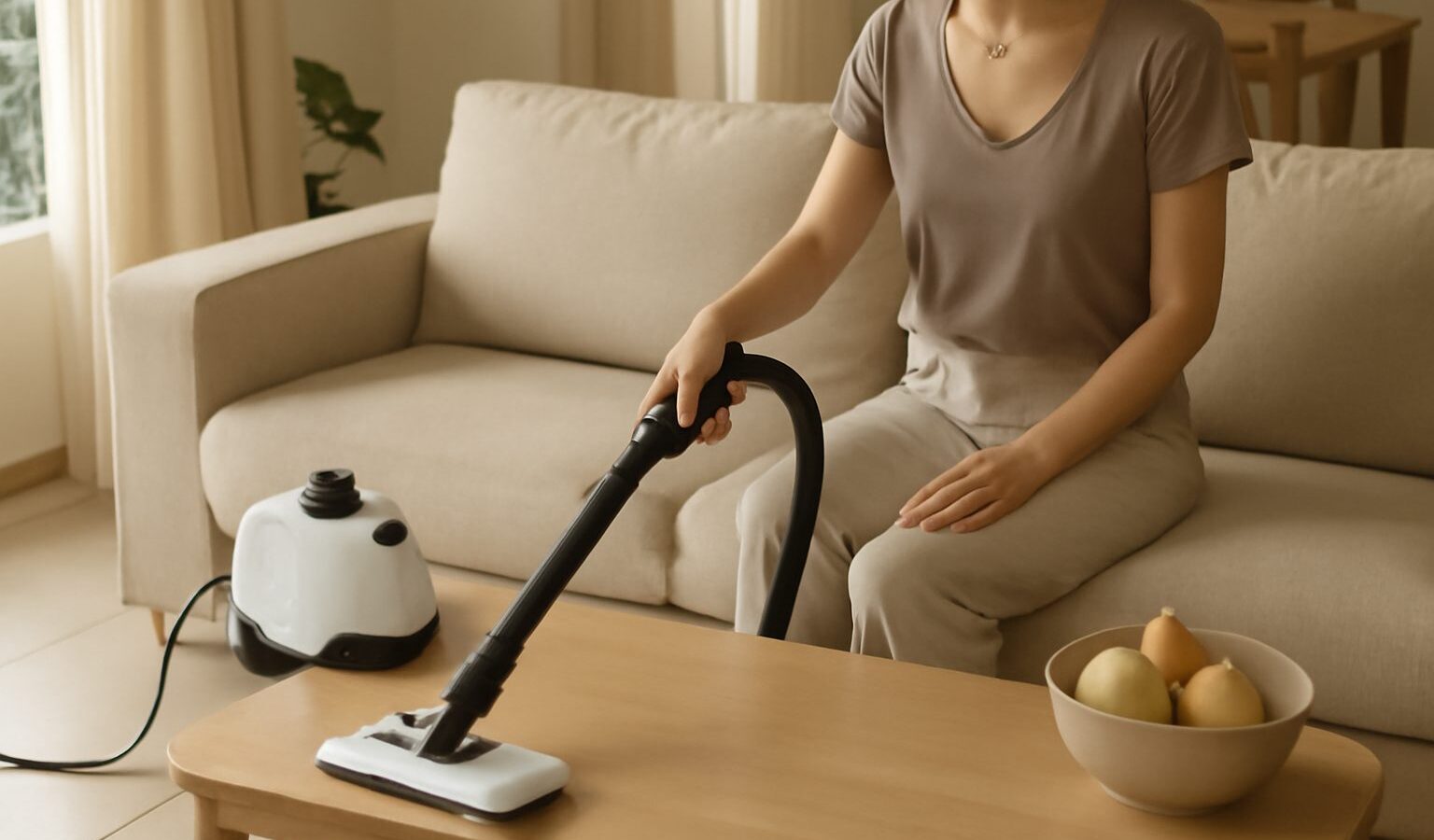
A steam cleaner uses hot, pressurised steam to loosen grease, grime and residue, often with little or no detergent. In humid Singapore homes, where kitchen grease builds up quickly and bathroom grout stays damp, that can be a genuinely useful tool. But a steam cleaner is not one product. Handheld, canister and multi-purpose models suit very different homes and habits, and buying the wrong type is a common reason they end up unused in a storeroom.
This guide helps you decide which type of steam cleaner in Singapore suits your surfaces and routine. It is not about steam mops, which are floor-only tools; if floors are your only concern, our guide to choosing a steam mop is a better starting point.
What a Steam Cleaner Does Well, and What It Does Not
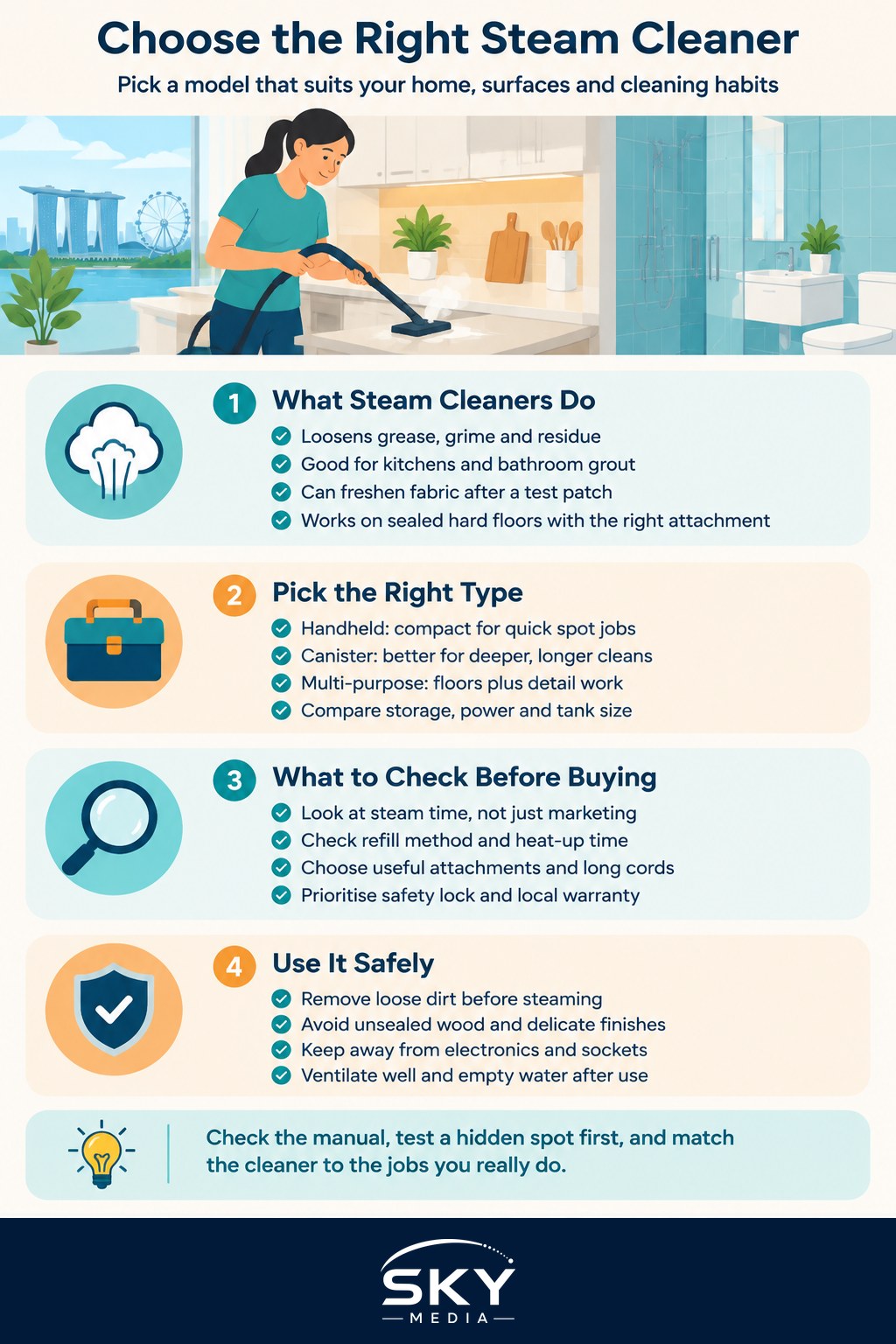
Steam is good at softening and lifting stuck-on dirt so you can wipe it away. Typical uses in local homes include:
- Kitchen stovetops, backsplashes and cooker hood filters coated in oil from daily cooking.
- Bathroom tile grout, shower screens and taps with soap scum.
- Window tracks, sliding door rails and aircon louvres where dust and mould collect.
- Mattresses, sofas and curtains, for freshening fabric (always test first).
- Sealed hard floors, if your model has a floor attachment.
Steam is not a magic fix. It does not replace a vacuum for loose dust or crumbs, it will not remove deep stains on its own, and it can damage some materials. Remove loose debris first, then steam, then wipe with a microfibre cloth.
If you have health concerns about mould, dust mites or allergies, a steam cleaner may help with general hygiene, but it is not a substitute for medical advice or professional remediation of serious mould problems.
The Three Main Types Compared
Most home steam cleaners fall into three broad groups. The table compares them on the points that matter most for everyday use.
| Feature | Handheld steam cleaner | Canister steam cleaner | Multi-purpose (2-in-1 or convertible) |
|---|---|---|---|
| Size and storage | Compact, fits in a cabinet | Larger body on wheels, needs floor space | Upright body with detachable handheld unit |
| Water tank | Small, frequent refills | Large, longer sessions | Medium |
| Steam pressure and heat | Lower, fine for spot cleaning | Usually higher and more consistent | Moderate |
| Heat-up time | Generally quick | Usually longer | Moderate |
| Best for | Quick jobs on stoves, taps, window tracks | Deep cleans of grout, kitchens and whole rooms | Homes that want floor cleaning plus some detail work |
| Main drawback | Short run time, tiring to hold for long | Bulky, more setup | Jack of all trades, may not excel at heavy grease |
Exact figures for pressure, tank size and heat-up time vary widely by model, so compare the manufacturer’s specifications directly rather than relying on general claims.
Matching the Type to Your Home
Think about where you would actually use the machine each week.
Choose a handheld if:
– You live in a smaller flat, such as a 2-room or 3-room HDB flat or a studio condo, with limited storage.
– You mainly want to tackle the stovetop, sink area and bathroom fittings in short bursts.
– You will grab it often for 10 to 15 minute jobs rather than planning big cleaning sessions.
Choose a canister if:
– You want to deep clean grout across a whole bathroom or kitchen in one go.
– You have a larger home, more tiled surfaces, or cook heavily at home.
– You do not mind the setup time and have space to store a wheeled unit.
Choose a multi-purpose model if:
– You want sealed hard floors steamed as well as some detailed work.
– You prefer one appliance over two, and accept it may be less powerful on stubborn grease than a dedicated canister.
If you already own a good floor cleaner, a handheld often fills the gap best. Our guide to choosing a cordless vacuum cleaner explains how a vacuum and a steamer can share the cleaning work.
Specs and Features Worth Checking
When you compare models in stores or online, look past marketing language to these details:
- Continuous steam time. Ask how long one full tank lasts. A short run time is fine for spot cleaning, frustrating for a full bathroom.
- Refill while in use. Some designs let you top up without waiting for the unit to cool. Others require a cool-down before the cap can be opened safely.
- Adjustable steam. Variable settings let you use gentler steam on fabric and stronger steam on grout.
- Attachments. Look for a jet nozzle, small brushes (including a narrow grout brush), a scraper, a window squeegee and a fabric or garment head. Check that spare brushes and pads are sold separately so the machine stays useful.
- Hose and cord length. A short cord means constant replugging, especially in kitchens with few sockets.
- Safety features. A child-resistant safety lock, a pressure-locked cap and auto shut-off are worth prioritising.
- Water requirements. Some models recommend distilled or filtered water to reduce scale buildup. Follow the manual.
- Local warranty and service. Buy from retailers that offer a local warranty and access to spare parts. Check that the plug suits Singapore’s three-pin sockets and look for any required electrical safety markings for appliances sold here.
Surfaces to Avoid or Test First
Steam combines heat and moisture, which some materials do not tolerate. Always read the manual and test a hidden spot first.
- Unsealed wood, parquet and some laminate floors: moisture can swell or warp them.
- Certain vinyl or SPC floors: some manufacturers advise against steam, so check your flooring supplier’s care guidelines.
- Natural stone such as marble: heat and pressure can affect sealants.
- Painted walls, wallpaper and delicate finishes: steam can lift paint or adhesive.
- Electronics and electrical sockets: never steam near them.
- Delicate fabrics such as silk or some synthetics: these can mark, shrink or melt.
- Cold glass: sudden heat on cold glass can crack it, so avoid steaming glass that has been chilled.
For clothing specifically, a dedicated garment steamer is usually more practical. Our guide on how to iron and steam clothes at home covers that side.
Using and Caring for a Steam Cleaner Safely
A few habits make a steam cleaner safer and longer-lasting:
- Never point steam at people or pets, and keep children well away while it runs.
- Let the machine cool and depressurise fully before opening the tank cap, unless the model is specifically designed for safe refilling.
- Wipe immediately after steaming so loosened grease does not re-settle.
- Ventilate the room, especially small bathrooms, to help moisture escape and limit mould.
- Empty leftover water after use and descale as the manufacturer recommends.
- Store attachments dry to prevent mildew on brushes.
A Quick Decision Checklist
Before you buy, run through these questions:
- Which three jobs would I actually use this for every week?
- Are my main surfaces steam-safe according to their care instructions?
- Do I have storage space for a larger unit?
- Do I prefer short daily touch-ups or occasional deep cleans?
- Is there a local warranty and an easy way to buy replacement parts?
Answer those honestly and the right type usually becomes obvious. A well-matched steam cleaner can cut down on harsh chemical use and make stubborn kitchen and bathroom jobs noticeably easier.
Frequently Asked Questions
Can a steam cleaner kill mould and bacteria? High-temperature steam can reduce germs and loosen surface mould on sealed, hard surfaces, but results depend on the machine and how long you apply it. It will not fix damp that keeps feeding mould, so serious or recurring mould needs professional help.
Can I use a steam cleaner on my aircon? Only on the outer louvres and removable grilles, and never near the electrical parts or inside the unit. Heat and moisture around components can cause damage or a safety risk. For internal cleaning, a qualified aircon servicing technician is the safer route.
Does a steam cleaner need special water, and will scale build up? Many manufacturers suggest distilled or filtered water because mineral scale can clog nozzles over time, while others allow tap water. Check the manual for your model, and descale as it recommends so the steam stays strong.
How often should I steam clean the kitchen and bathroom? Kitchens that see daily frying benefit from a quick steam of the stovetop and backsplash weekly, while bathroom grout usually needs it less often. Adjust to how quickly grease and soap scum return, rather than following a fixed schedule.
Is a steam cleaner worth buying if I already use detergent and a scrubbing brush? It can be worthwhile if you cook heavily or want to cut down on chemicals, as steam softens grease and grout grime faster. If you clean lightly and your surfaces are not steam-safe, regular detergent and a microfibre cloth may be all you need.