
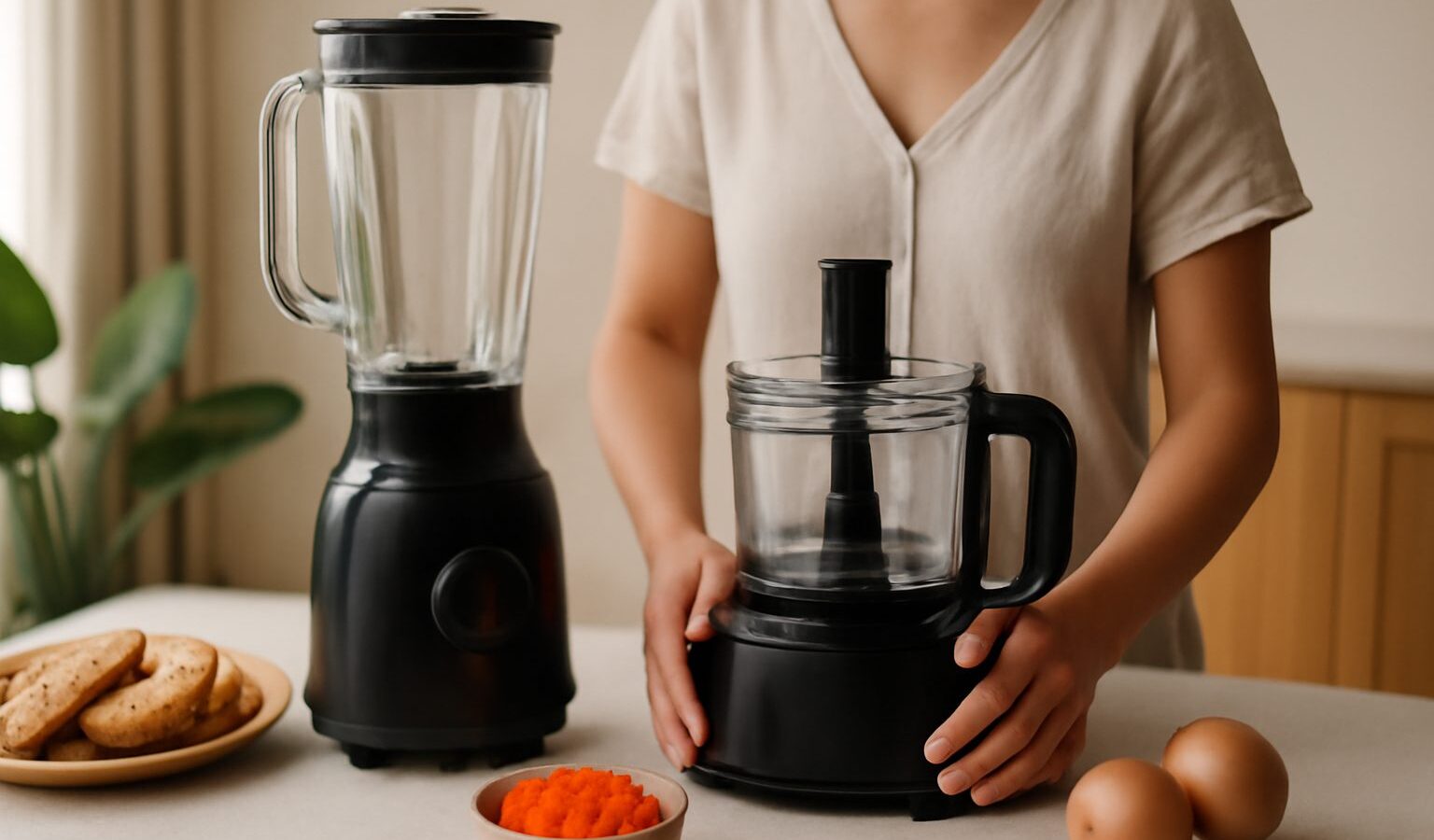
If you have ever stood in a store wondering whether you need a blender or a food processor, you are not alone. The right blender singapore kitchens depend on does not just make smoothies; it can crush ice, blend chilli paste, purée soup and whip up a quick chutney. A food processor, meanwhile, chops, slices, shreds and kneads. The two overlap, but they are built for different jobs. This guide explains the types, the features that matter and how to size your choice to a compact local kitchen, all without pushing any particular brand.
Blender or Food Processor: Know the Difference
A blender uses a tall jug and a blade spinning fast at the base to create a vortex that pulls ingredients down. It excels at anything wet or drinkable: smoothies, juices, soups, sauces, rempah and blended drinks. Add a little liquid and it does its best work.
A food processor uses a wide, shallow bowl and interchangeable discs and blades. It is built for dry or chunky tasks: chopping onions and garlic, slicing vegetables, shredding cheese, making breadcrumbs, mincing meat and kneading dough. It is not meant for thin liquids, which can leak past the bowl.
Many households eventually want both, but if you must start with one, choose by what you cook most. Love smoothies, soups and spice pastes? Start with a blender. Do a lot of chopping, slicing and dough? A food processor saves the most time.
To make the choice concrete, picture a typical week of cooking. If your habits lean towards morning smoothies, blended soups, rempah and sauces for local dishes, the blender will be the appliance you reach for daily, and a food processor would sit idle. If instead you spend the most time chopping onions and garlic, slicing vegetables for stir-fries, shredding cheese or making pastry and bread dough, the food processor removes the tedium and the blender becomes the occasional treat. Being honest about which of these describes you is the single most useful step in the decision, and it saves you from buying a machine that quietly gathers dust.
Within blenders there are a few styles worth knowing:
- Jug (countertop) blenders are the all-rounders, good for family batches.
- Personal or bullet blenders blend directly into a portable cup, ideal for single smoothies and small kitchens.
- Immersion (stick) blenders are handheld and blend straight in the pot, perfect for soups and easy to store.
- High-performance blenders run more powerful motors and tougher blades for smoother results and heavier ice-crushing.
Features and Sizing That Matter
Beyond the basic type, a handful of features separate a tool you love from one that gathers dust.
For blenders, look at the jug material. Glass resists scratches and odours but is heavier; good-quality plastic (BPA-free) is lighter and less likely to crack. Blade quality and design affect how smoothly it blends, and speed settings plus a pulse function give you control between a rough chop and a silky purée. A well-shaped jug that pours cleanly and comes apart for washing will make daily use far nicer.
For food processors, the key is the range of discs and blades and how easy they are to swap and store. A feed tube that fits whole vegetables saves prep time, and a bowl with clear capacity markings helps with portioning.
Cleaning is a deciding factor for both. Removable parts that are top-rack dishwasher safe, or at least quick to rinse, mean you will actually reach for the machine. Fewer crevices means fewer trapped bits of garlic and chilli.
Space and safety round it off. Singapore mains supply 230V at 50Hz, so buy a unit sold locally with the correct three-pin plug rather than adapting an imported model, which protects both your appliance and your warranty. Measure your counter and check the height with the jug on, since tall blenders may not fit under wall cabinets. Most models have a safety interlock that stops the motor running unless the jug or lid is locked in place; never bypass it, and always let the blades stop fully before opening.
| Type | Best for | Typical size | Who it suits |
|---|---|---|---|
| Personal blender | Single smoothies, small portions | Around 0.5 to 0.6 litre cup | Individuals, small flats, on-the-go |
| Jug blender | Smoothies, soups, spice pastes | Around 1.5 to 2 litre jug | Families, all-round daily use |
| Immersion blender | Soups, sauces, purées in the pot | Handheld | Minimal storage, easy cleanup |
| Food processor | Chopping, slicing, shredding, dough | Around 2 to 3 litre bowl | Frequent cooks who prep a lot |
| High-performance blender | Tough ice, nut butters, ultra-smooth blends | Around 2 litre jug | Keen cooks, heavy or daily use |
Matching Budget to Needs
Thinking in tiers keeps the decision simple.
- Budget tier: basic jug blenders and stick blenders. Fine for daily smoothies, soups and light blending. Motors are less powerful, so give them a rest during heavy tasks and add enough liquid.
- Mid tier: sturdier blenders with more speed settings and better jugs, or a mid-range food processor with a useful set of discs. This tier suits most families and handles spice pastes, batch soups and regular prep comfortably.
- Premium tier: high-performance blenders and larger food processors with robust motors and many attachments. Worth it if you blend or process almost daily, tackle tough ingredients, or want the smoothest possible results.
A practical shortcut for tight kitchens: if you want one machine to stretch furthest, a good jug blender covers the most everyday jobs, while a food processor is the upgrade once chopping and slicing become your bottleneck. Buy the capacity that matches your usual batch, prioritise easy cleaning, and pick the format that will live happily on your counter. Chosen well, either tool quietly speeds up cooking for years.
Explore more
Buying Kitchenware
Choosing an Air Fryer
Home Appliance Shopping
Kitchen Organisation and Storage