
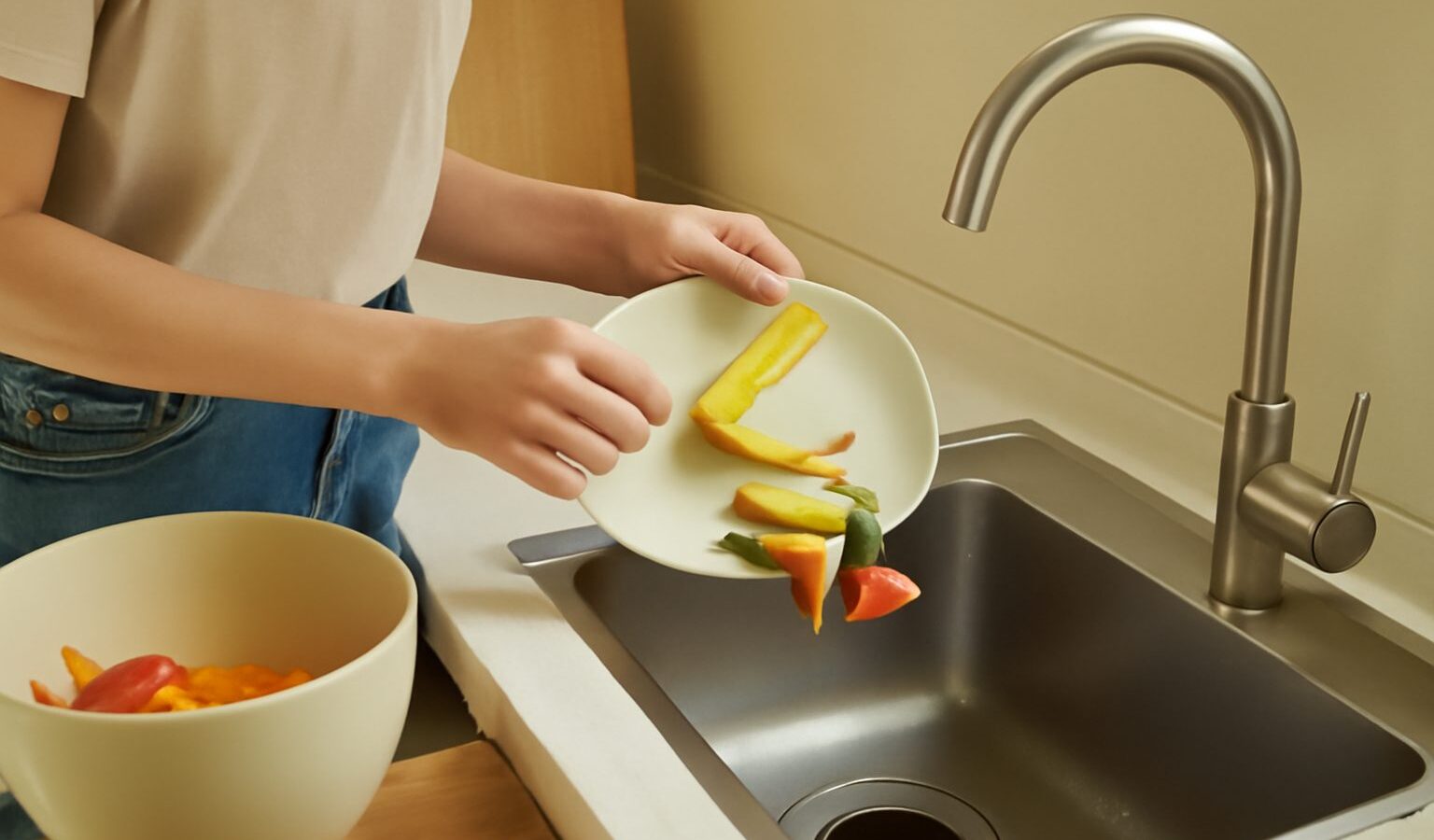
A food waste disposer promises to make kitchen scraps vanish down the sink, which sounds ideal in a warm climate where bins smell fast. Before you buy one, though, it pays to understand how it fits an HDB kitchen, what plumbing it needs, and where the real trade-offs lie. This guide gives you an honest look so you can decide whether one belongs under your sink.
What a Food Waste Disposer Actually Does
A food waste disposer is an electric unit fitted under the kitchen sink, connected to the drain outlet. When you switch it on and run water, a grinding chamber breaks down soft food scraps into tiny particles that flush away with the water. There are no spinning blades in the way most people imagine. Instead, blunt lugs fling the waste against a grind ring to pulverise it.
It is designed for soft, biodegradable scraps such as vegetable trimmings, fruit peel, small leftovers and soft cooked food. It is not a rubbish chute. Hard bones, fibrous husks, large amounts of fat, and non food items can jam it or clog the pipes below.
The Appeal in a Singapore Kitchen
The attraction is easy to see. Wet food scraps are the smelliest, fastest rotting part of household rubbish, and in our heat a kitchen bin can turn unpleasant within hours. Grinding scraps straight down the drain keeps the bin drier, cuts odours, and reduces the fruit flies and pests that wet waste attracts.
For households that cook often and generate a lot of peelings and trimmings, a disposer can make the daily kitchen routine cleaner and less smelly. That convenience is the main reason people want one.
Plumbing and Approval Considerations
This is where you need to slow down, because a disposer is not simply a plug in gadget.
First, it needs a power supply near the sink, which many HDB kitchens do not have under the counter. Adding a socket or a switched connection in a wet area is electrical work that should be carried out by a licensed electrician.
Second, it changes what goes into your drainage. Building and estate rules on discharging ground food waste into the sewer are not uniform, and some developments or management bodies restrict it. Before buying, check your tenancy or estate rules, and where required, seek approval from the relevant authority or your building management. Fitting one into the drain line is plumbing work that a licensed plumber should handle so the connection, trap and pipe sizing are correct.
Third, older or narrow drain pipes may not cope well with ground waste over time, raising the risk of clogs. A plumber can tell you whether your existing pipework is suitable.
Pros and Cons at a Glance
| Consideration | The upside | The downside |
|---|---|---|
| Kitchen odour | Drier bin, fewer smells | None significant |
| Pests | Less wet waste to attract them | None significant |
| Installation | Quick once fittings exist | Needs power and correct drain work |
| Plumbing | Convenient daily use | Risk of clogs on old pipes |
| Rules | Suits some homes well | May need approval or be restricted |
| Waste value | Removes scraps easily | Sends nutrients to sewer, not compost |
The Downsides Worth Weighing
Beyond installation, there are ongoing points to consider. A disposer uses water and electricity every time you run it, though the amounts per use are small. It needs the right habits too, as feeding it the wrong things such as bones, oil, or fibrous vegetable stalks is the fastest route to a jam or a blocked pipe.
There is also a bigger picture question. A disposer sends food waste into the sewer system rather than turning it into something useful. If your goal is to reduce waste in an environmentally minded way, home composting keeps those nutrients and puts them back into your plants instead of washing them away. For some households that is a more satisfying answer than grinding scraps down the drain.
Who It Suits, and Who It Does Not
A food waste disposer tends to suit homes that cook heavily, that already have or can safely add the power and plumbing, and that live where estate rules permit it. If your top priority is a fresh, dry, low odour kitchen and you are willing to invest in proper installation, it can be genuinely worth it.
It suits you less if your kitchen has no easy power point, if your drain pipes are old or narrow, if your estate restricts ground food waste, or if you produce little wet waste in the first place. In those cases the cost and hassle outweigh the benefit, and simpler habits work better.
Simpler Alternatives to Consider
- Line your bin and empty wet scraps daily or wrap them before disposal to control smell.
- Keep a small sealed caddy for scraps and freeze the smelliest items until bin day.
- Try home composting for fruit and vegetable waste, which cuts bin odour and rewards you with compost.
These cost little, need no approval, and sidestep the plumbing questions entirely.
Using One Well If You Fit It
If you do install a disposer, a few habits keep it running smoothly. Always run a steady flow of cold water before, during and after grinding, as this carries the waste right through the pipe rather than letting it settle. Feed scraps in gradually instead of packing the chamber full. Keep out bones, hard seeds, corn husks, onion skins and cooking oil, since these are the usual culprits behind jams and blockages. Run it briefly every day even when you have little to grind, so nothing sits and dries inside. Treated this way, a disposer stays reliable for years; neglected, it becomes a plumbing headache you will pay to fix.
The Verdict
So, is a food waste disposer worth it? For a keen home cook with the right kitchen and permissions, it can be a real quality of life upgrade that tames odour and pests. For many HDB households, though, the electrical work, drainage limits and possible approval needs make it more effort than it is worth, and everyday habits or composting do the job. Weigh your own kitchen honestly, and bring in a licensed plumber or electrician before you commit.
Explore more: Composting and Food Waste at Home · Water Heater and Plumbing Guide · Energy Efficient Appliances