

When an ageing parent needs more support than the family can manage alone, home care can be a lifeline. It allows a loved one to stay in familiar surroundings, close to their neighbourhood and community, while getting the help they need with daily living or medical care. But choosing home care in Singapore can feel overwhelming, especially when you are already stretched and unsure what to look for. This article is general guidance to help you approach the decision calmly and ask the right questions. It is not a recommendation of any particular provider.
The aim is to find care that fits your parent’s actual needs, respects their dignity, and works for your family’s circumstances and budget. Taking a little time to understand the options usually saves stress, and sometimes money, later.
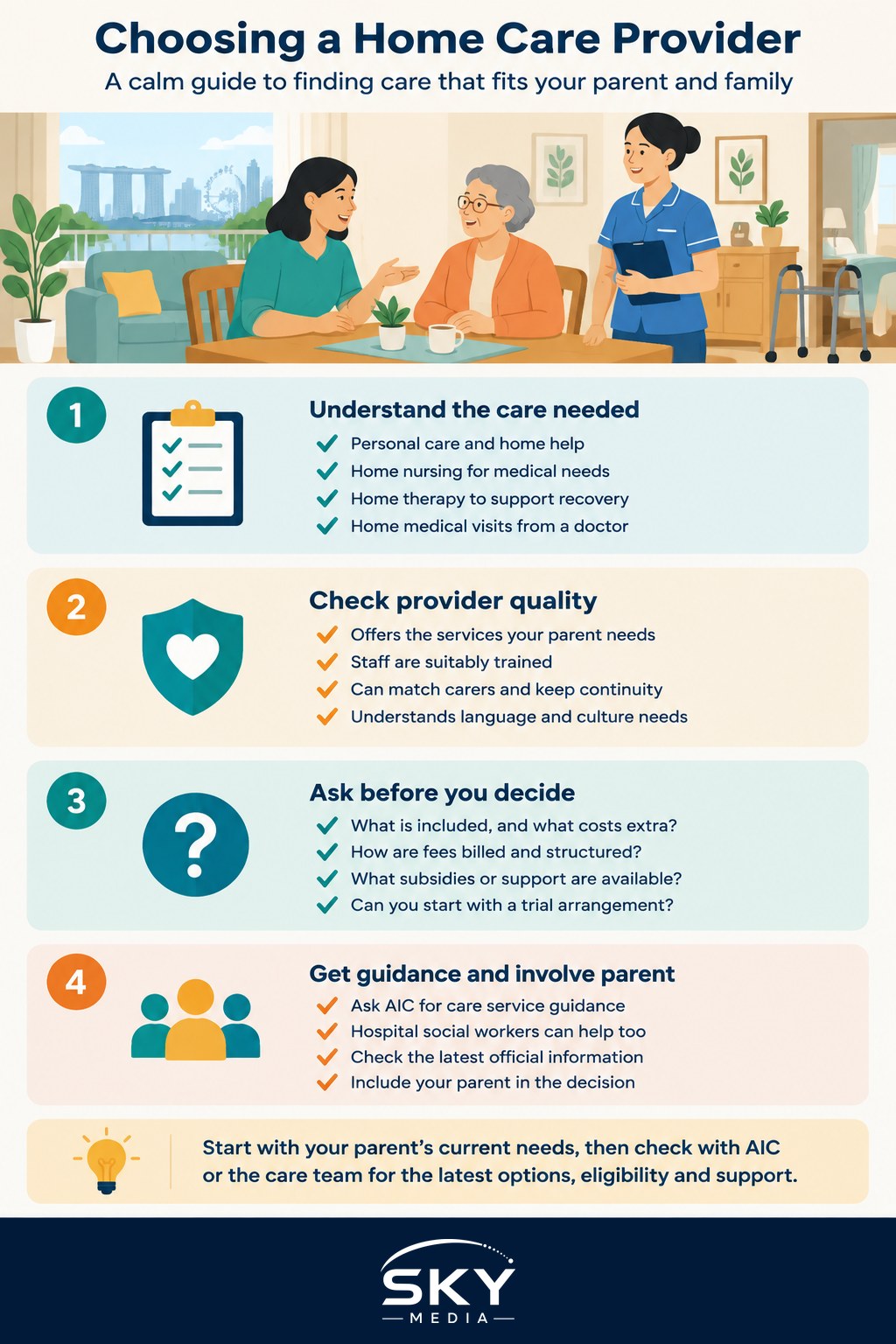
Understanding What Home Care Involves
Home care is not one single thing. It covers a range of services, and knowing which type you need is the first step.
- Personal care and home help, such as assistance with bathing, dressing, meals, and mobility.
- Home nursing, for things like wound care, medication management, or monitoring a medical condition.
- Home therapy, such as physiotherapy or occupational therapy to help someone recover or stay mobile.
- Home medical visits from a doctor for those who find it hard to travel to clinics.
Some families combine home care with day care, where a parent attends a centre for activities and supervision, giving the caregiver a regular break. It is worth reading our overview of home care and day care for seniors to see how these pieces fit together, and long-term care options in Singapore for the wider picture.
Start by being honest about what your parent needs today, and what they may need soon. A geriatric assessment or a chat with their doctor can help clarify this, and our guide to understanding a geriatric assessment explains what that involves.
What to Look For in a Provider
Once you know the type of care you need, you can weigh up providers more confidently. Rather than chasing the cheapest or the first name you find, look at the whole picture.
Quality and suitability of care
- Does the provider offer the specific services your parent needs, and can they adapt as needs change?
- Are the care staff suitably trained for the tasks involved, especially anything medical?
- How do they match a carer to your parent, and can you request consistency so your parent is not constantly meeting new faces?
- How do they handle language and cultural needs, which matter a great deal for comfort and communication?
Reliability and communication
- What happens if the assigned carer is unwell or unavailable? Is there a backup?
- How are concerns and complaints handled, and who do you contact if something goes wrong?
- Will you receive updates on how your parent is doing?
Trust and safety
- How does the provider screen and supervise its staff?
- Are the arrangements clear and put in writing, including what is and is not included?
Because a home carer becomes a trusted presence in your parent’s life, it is also sensible to stay alert to safeguarding, simply as good practice with anyone who has access to the home.
Questions to Ask Before You Commit
It helps to go into any conversation with a list. Asking clear questions is not rude, and a good provider will welcome them. Consider asking:
- What exactly is included in the service, and what costs extra?
- How are fees structured, and how and when are they billed?
- What subsidies or financial support might my parent be eligible for, and how do we apply?
- Can we start with a trial or short arrangement before committing long term?
- How much notice is needed to change or stop the service?
- Who supervises the carer, and how is care quality monitored?
On costs and subsidies, do not rely on guesswork or on figures you read online, as these change. Ask the provider directly and confirm what is current. Support for caregivers is worth exploring too, and our guide to financial support for caregivers points you in the right direction.
Where to Get Guidance
You do not have to navigate this alone. In Singapore, the Agency for Integrated Care (AIC) is the go-to body for information on care services, and it can help families understand the options, eligibility, and how to access support. If your parent has been in hospital, the medical social worker and the discharge planning team can also help arrange home care as part of coming home. Always check the latest official information, as services and subsidies are periodically updated.
Involve your parent in the decision as much as possible. It is their home and their care, and feeling consulted rather than managed makes a real difference to how well the arrangement works.
A Gentle Wrap-Up
Choosing a home care provider is a big decision, but it becomes far more manageable when you break it down. Understand what type of care is needed, look for quality, reliability, and trustworthiness, ask plenty of clear questions, and lean on AIC and your parent’s care team for guidance. There is no single perfect provider, only the one that best fits your parent’s needs, respects their dignity, and gives your family some breathing room. Take your time, trust your instincts, and remember that arranging good help is itself an act of love.
Frequently Asked Questions
How much does home care cost, and can my parent get subsidies? Costs depend on the type and amount of care, and subsidies depend on eligibility, so ask providers directly and confirm what is current. The Agency for Integrated Care can explain options and how to apply.
Can we try a home care provider on a trial basis first? It is reasonable to ask. Many families start with a trial or short arrangement before committing long term, and a good provider will welcome the question. Also ask how much notice is needed to change or stop the service.
What if my parent’s regular carer is sick or leaves? Ask beforehand whether there is a backup carer and how they handle absences. Also ask how the provider matches carers, since consistency matters for a parent who does not cope well with constantly meeting new faces.
Home nursing or home help: which does my parent need? It depends on the need. Help with bathing, dressing and meals is personal care, while wound care or managing medication calls for home nursing. A geriatric assessment or the doctor’s advice can clarify which type, or a mix, is right.
How can I involve my parent in choosing home care? It is their home and their care, so include them as much as possible. Ask what they are comfortable with, let them meet the carer and voice preferences on language and routines. Feeling consulted helps the arrangement work.
Official sources: Agency for Integrated Care