

Caring for an ageing parent at home is demanding, and even the most devoted caregiver needs a break. Respite care in a nursing home lets your loved one stay in residential care for a short period while you rest, travel, recover from illness or handle a family emergency. Done well, it protects the caregiver’s health and keeps home care sustainable for longer.
This guide focuses on temporary residential stays: what they involve, how the process typically works in Singapore, and how to prepare your parent and yourself. It is general information, not medical advice. Always discuss care needs with your parent’s doctor and the care provider.
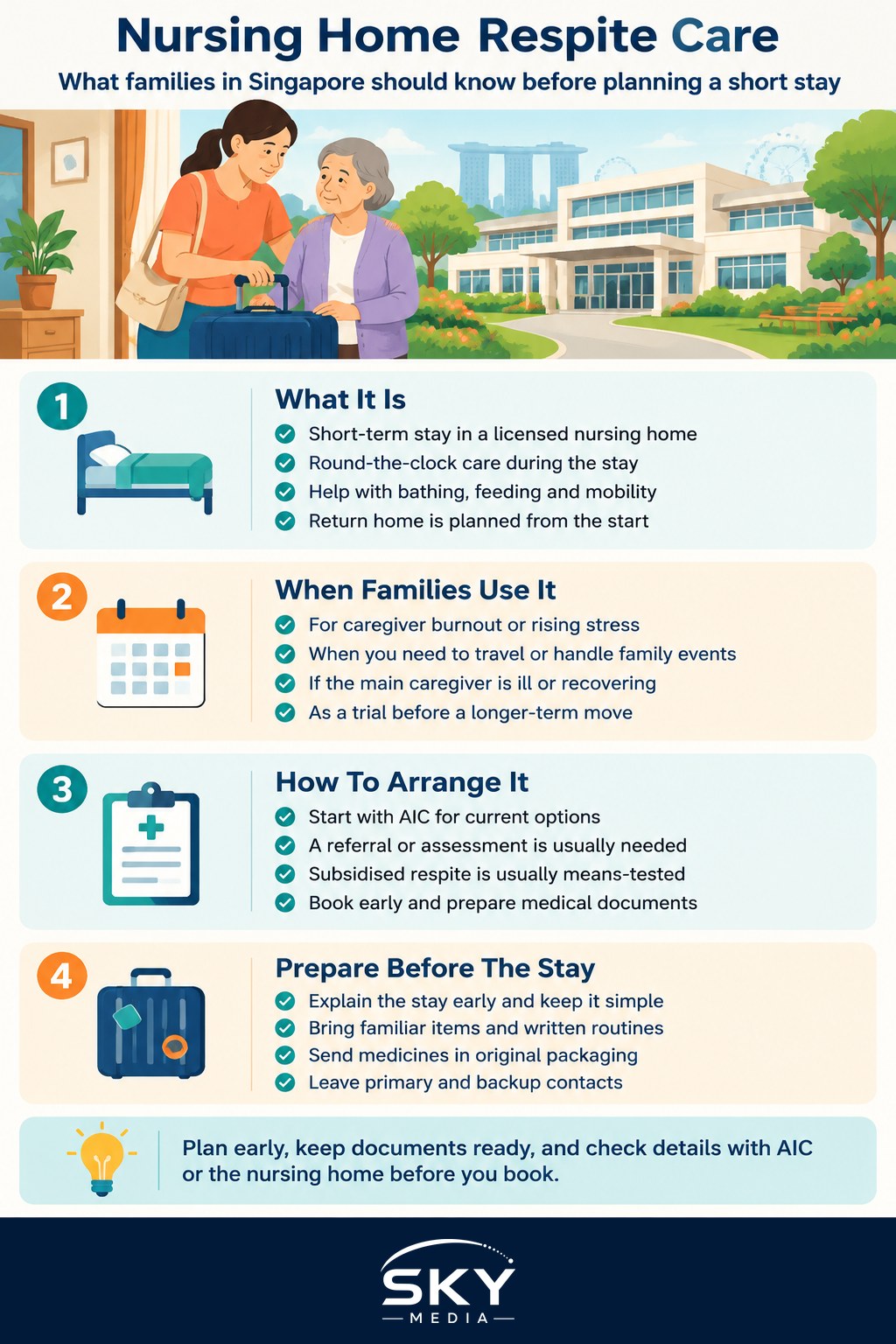
What Nursing Home Respite Care Means
Nursing home respite care is a short-term stay in a licensed nursing home, with round-the-clock care, for someone who normally lives at home. During the stay, nursing staff and care aides help with daily activities such as bathing, toileting, feeding, medication and mobility, depending on the resident’s needs.
It differs from other forms of support:
- Day respite at an eldercare day centre covers daytime hours only, and the senior returns home each evening. Our guide to eldercare day centres and respite care explains that option.
- Home respite brings a care worker into your home for a few hours.
- Long-term nursing home admission is a permanent move. Respite is temporary, with a planned return home.
Residential respite suits seniors who need overnight supervision or significant help with daily care, which a day centre or a few hours of home help cannot cover.
When Families Use a Respite Stay
Common reasons include:
- Caregiver burnout: exhaustion, poor sleep or rising stress are signals to plan a break before things reach crisis point.
- Travel or family events: an overseas trip, a wedding or a work commitment where no one else can step in.
- Caregiver illness or surgery: when the main caregiver needs time to recover.
- Helper leave: when a live-in migrant domestic worker goes home for leave and the family cannot cover care alone.
- Trial of residential care: some families use a short stay to see how a parent adjusts before considering a longer-term move. If you are weighing that bigger decision, read deciding when a nursing home is the right choice.
Planned stays are easier to arrange than last-minute ones, because respite beds are limited and in demand around school holidays and festive periods.
How to Arrange Respite Care in Singapore
Processes and eligibility rules can change, so treat the steps below as a general outline and confirm the current details with the official bodies.
- Start with the Agency for Integrated Care (AIC). AIC coordinates many eldercare services in Singapore, including residential respite in nursing homes. Its website and hotline explain current options, eligibility and how to apply. You can also ask at an AIC Link branch.
- Get a referral or assessment. Applications for subsidised respite usually need input from a doctor or a hospital or polyclinic medical social worker, who can assess care needs and help with the paperwork.
- Check subsidies. Subsidised respite is typically means-tested based on household income. Ask AIC or your medical social worker how means testing works and what you may need to pay. Some families arrange private respite directly with a nursing home instead, which follows that home’s own fees and terms.
- Confirm the dates and home. Availability varies, so be flexible on timing where you can, and book well ahead of planned trips.
- Prepare documents. These typically include identity documents, recent medical reports, a current medication list and any care instructions.
Ask about the length of stay allowed, the minimum notice needed and what happens if your plans change.
Comparing Respite Options
If you are unsure whether residential respite is the right fit, this comparison can help.
| Option | Care hours | Best for | Things to consider |
|---|---|---|---|
| Nursing home respite | 24 hours, overnight stay | Seniors needing high care or night supervision | Limited beds, needs advance booking and referral |
| Day centre respite | Daytime only | Seniors who can return home each evening | Transport and daily routine at both ends |
| Home respite | Short visits, a few hours | Brief breaks for errands or rest | Not suitable for long trips or night care |
| Family or friends covering | Flexible | Short absences with simple care needs | Relies on others’ availability and skills |
For a wider look at the support available to caregivers, including training and grants, see caregiver support and respite in Singapore.
Preparing Your Parent for a Short Stay
A move into an unfamiliar place, even briefly, can unsettle older adults, especially those with dementia. Some ways to ease the transition:
- Explain honestly and early. Frame it as a short stay with a clear return date. For a parent with dementia, keep explanations simple and reassuring, and take guidance from the care team.
- Visit beforehand if possible. Seeing the room and meeting staff reduces anxiety for both of you.
- Pack familiar items: comfortable clothes labelled with their name, a favourite blanket or pillow, family photos, reading glasses, hearing aids and spare batteries.
- Share routines in writing: usual wake and sleep times, food preferences, dialect or language spoken, how they like to be addressed, triggers that upset them and what calms them.
- Hand over medication properly. Provide medicines in original packaging with a current list from the doctor or pharmacy. Do not change doses yourself. Follow the nursing home’s instructions on what to bring.
- Leave clear contacts: a primary and backup family contact who can be reached during the stay.
Making the Most of the Break
The purpose of respite is rest, so use it well.
- Actually rest. It is tempting to fill the time with chores. Schedule sleep, medical check-ups you have been putting off, and time with friends.
- Agree on updates. A short check-in call every day or two is reassuring without making you feel tethered.
- Visit if it helps, but do not feel guilty if you need full days off. Ask staff what visiting arrangements apply.
- Reflect on your care plan. A break is a good time to ask whether the current arrangement is sustainable or whether more regular help is needed.
Questions to Ask the Nursing Home
Before the stay, ask the home:
- What care is included, and what costs extra, such as diapers, special diets or escort to appointments?
- How are medications stored and given?
- What activities or therapy are available for respite residents?
- How do staff handle falls, a change in condition or a need to go to hospital?
- How will they update the family?
- What should we bring, and what should we leave at home?
After Your Loved One Returns Home
Expect a short adjustment period as your parent settles back into home routines. Ask the nursing home for a brief handover on how the stay went, any changes noticed in appetite, sleep, mobility or mood, and any incidents. Share relevant points with their doctor.
Many families find that planning regular respite, rather than waiting for a crisis, keeps caregiving manageable for years. Taking care of yourself is part of taking care of your parent.
Official sources: Agency for Integrated Care
Further reading: Nursing Homes in Singapore: A Guide