
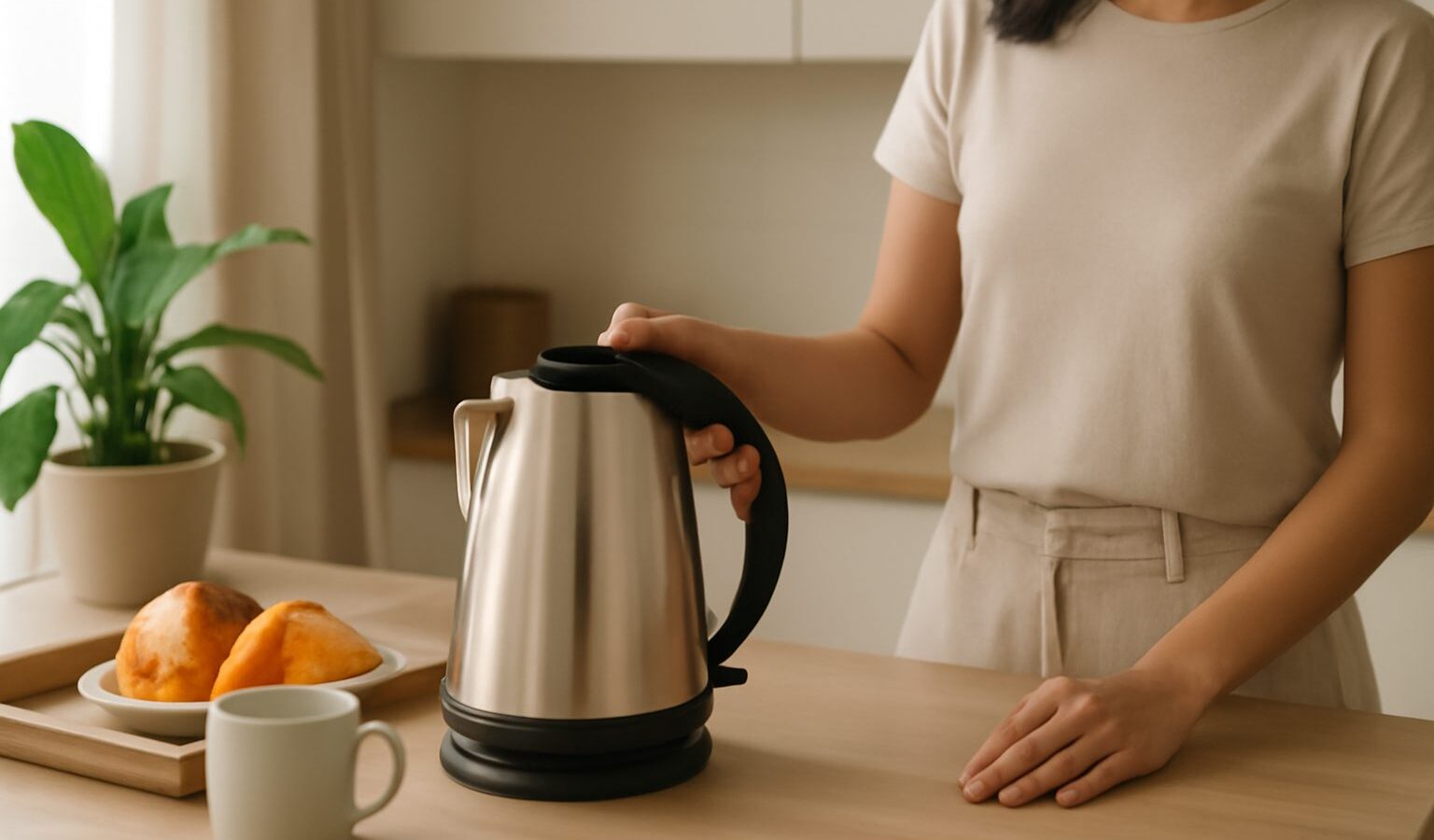
An electric kettle singapore kitchens rely on every day is easy to take for granted, yet a good one saves time, energy and a surprising amount of daily frustration. It boils faster than a pot on the hob, switches itself off, and does not heat up the kitchen the way a stove does. Whether you are brewing kopi, steeping tea, filling a thermos or getting a quick head start on cooking, the right kettle earns its place on the counter. This guide covers capacity, materials, temperature control, safety and upkeep so you can choose sensibly.
Why an Electric Kettle Beats the Hob
A stovetop kettle works, but an electric one is quicker because the heating element sits right in the water, and it is safer because it shuts off automatically once the water boils. In a warm climate that automatic cut-off is a small blessing, since you are not adding stove heat to an already hot kitchen or standing over a flame. Electric kettles are also portable within the home, so you can fill a flask on the dining table or set one up in a study or pantry corner.
Every kettle sold here should run on Singapore mains of 230V and 50Hz and come with the standard three-pin BS 1363 plug. Our higher mains voltage means kettles here boil quickly, so there is rarely any need to import a model designed for a lower-voltage country, which would boil more slowly and could be unsafe on our supply.
Capacity: Match It to How You Drink
Capacity is a genuine trade-off rather than a case of bigger being better. A larger kettle means fewer refills for a household that drinks a lot, but it also takes longer and uses more energy to bring a full load to the boil. A smaller kettle boils a single mug quickly and wastes less if you only want one drink.
The honest habit is to boil only what you need. If most of your boiling is one or two cups at a time, a compact kettle suits you and saves electricity over the year. If you regularly fill a large flask or make drinks for a crowd, a bigger capacity avoids repeated refills. Check the minimum fill line too, because a kettle that demands a large minimum is wasteful for solo cups.
| Household or use | Suggested capacity | Notes |
|---|---|---|
| One person, single cups | Compact | Boils fast, less waste |
| Small family | Mid-size | Everyday all-rounder |
| Large family or flask filling | Large | Fewer refills, slower boil |
| Frequent solo drinks | Low minimum fill | Avoids boiling excess water |
Materials and Build
Kettles come mainly in stainless steel, plastic and glass, and each has trade-offs. Stainless steel is durable and looks smart, though the outer body can get hot, so look for a cool-touch or double-wall design if a child or elderly family member uses it. Glass kettles let you see the water and are easy to keep visibly clean, but they show limescale and need careful handling. Plastic is light and inexpensive; if you prefer it, choose a reputable, food-grade model and avoid leaving boiled water standing in it for long.
Whatever the body, a concealed heating element in the base is easier to clean and descale than an exposed coil. A wide opening makes filling and cleaning simpler, and a well-designed spout pours without dribbling, which matters when you are filling a narrow flask or a pour-over.
Useful Features to Look For
A few features genuinely improve daily use. A variable temperature setting is worth having if you drink tea or make coffee that benefits from water below boiling point, since green tea and some coffee methods taste better when the water is not fully boiling. A keep-warm function holds the temperature for a while, handy for repeat cups, though it uses extra power the longer it runs.
Practical touches matter as much as clever ones: a clear water gauge so you can see the level, a lid that opens easily without scalding your hand with steam, a 360-degree base so you can lift the kettle from either side, and cord storage to tidy the counter. A quiet boil is a bonus in an open-plan flat.
Speed, Efficiency and the Water You Use
A kettle is one of the most efficient ways to heat water because the element sits directly in the liquid, so almost all the energy goes into the boil rather than escaping around a pot on the hob. You can make it more efficient still with one simple habit: fill only to the amount you need, using the gauge as a guide. Boiling a full kettle for a single cup wastes both time and electricity, load after load, across the year. A kettle with a low minimum fill line lets you do this without dry-boiling the element. Speed is rarely a problem on our higher mains voltage, so do not pay a premium chasing marginal boil-time claims; a sensible capacity, a clear gauge and a well-designed spout will serve you better day to day than a slightly faster element you will never notice.
Safety, Cleaning and Descaling
Safety features are largely standard now, but confirm the kettle has automatic shut-off when the water boils and boil-dry protection that cuts power if it is switched on empty. A locking lid stops hot water sloshing out, and a stable, well-weighted base reduces the chance of tipping. Keep the kettle and its cord away from the counter edge and out of reach of children, and never immerse the base or the connector in water.
Cleaning is straightforward but does need doing. Over time, minerals in the water leave limescale inside the kettle, which slows boiling and can flake into your drink. Descale regularly with a suitable descaler or a diluted vinegar or citric acid solution, then rinse well. Wipe the exterior with a damp cloth, empty the kettle if it will sit unused, and check the cord occasionally for wear. Looked after this way, a good electric kettle will serve your kitchen reliably for years.
Explore more
Buying Kitchenware
Energy-Efficient Appliances
Home Appliance Shopping
How to Maintain Your Home Appliances