
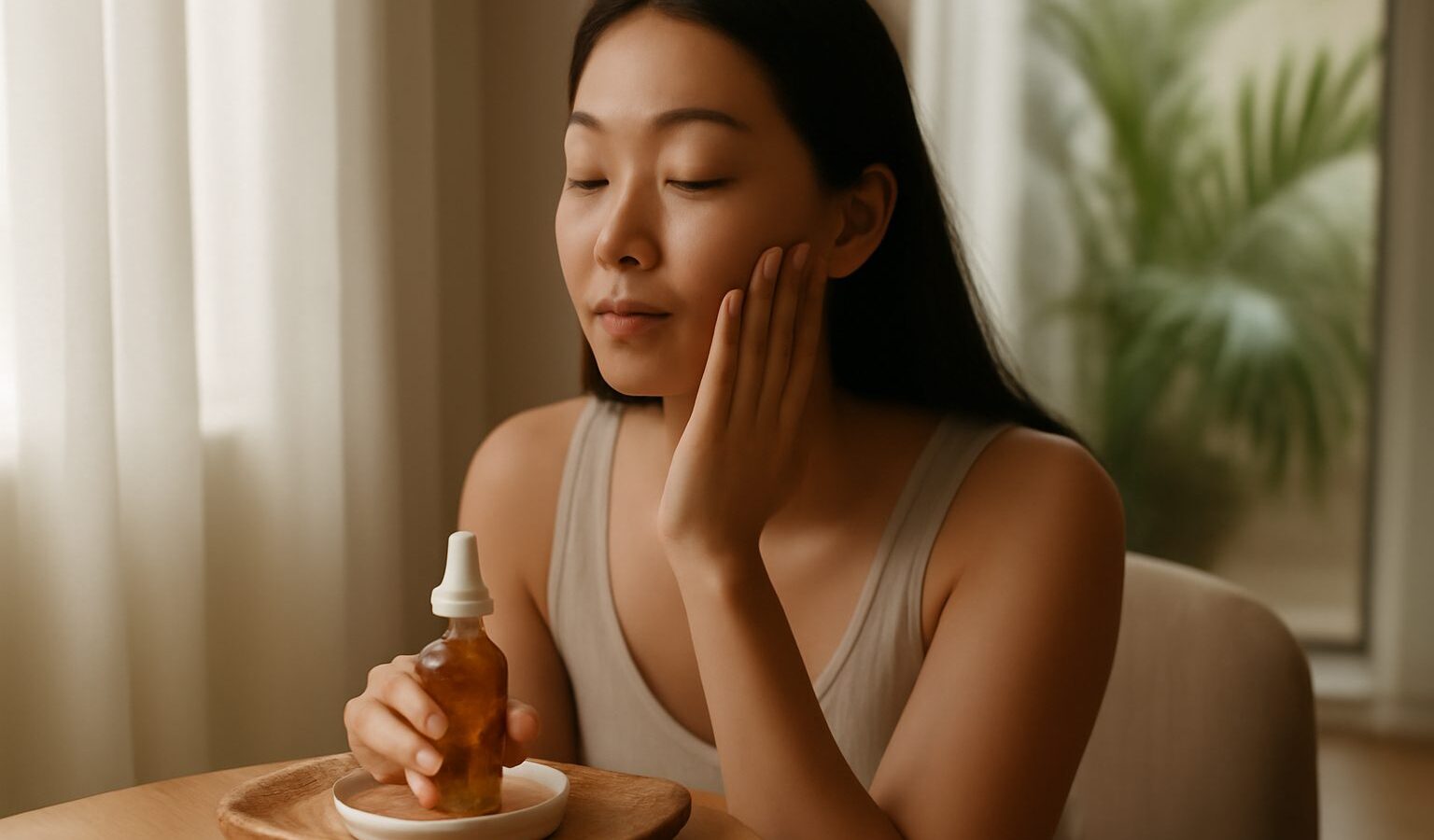
Facial oils have a bit of an image problem in Singapore. When the air is already thick and your skin is glistening by lunchtime, the idea of adding oil sounds like asking for trouble. Yet facial oils can absolutely earn their place in a tropical routine, as long as you pick the right ones and use them with a light hand. Used well, they help seal in moisture, comfort skin that aircon has dried out, and give a healthy finish without the heavy, greasy feeling most people fear. This guide covers how to use facial oils sensibly in the humidity.
Why an oil can still help in the humidity
It helps to understand what an oil actually does. A facial oil is mainly an occlusive and emollient step, which means it sits toward the end of your routine and helps slow water loss from the skin while smoothing the surface. Humidity does not cancel that job out. Plenty of people in Singapore have skin that is oily on top yet dehydrated underneath, especially after hours in air-conditioned offices and MRT carriages that pull moisture out of the air and out of your face.
An oil will not add water to your skin, so it is not a replacement for a hydrating serum or a moisturiser. Think of it as the step that helps everything underneath stay put. When your barrier is comfortable and sealed, skin often looks calmer and, oddly enough, can even feel less oily, because it is not overproducing to compensate for dryness. The trick in a humid climate is restraint: a few drops, chosen and layered thoughtfully, rather than a generous slick.
Choosing an oil that suits the climate
Not all facial oils feel the same on the skin, and texture matters more than anything when the weather is hot. Lighter, faster-absorbing oils tend to sit better in the humidity, while rich, heavy ones can feel suffocating and may not suit oilier skin at all. You do not need to memorise a chart, but a rough sense of weight is useful when you are reading a label or testing a tester in store.
- Lighter, quick-sinking oils generally feel best in Singapore’s heat and layer neatly under or over other products.
- Medium-weight oils can work at night or on drier patches, even if they feel like too much for daytime.
- Rich, heavy oils are usually better saved for very dry skin or cooler, air-conditioned sleep, not a midday top-up.
If your skin is prone to congestion or breakouts, go gently and watch how it responds over a couple of weeks. And as with any new product, patch test first. Dab a little on your inner forearm or jaw for a few days before committing it to your whole face. If you have persistent acne, fungal-type bumps or any condition that keeps flaring, see a doctor, dermatologist or pharmacist rather than experimenting, since some oils can aggravate certain conditions.
How much, and where oil sits in your routine
Order matters. A common rule of thumb is to layer from thinnest to thickest, and a facial oil is usually one of the last steps because it helps seal what came before. Here is a simple sequence that works in the humidity.
- Cleanse with a gentle cleanser to clear off sweat, sunscreen and the day’s grime.
- Hydrate with a watery essence or serum while skin is still slightly damp.
- Moisturise with a light lotion or gel-cream suited to the heat.
- Seal with one to three drops of facial oil, pressed gently over the top.
- Protect every morning with a broad-spectrum sunscreen, applied after your oil has settled.
For daytime, less really is more. One or two drops warmed between your palms and pressed on is usually plenty; you can always add another drop to dry areas. At night you have more room to be generous, since you are not layering sunscreen or makeup on top and the aircon is working against you while you sleep. If your skin looks shiny within an hour of applying oil in the morning, that is a sign to cut back the amount or switch to a lighter texture.
Common mistakes, and how to avoid them
Most oil disappointments come down to technique, not the product. Here is how the do’s and don’ts compare in a tropical climate.
| Habit | Do | Don’t |
|---|---|---|
| Amount | Start with one to two drops for the face | Pour a coin-sized amount and hope it sinks in |
| Timing in the routine | Apply after moisturiser, before sunscreen | Use oil first and layer water-based products on top |
| Choice of texture | Match a lighter oil to the humidity | Reach for the richest oil for a quick glow |
| Under sunscreen and makeup | Let the oil settle, then apply the next layer | Pile sunscreen straight onto a wet, slippery film |
| Reacting to shine | Reduce the amount or the frequency | Skip oil entirely and let dryness rebound |
A few more practical notes. Give the oil a minute to absorb before sunscreen or makeup, or you may find products slide and pill. Store oils away from direct heat and sunlight so they stay fresh in our warm flats. And remember that an oil is a finishing touch, not the whole routine; it works best on top of proper hydration, not instead of it.
Making it work for your skin
There is no single right answer here, because skin varies and so does the way each of us reacts to the weather. Oilier skin might use an oil only at night, or only on the cheeks where things get dry, while drier or more mature skin may welcome a couple of drops morning and evening. Combination skin can spot-apply, keeping oil to the areas that feel tight and skipping the T-zone. The point is to observe and adjust rather than follow a rigid formula.
If you are unsure whether facial oils suit you at all, start small and slow, watch for congestion, and give any change a few weeks before judging it. Buy from reputable pharmacies, drugstores or counters, and keep your overall routine simple so you can actually tell what is working. If a product consistently stings, breaks you out or leaves skin inflamed, stop using it and check with a pharmacist or doctor. Skincare in the humidity should feel comfortable, not like a daily battle with your own face.
Explore more
For the foundations, see the difference between hydrating and moisturising your skin and how to layer lightweight boosters in our guide to ampoules and treatment essences. If your skin feels raw rather than dry, our notes on how to fix over-exfoliated skin may help you reset first.