
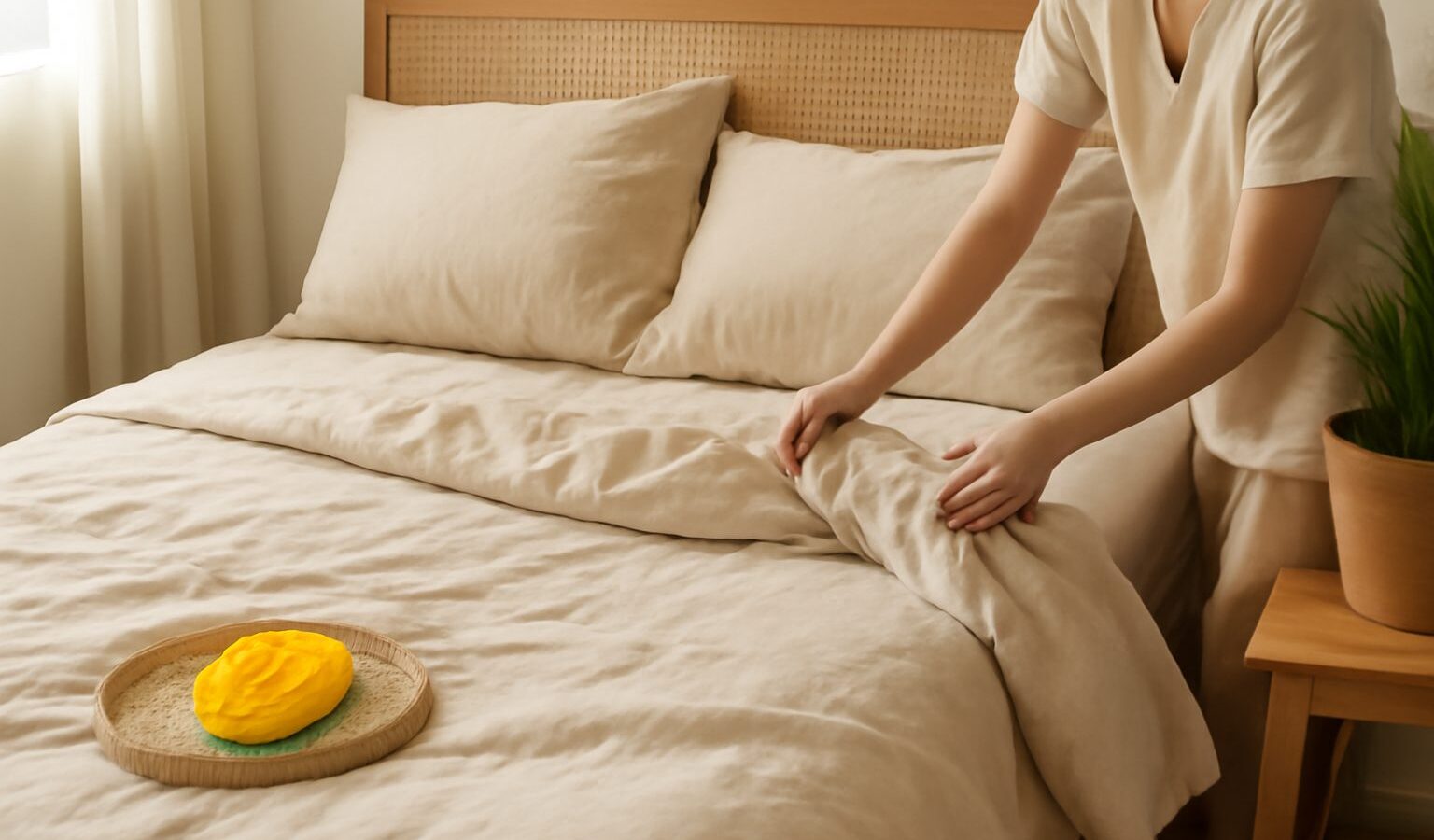
Sleeping well in Singapore often comes down to what touches your skin at night. When the air is warm and sticky and the ceiling fan is doing its best, the wrong sheets trap heat and leave you damp by 3am. The best bed sheets for hot weather are the ones that breathe, wick moisture away and dry quickly, so your bed feels cool and fresh even through a humid island night. This guide walks you through the fabrics that suit our climate, the truth about thread count, and how to keep everything clean and mould-free.
Why Breathable Fabrics Matter Here
Our climate is warm and humid almost every day of the year, and we sweat more in our sleep than we realise. A good sheet needs to do two jobs: let air move through it, and pull moisture off your skin so it can evaporate. Natural and plant-based fibres tend to do both well, while many synthetics trap heat and hold damp against you.
Watch out for these comfort-killers:
- Polyester and microfibre. Cheap and wrinkle-free, but they breathe poorly and can feel clammy once you warm up.
- Satin-weave synthetics. Look luxurious, sleep hot.
- Heavy flannel or brushed fabrics. Lovely in a cold country, far too warm for us.
The other tropical enemy is mould and that musty smell. Sheets that stay damp in a closed, air-conditioned room are a breeding ground, so quick-drying fabrics and good laundry habits matter as much as the fibre itself.
Comparing the Main Sheet Fabrics
Most breathable options come down to cotton, Tencel (lyocell), linen and bamboo. Each handles our heat a little differently, so it helps to see them side by side.
| Fabric | How it feels in the heat | Care and upkeep | Best for |
|---|---|---|---|
| Cotton (percale) | Crisp, cool and airy, breathes very well | Machine washable, wrinkles a little, dries fairly fast | Most people who want a fresh, hotel-crisp bed |
| Tencel / lyocell | Silky, smooth and cool to the touch, wicks moisture strongly | Gentle wash, dries quickly, resists odours | Sweaty sleepers and sensitive skin |
| Linen | Loose weave, extremely breathable, gets softer over time | Washes well, dries fast, relaxed crumpled look | Hot sleepers who like a lived-in, textured bed |
| Bamboo (viscose) | Soft and cool, good moisture wicking | Wash gently, can pill if low quality | Those wanting softness at a friendlier price |
Cotton is the reliable all-rounder, and a percale weave (a simple over-under weave) feels cooler than a smooth sateen. Tencel, made from wood pulp, is excellent if you run hot or sweat heavily because it moves moisture fast. Linen looks casually crumpled and is arguably the most breathable of all, though it feels textured rather than smooth. Bamboo viscose is soft and affordable, but quality varies a lot, so buy from a seller you trust.
The Truth About Thread Count
Thread count is the most oversold number in bedding. It simply counts the threads woven into a square inch of fabric, and shops love to print big figures on the packaging. In reality, past a certain point a higher number does not make a sheet cooler or better.
A few things to keep in mind:
- Sweet spot. For cotton, roughly 200 to 400 is plenty for a soft, durable, breathable sheet.
- Inflated counts. Numbers like 1000 usually come from counting multi-ply threads twice, or from thin, tightly packed fabric that actually sleeps hotter.
- Weave beats count. A percale weave at 300 will feel cooler and crisper than a dense sateen at 800.
- Fibre quality matters more. Long-staple cotton (often labelled Egyptian or Supima) is smoother and lasts longer regardless of the count.
For a tropical bedroom, look for the words “percale”, “cool”, “breathable” or “long-staple” before you look at the thread count at all. With Tencel and linen, thread count is not a meaningful measure anyway, so judge those on fibre and weight instead.
Weave, Weight and the Small Details
Beyond fibre, a few practical details decide how a sheet performs in our weather.
- Weave. Percale sleeps cooler and crisper; sateen feels smoother and warmer. Choose percale for the heat.
- Colour. Lighter colours show less heat wear and hide the faint yellowing that humidity can cause over time.
- Fitted sheet depth. Measure your mattress height, especially if you have added a topper, so the corners actually stay tucked.
- Duvet strategy. Many people here skip a thick duvet entirely and use just a sheet, a thin cotton blanket, or a low-tog quilt for the air-conditioned nights.
- Pillows. Breathable pillow covers matter too, since your head and neck sweat the most.
If you use air-conditioning, a light quilt you can pull up at 4am is handy. If you rely on a fan, keep it to a single breathable top sheet and let the air do the rest.
Washing, Drying and Keeping Sheets Fresh
Good laundry habits keep sheets breathable and stop that damp, musty smell that our humidity encourages.
- Wash weekly. In our climate, sweat and skin oils build up fast, so a weekly wash keeps sheets fresh and cool-feeling.
- Warm, not hot. A 30 to 40 degree wash cleans well without breaking down the fibres. Skip fabric softener, which coats fibres and reduces breathability and wicking.
- Dry fully. This is the big one here. Never fold away slightly damp sheets, or mould and odour follow. Sun-dry if you can, as sunlight freshens and naturally deodorises.
- Air the mattress. On a dry day, pull back the bedding and let the mattress breathe before remaking it.
- Rotate two sets. Having a second set means you can wash and fully dry one while using the other.
Store spare linen somewhere ventilated rather than a sealed plastic box, and a small dehumidifier or moisture absorber in the wardrobe helps in the monsoon months. If sheets already smell musty, a wash with a cup of white vinegar in the rinse usually lifts it.
Where to Buy and What to Consider
You can find breathable bedding across every budget in Singapore. IKEA and Courts carry affordable cotton and percale sets, department stores and specialist bedding shops stock Tencel, linen and long-staple cotton, and online sellers on Lazada, Shopee and Taobao offer a huge range if you read reviews carefully. Local bedding brands often tailor their ranges to our climate, which is a genuine plus.
Before you buy, run through a quick checklist:
- Confirm the fibre, not just the thread count, and prefer cotton, Tencel or linen.
- Check the weave, aiming for percale if you want the coolest feel.
- Match the fitted sheet depth to your mattress.
- Read reviews for pilling, shrinkage and colour fading, especially for bamboo and budget sets.
- Buy two sets so one can always be drying.
Prices vary widely by fibre and brand, so compare a few retailers rather than fixing on a single figure. Spend where it counts, on a breathable fibre and an honest weave, and your bed will feel cooler on the hottest, stickiest nights of the year.
Explore more
Comfort at home is about more than the bed. If you are kitting out a bedroom or living space for our climate, see our guide to choosing a sofa for your home and the fabrics that cope with humidity. For a cooler, quieter room, read up on soundproofing your home, and if you work from your bedroom, our tips on home office ergonomics and desk setup will help you rest and work better.