
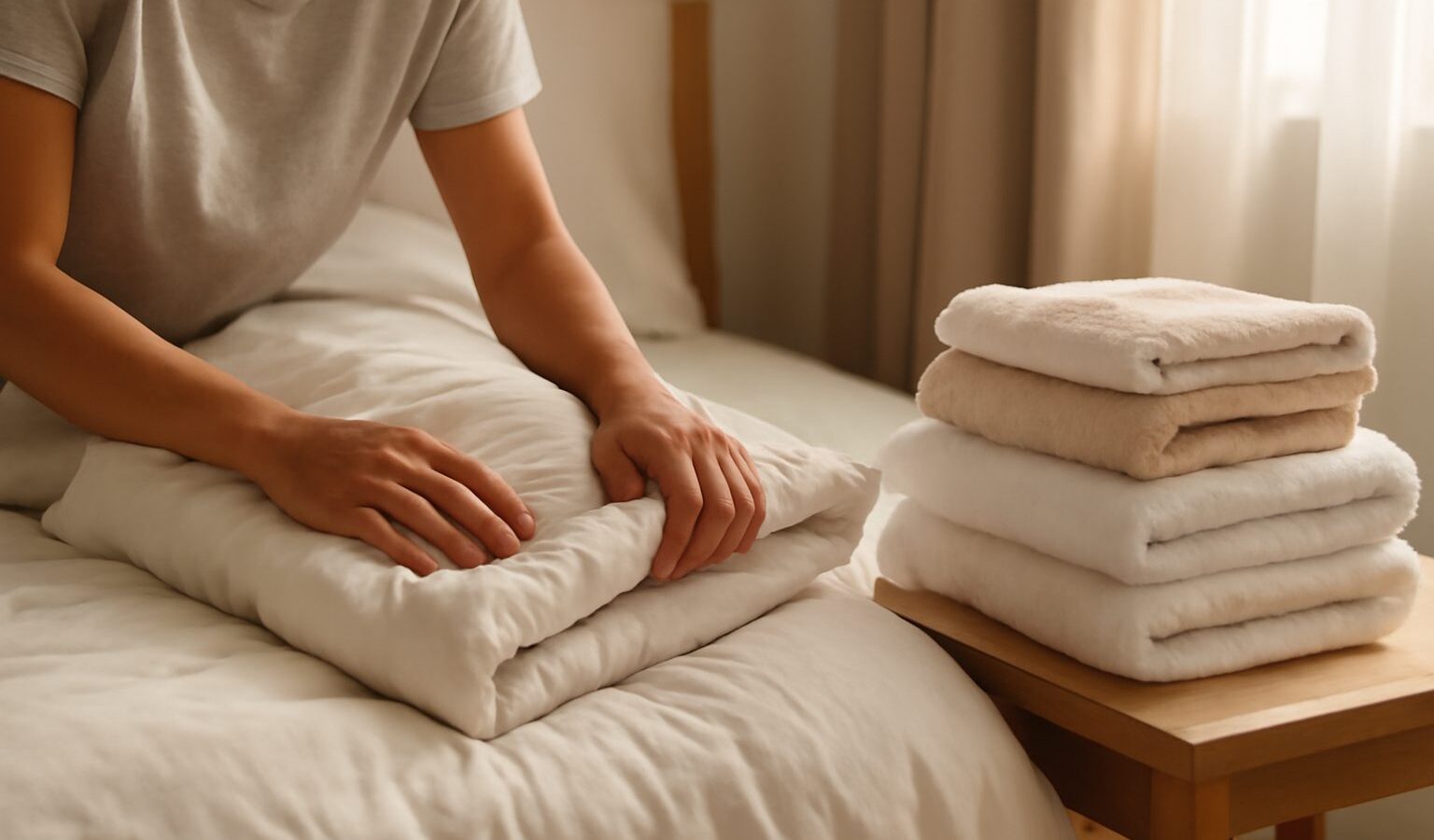
Fresh sheets and fluffy towels are one of life’s simple pleasures, and in our climate they need a little regular attention to stay that way. Heat and humidity mean sweat, dust mites, and musty smells build up faster than you might expect, so caring for bed linen in Singapore is really about a steady rhythm rather than hard work. This guide covers how often to wash, the settings that suit our weather, how to dry properly when the air is damp, and how to keep everything soft, hygienic, and pleasant to sleep in.
How Often to Wash Sheets and Towels
Because we sweat more here, bedding and towels get dirtier faster than in cooler places. Skin cells, body oils, and moisture feed dust mites and bacteria, which is why old linen starts to smell even when it looks clean.
- Bed sheets and pillowcases: wash weekly. If someone sweats heavily, is unwell, or has allergies or sensitive skin, wash more often.
- Duvet covers: wash every one to two weeks along with the sheets.
- Bath towels: hang to dry fully after every use and wash after three or four uses. If a towel ever smells damp before then, wash it sooner.
- Hand towels and face towels: wash every couple of days, since they stay damp and are handled often.
- Pillows and duvets themselves need occasional washing too, which we cover in our guide on washing pillows and duvets.
The single biggest mistake in our climate is letting damp towels sit crumpled. A towel that never dries fully between uses turns musty quickly, so always spread it out on a rail with airflow, not bunched on a hook.
Wash Settings That Suit Our Humidity
You do not need complicated cycles. The aim is to clean thoroughly, rinse well, and avoid trapping moisture or residue.
- Sort by colour and by fabric weight so heavy towels do not batter delicate sheets.
- Wash bed linen at a warm setting where the fabric care label allows, as warmer water helps reduce dust mites and lift body oils. Check the label first, since some prints and blends prefer cooler washes.
- Use a sensible amount of detergent. Too much leaves residue that stiffens towels and holds smells, especially in humid storage.
- Skip or go easy on fabric softener for towels. It coats the fibres and makes them less absorbent over time. A splash of white vinegar in the rinse keeps towels soft and fresh without the coating.
- Do not overload the machine. Clothes and linen need room to move so they rinse clean.
If you are unsure what a symbol means, our explainer on laundry labels and machine settings takes the guesswork out of choosing a cycle.
Drying Properly When the Air Is Damp
Drying is where Singapore homes struggle most, because humid air slows everything down and gives smells a chance to set in. The goal is to dry linen and towels fully and fairly quickly.
- Hang sheets in a breezy spot, ideally with a fan or open window, and spread them out rather than folding them over the line in thick layers.
- Give towels space to hang loosely so air reaches both sides. Cramming several onto one rail keeps them damp for hours.
- On wet-weather days, use a fan, a dehumidifier, or a dryer to finish the job. Linen that stays damp overnight is the classic cause of that sour, musty smell.
- If you tumble dry, do not over-dry, as excessive heat wears out fibres. A short, warm dry followed by air-finishing works well.
- Only fold and store linen and towels when they are completely dry to the touch, with no cool or heavy patches.
Sun is a natural helper. A few hours of sunlight freshens fabric and helps keep it hygienic, though strong direct sun over time can fade dark colours, so turn coloured items inside out.
A Simple Care Schedule
A clear rhythm keeps everything fresh without you having to think about it. Use this as a starting point and adjust for your household.
| Item | How often to wash | Extra care |
|---|---|---|
| Bed sheets and pillowcases | Weekly | Warm wash if label allows |
| Duvet cover | Every 1 to 2 weeks | Wash with the sheets |
| Bath towels | Every 3 to 4 uses | Dry fully between uses |
| Hand and face towels | Every 2 to 3 days | They stay damp, so wash often |
| Pillow and duvet inners | Every few months | Follow the care label carefully |
Keeping two or three sets of sheets and plenty of towels in rotation makes this painless, since you always have a dry set ready while another is in the wash.
Storing Linen So It Stays Fresh
Clean linen still needs the right storage, or humidity will undo your work. Store everything bone dry, and give it airflow.
- Keep a linen shelf or cupboard that is not packed too tightly, so air can move between sets.
- Add a few moisture absorbers or silica gel packs to the cupboard and refresh them when they fill up.
- Open the cupboard on sunny days to let it breathe, especially if it sits against an external wall.
- A neat trick is to store each set inside one of its own pillowcases, keeping the sheet, cover, and cases together and easy to grab.
- Rotate your stock so the same set is not always used, which spreads the wear evenly.
If linen has been stored a while and smells a little stale, a quick wash and full dry brings it back. Never seal slightly damp linen into a plastic box, as that is exactly how mould and musty odours take hold.
Keeping Towels Soft and Beds Comfortable
Over time towels can turn stiff and beds can feel less inviting, but a few habits fix that. Wash towels without heavy softener, use the vinegar rinse now and then, and give them a good shake before hanging to fluff the loops. For beds, airing the mattress by pulling back the sheets each morning lets moisture escape before you make the bed. Every few months, air pillows and duvets in a breezy spot to keep dust mites and damp in check.
None of this is fussy. A weekly wash, proper drying, and dry storage are enough to keep your bed linen and towels soft, fresh, and comfortable all year round.
Explore more
Bedding and towels are part of your wider washing routine, so it helps to have the basics down. Start with how to do your laundry properly, decode the care symbols in understanding laundry labels and machine settings, and keep pillows and duvets fresh with our guide on washing and caring for pillows and duvets.