
Living close together is part of life here, and so is the noise that comes with it: the neighbour’s late-night television through a shared wall, drilling from a renovation two floors up, traffic from a nearby expressway, or footsteps overhead. Soundproofing your home in Singapore is really about managing that noise so your flat feels calmer, whether you want a quieter bedroom, a focused work corner, or simply better sleep. You will not turn an HDB flat into a recording studio, but you can meaningfully soften the sounds that bother you most.
This guide explains how sound actually travels, what renters can do today without touching the structure, and which renovation options make sense when the problem is more serious. Throughout, the aim is honest expectations and practical steps you can match to your budget and your tenancy.
How Sound Travels in HDB and Condo Homes
There are two kinds of noise to think about, and they need different fixes. Airborne noise travels through the air and then through walls, doors and windows: voices, music, television, traffic. Impact noise travels through the structure itself: footsteps, dragged chairs, drilling and slamming doors, which is why you sometimes hear a neighbour above you as if they were in your own ceiling.
Most everyday complaints in flats are a mix of both. Airborne noise usually sneaks in through the weakest gaps, especially around doors and windows, so sealing those often gives the biggest improvement for the least effort. Impact noise is harder because it moves through concrete, and it is best tackled at the source, ideally by the person making it. If a neighbour’s renovation or habits are the issue, a friendly word or, if needed, your town council or the HDB is often more effective than any material you can buy.
Two simple principles guide everything below. Mass blocks sound, so heavier, denser materials reduce noise better than thin, light ones. Gaps leak sound, so a small unsealed gap around a door can undo an otherwise solid wall. Keep both in mind and your money goes further.
Renter-Friendly Soundproofing You Can Do Today
If you rent, you probably cannot drill freely, hack anything, or alter the flat, so focus on soft, reversible fixes that add mass and absorb sound. These will not silence a room, but together they take the edge off and make a space feel noticeably calmer.
- Heavy curtains across windows help block traffic and outdoor noise, especially thick, lined or blackout styles that also cut heat and light.
- Rugs and carpets on hard flooring absorb sound inside the room and reduce the impact noise you pass to the neighbour below.
- Soft furnishings such as a fabric sofa, cushions, throws and a full bookshelf break up echo and make a room feel less harsh.
- Draught excluders and self-adhesive foam strips around the edges and base of doors close the gaps where airborne noise leaks in.
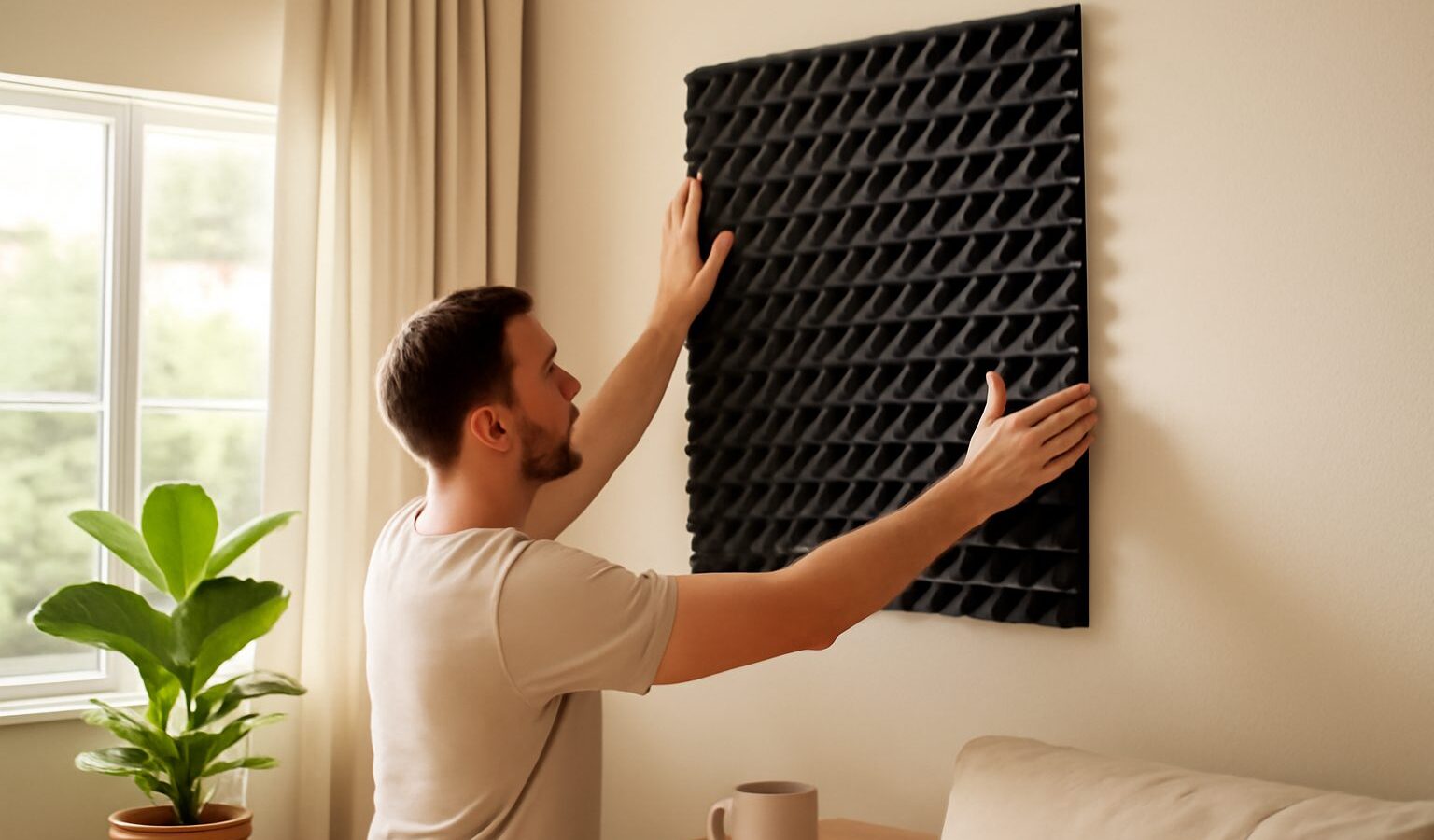
- Removable acoustic or foam panels stuck up with non-marking adhesive strips help a work-from-home corner or a music space.
- Rearranging the room so a wardrobe or full bookcase sits against the noisiest wall adds mass without any building work.
Check your tenancy agreement before sticking anything to walls, and use removable fixings so you get your deposit back. None of this is structural, so it is all fair game for renters and easy to undo when you move.
Renovation Options for Serious Noise Reduction
When the noise is constant and you own the flat, renovation can go further, but the heavier options change the structure and must be planned properly. Anything involving walls, ceilings or the flat’s structure should be done by an HDB-registered renovation contractor, and you should check current HDB, BCA and town council rules on permitted works and hours before you start. Never assume a wall can be altered; structural walls must never be touched.
The table below compares common approaches so you can match effort and cost to how much quiet you actually need. Costs vary widely by material, area and contractor, so treat the bands as rough and confirm real figures with your contractor or retailer.
| Approach | Best for | Renter friendly | Rough effort and cost |
|---|---|---|---|
| Soft furnishings and rugs | Echo, mild airborne noise | Yes | Low, DIY |
| Door and window seals | Gaps around doors and windows | Yes | Low, DIY |
| Acoustic panels | Work corners, music rooms | Mostly | Low to mid |
| Upgraded or double glazing | Traffic and outdoor noise | No | Mid to premium |
| Stud wall or false ceiling with insulation | Shared walls, upstairs impact noise | No | Premium, contractor |
Upgraded windows are one of the most effective moves against outdoor noise, since older windows and their gaps let a lot of sound through. For a shared wall with a noisy neighbour, a contractor can build a second stud wall with an air gap and insulation, though this eats into floor space. A false ceiling with insulation can help a little with airborne noise from above, but it does far less for impact noise, so be realistic before spending on it.
Quietening the Problem Areas: Doors, Windows and Floors
Rather than treating a whole flat, target the weak points. Doors are often the biggest leak: a hollow internal door with gaps around it lets sound pour through, so sealing the edges, adding a door sweep at the base, or upgrading to a solid-core door makes a clear difference for a bedroom or study.
Windows are the main entry point for traffic and outdoor noise. Good seals and heavy curtains help for renters, while owners troubled by an expressway or busy road may consider better-sealed or double-glazed windows. For floors, rugs with a dense underlay reduce the impact noise you send downstairs and soften sound within your own room, which is a considerate move in a block of flats. If you work from home, concentrating your effort on one room, sealing its door, dressing its windows and softening its floor, usually beats spreading a small budget thinly across the whole flat.
Where to Buy and Who to Hire in Singapore
For do-it-yourself materials, hardware shops, IKEA, Courts and online marketplaces such as Taobao, Shopee and Lazada stock foam seals, draught excluders, heavy curtains, rugs, underlay and stick-on acoustic panels. These cover most renter-friendly needs at modest cost.
For anything structural, such as new windows, a stud wall or a false ceiling, engage an HDB-registered renovation contractor and, for windows specifically, a BCA-approved window contractor, since window replacement in HDB flats has its own rules. Any electrical work along the way must be done by a Licensed Electrical Worker, never as a DIY job. Get an itemised quote, confirm the scope and the permitted works in writing, and set realistic expectations: good soundproofing reduces noise, it rarely removes it entirely. Start with the cheap, reversible fixes, see how much they help, and only escalate to renovation if the noise still disrupts your daily life.
Explore More
A quieter home often goes hand in hand with a comfortable, well-planned one. If a work corner is what you are protecting, see our guide to home office ergonomics and desk setup. For a restful bedroom, choosing bedding and sheets for a tropical climate helps you sleep better, and if soft furnishings are part of your plan, how to choose a sofa covers the fabrics that also help absorb sound.