
Of all the ingredients that get called soothing, colloidal oatmeal is one of the few that genuinely earns the word. It is a humble, well-established skin comforter, the kind of thing you find in gentle cleansers, calming lotions and post-sun products aimed at irritated, itchy or reactive skin. If you have been reading about colloidal oatmeal in Singapore and wondering whether it lives up to the calm-your-skin reputation, the good news is that this is one trend with real substance behind it. This guide covers what it is, who it suits, how to use it in our hot and humid weather, and where its limits honestly lie.
What Colloidal Oatmeal Is
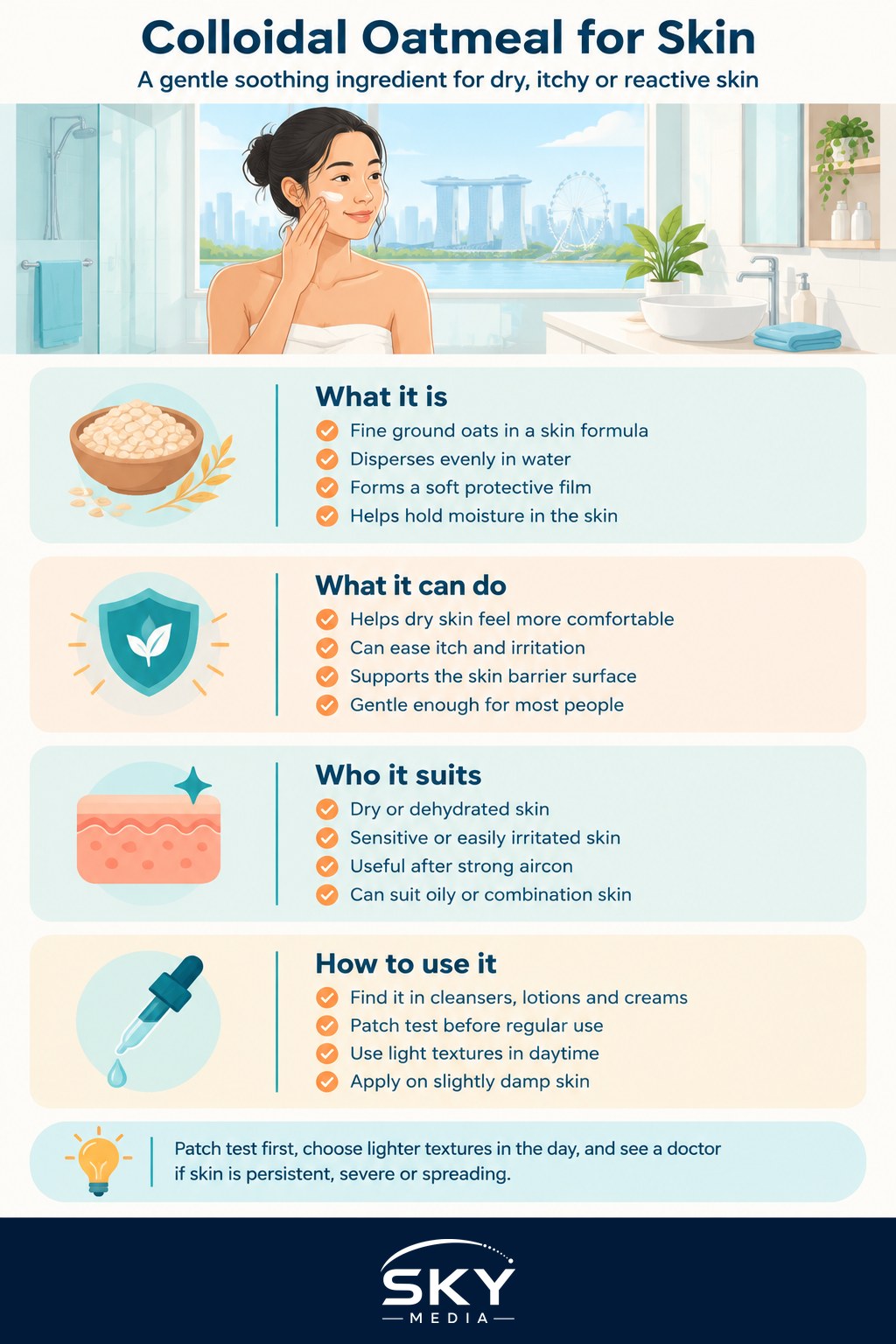
Colloidal oatmeal is simply whole oats ground into a very fine powder and processed so that it disperses evenly in water and in a formula. It is not the same as sprinkling breakfast oats into your bath, though the idea is related. That fine, even texture is what lets it coat and cling to the skin.
What makes it useful is its natural mix of components. Oats contain starches and beta-glucans that hold water and form a soft, protective film, along with compounds called avenanthramides that are associated with soothing and calming effects. Together these give colloidal oatmeal a triple appeal: it helps hydrate, it helps buffer and protect the skin surface, and it helps calm the feeling of itch and irritation.
Because it supports the skin surface and helps hold moisture, it fits naturally into a barrier-friendly routine. If your skin often feels tight, rough or reactive, our guide on repairing your skin barrier is a useful companion, since colloidal oatmeal works by supporting that same surface.
What It Can and Cannot Do
Here is the honest scope. Colloidal oatmeal is very good at making dry, itchy, tight or generally irritated skin feel more comfortable. It is gentle enough for most people, including those with easily upset skin, and it is a mainstay of products designed for exactly that job.
What it is not is a treatment for a diagnosed skin condition. People often reach for oatmeal-based products when their skin is flaring, and while these can genuinely help the skin feel calmer, colloidal oatmeal is a cosmetic comforter, not a cure. This is general cosmetic information, not medical advice. If you have persistent, spreading, weeping or severe itchy skin, or anything that keeps coming back, please see a doctor or dermatologist to have it properly assessed rather than managing it with lotions alone.
One more honest note. Oats are a grain, and although reactions are uncommon, they are not impossible, particularly for anyone with a known grain or gluten sensitivity affecting the skin. That makes patch testing genuinely worthwhile here rather than a box-ticking formality.
Who It Suits in Singapore
Colloidal oatmeal suits dry, dehydrated, sensitive and easily irritated skin especially well. If your skin is tight and flaky, our guide to caring for dry and dehydrated skin pairs naturally with it.
It also has some very Singapore-specific uses. Long hours in strong aircon can leave skin parched and itchy, and a gentle oatmeal lotion is a comfortable way to relieve that. After a day of strong sun, oatmeal-based products can help skin feel soothed, which our piece on after-sun care and treating sunburn touches on, though genuine sunburn always calls for cool, careful care first.
Even oily and combination skin can use it, since it is light and not inherently greasy. The key, as always in our humidity, is choosing the right texture.
How to Use It Sensibly
You will most often meet colloidal oatmeal in cleansers, lotions, creams and masks rather than as a raw ingredient you add yourself. A few pointers help you get the best from it.
- Patch test first, especially given the small chance of a grain sensitivity. Our guide on how to patch test new skincare shows you how, and it is worth the few days.
- Choose light textures for daytime in our humidity, and save richer creams for night or for particularly dry, aircon-parched patches.
- Apply calming products onto slightly damp skin to help lock in moisture.
- Introduce it on its own, without piling on other new actives at the same time, so you can judge how your skin responds.
- Do not use it on badly broken, blistered or infected skin, and see a doctor if that is what you are dealing with.
If you enjoy the ritual of a soak, a fine colloidal oatmeal added to a lukewarm, not hot, bath can be a comforting way to calm widespread dry itch. Keep the water cool rather than steaming, since hot water tends to dry and irritate skin further.
The Honest Wrap-Up
Colloidal oatmeal is one of the more reliable soothing ingredients out there, genuinely helpful for dry, itchy, tight and sensitive skin, and well suited to the aircon dryness and strong sun of life in Singapore. It hydrates, protects the surface and calms the feeling of irritation, all while being gentle enough for most people.
Just keep its role in perspective. It is a comforter, not a cure, so patch test before you start, favour lighter textures in our humidity, and keep it as part of a simple, barrier-friendly routine. If your skin problem is persistent, severe, spreading or keeps returning, see a doctor or dermatologist to get it properly looked at rather than relying on any single soothing ingredient.
Frequently Asked Questions
Can I add colloidal oatmeal to my bath for itchy skin? A fine colloidal oatmeal in a lukewarm bath can be a comforting way to calm widespread dry itch. Keep the water cool rather than steaming, since hot water dries and irritates skin further. For severe or persistent itching, see a doctor.
Is oatmeal skincare safe if I have a gluten sensitivity? Reactions are uncommon but not impossible, particularly if a grain or gluten sensitivity affects your skin. Patch-test properly before using it widely, and check with a doctor or dermatologist if you know you react to grains.
Will an oatmeal lotion feel too heavy in humid weather? Not necessarily. Choose light textures for daytime and keep richer creams for night or for parched, aircon-dried patches. Applying calming products on slightly damp skin helps lock in moisture without adding a heavy feel.
Can colloidal oatmeal soothe skin after a day in the sun? It can help skin feel more comfortable after sun, but it is a comforter, not a repair. Genuine sunburn calls for cool, careful care and shade first. Blistered or badly burnt skin needs a doctor rather than a lotion.
Can oily skin use colloidal oatmeal products? Yes, since colloidal oatmeal is light and not inherently greasy. What matters is the product texture, so choose a gel-cream or lightweight lotion over a rich balm, and introduce it on its own so you can judge how your skin responds.