
Haze is hard on the eyes. Fine smoke particles land on the surface of the eye, the air feels drier when you shelter in aircon all day, and many people end up with red, gritty or watery eyes. If you wear contacts, that discomfort can be worse, because a lens can trap particles and reduce the tear film that normally washes them away. This guide to contact lenses haze care covers why lens wearers feel it more, when to switch to glasses, how lubricating drops fit in and which symptoms mean you should see an eye professional.
This is general information, not medical advice. Your optometrist, ophthalmologist or doctor knows your eyes and your lens type, so follow their guidance first.
Why Lens Wearers Feel the Haze More
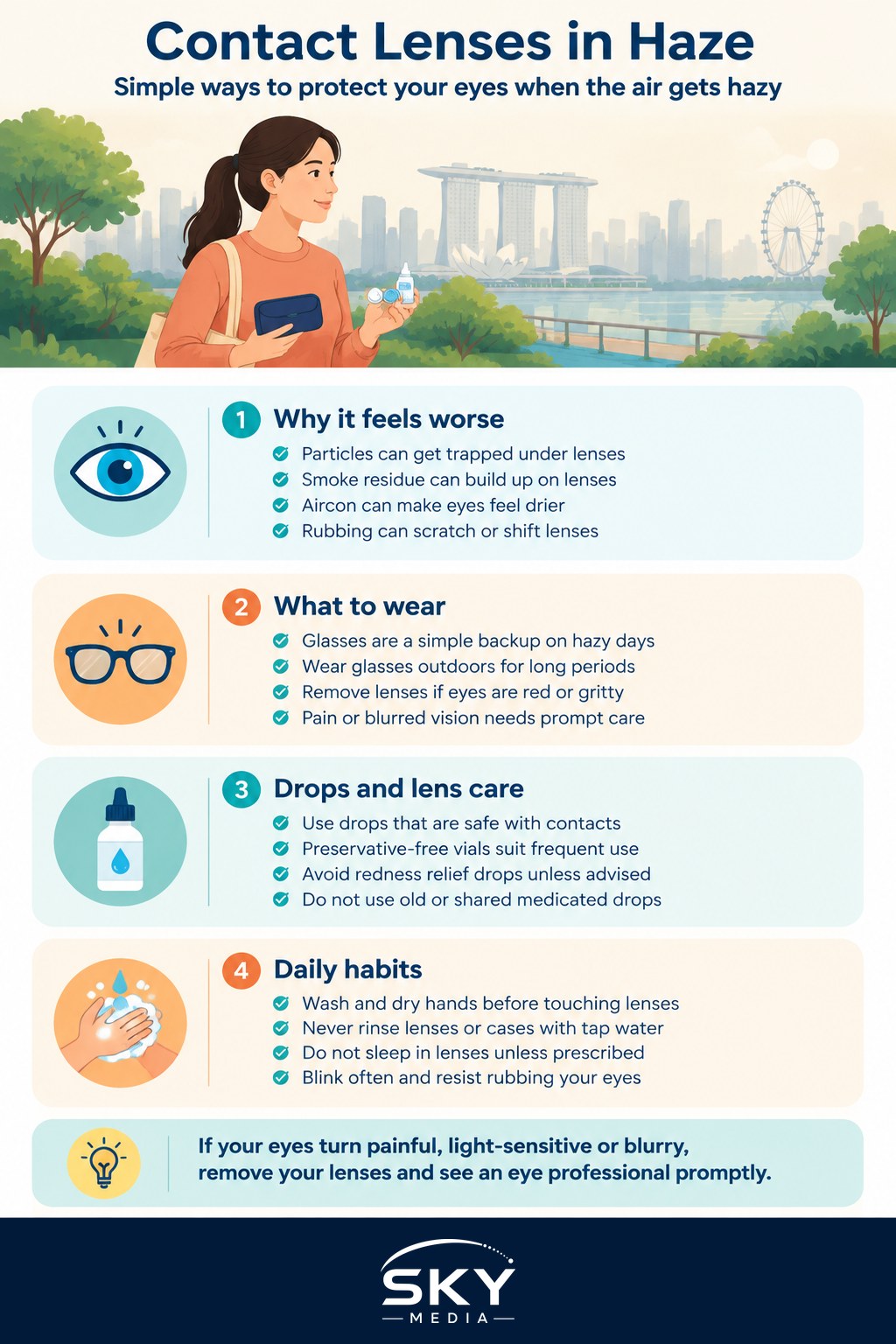
Several things combine during haze season:
- Particles get caught under the lens. The eye normally flushes debris with tears and blinking. A contact lens sits on the surface, and tiny particles can collect between the lens and the cornea, rubbing with every blink.
- Deposits build up faster. Smoke residue can stick to the lens surface, making it feel cloudy or uncomfortable by the end of the day, especially with reusable lenses.
- Drier eyes from aircon. Staying indoors with the aircon on for long hours lowers humidity. Contact lenses can feel drier in that environment, and dry eyes are more easily irritated.
- More rubbing. Itchy eyes invite rubbing, which pushes particles around and can scratch the eye surface or shift the lens.
None of this means lens wearers are in danger simply by wearing contacts on a hazy day, but it does mean you need to pay closer attention to how your eyes feel.
Glasses or Lenses: Choosing Day by Day
The simplest protection is to give your eyes a break. Many optometrists suggest wearing glasses on days when the air quality is poor, particularly if you will be outdoors. Glasses also act as a partial shield against drifting particles.
| Situation | Practical choice | Why |
|---|---|---|
| Mostly indoors, mild haze, eyes comfortable | Lenses are usually fine; keep wear time moderate | Less exposure, but watch for dryness from aircon |
| Outdoors for long periods during haze | Glasses, or wraparound sunglasses over lenses | Reduces particles reaching the eye surface |
| Eyes already red, gritty or watery | Remove lenses and wear glasses | Gives the eye surface time to settle |
| Pain, light sensitivity or blurred vision | Remove lenses and see an eye professional promptly | These can signal a problem that needs examining |
If you rely only on contacts, it is worth having a current pair of glasses ready before haze season. Our guide to getting spectacles and contact lenses explains how eye checks and prescriptions work here.
Daily disposables during haze
Some lens wearers find daily disposable lenses more comfortable during haze, because you start each day with a clean lens instead of one that may carry yesterday’s residue. Whether dailies suit you depends on your prescription and eyes, so discuss it with your optometrist before switching.
Using Lubricating Eye Drops Safely
Lubricating drops, often sold as artificial tears, can help rinse the eye surface and ease dryness. A few points matter for lens wearers:
- Check that the drops are suitable for use with contact lenses. Not all drops are. The packaging usually states this, and a pharmacist can help you choose.
- Preservative-free options in single-use vials are often recommended for frequent use. Ask your pharmacist or optometrist which suits you.
- Avoid “redness relief” drops unless advised. Some of these work by narrowing blood vessels and are not intended for routine use. They can mask a problem rather than treat it.
- Do not use medicated drops meant for someone else or old bottles past the period stated on the label after opening.
- Follow the instructions for how often to use them. If you find you need drops constantly, that is a sign to see an eye professional rather than to keep adding more.
Daily Habits That Protect Your Eyes
Small routines make a real difference during long haze spells:
- Wash and dry your hands thoroughly before touching your lenses or eyes.
- Never rinse lenses or cases with tap water or saliva. Use only the solution recommended for your lenses, and replace the case regularly.
- Do not sleep in lenses unless your optometrist has specifically prescribed lenses for that.
- Cut wear time on bad days. Taking lenses out earlier in the evening gives eyes a rest.
- Blink often, especially when looking at screens, since we blink less while focusing.
- Resist rubbing. If your eyes itch, remove the lenses with clean hands and use suitable drops instead.
- Keep indoor air cleaner. Closing windows during high readings and using an air purifier reduce the particles reaching your eyes at home.
- Wear sunglasses outdoors, preferably a wraparound style, to cut down on particles and glare.
If you also deal with itchy eyes from allergies, haze can make that worse; see our guide to protecting your health during the haze for wider measures such as checking NEA readings and reducing outdoor activity.
When to See an Optometrist or Doctor
Mild dryness and grittiness that settle after removing your lenses are common during haze. Some symptoms, though, should not be waited out, especially in lens wearers, because eye infections linked to contact lenses can progress quickly.
Remove your lenses and get your eyes checked promptly if you notice:
- Eye pain, not just discomfort.
- Increased sensitivity to light.
- Blurred or reduced vision that does not clear with blinking.
- Redness that is getting worse rather than better.
- Discharge, or a white spot on the coloured part of the eye.
- Symptoms in one eye that are much worse than the other.
An optometrist can examine the front of the eye and advise on your lenses. For severe pain, sudden vision changes or an eye injury, go to a doctor or the emergency department. Bring your lenses and case if you can, as they may help with checks.
Keep your lenses out until you have been told it is safe to wear them again.
Preparing Before Haze Season
A bit of preparation means you are not caught out when air quality drops:
- Book your routine eye check so your glasses and lens prescriptions are up to date.
- Keep a spare pair of glasses at work or in your bag.
- Buy lens-compatible lubricating drops in advance.
- Stock enough solution or daily lenses so you are not tempted to stretch wear beyond the recommended period.
If you are unsure where to go for an eye check, our overview of opticians in Singapore for glasses, lenses and eye tests is a useful starting point.
With glasses on standby and good lens habits, most lens wearers get through haze season with nothing more than the occasional uncomfortable afternoon.
Frequently Asked Questions
Are daily disposable lenses better than monthly ones during haze? Some wearers find dailies more comfortable because each day starts with a clean lens instead of one carrying yesterday’s smoke residue. Whether they suit you depends on your prescription and eyes, so discuss it with your optometrist before switching.
Can I use any eye drops with my contact lenses during haze? No, not all drops are suitable for lenses, and the packaging usually says so. Preservative-free single-use vials are often recommended for frequent use. Avoid redness relief drops unless advised, as they can mask a problem instead of treating it.
Is it okay to sleep in my contacts on a hazy night? Not unless your optometrist has specifically prescribed lenses for overnight wear. Sleeping in ordinary lenses can raise the risk of irritation and infection, and haze already dries and stresses the eye. Take them out earlier on bad days to give your eyes a rest.
What should I do if my eye feels gritty but the lens looks clean? Remove the lens with clean hands, wear glasses, and use lens-compatible lubricating drops if needed. Never rub the eye. Mild grittiness usually settles once the lens is out, but pain, worsening redness or discharge means an eye check.
How can I prepare my lens routine before haze season? Book a routine eye check so prescriptions are current, keep a spare pair of glasses at work or in your bag, and buy lens-compatible drops in advance. Stock enough solution or daily lenses so you are not tempted to stretch wear.
Official sources: National Environment Agency (NEA)
Further reading: Coloured Contact Lenses in Singapore: Safe Buying and Wear · Working During the Haze: What MOM Guidelines Mean for Staff