
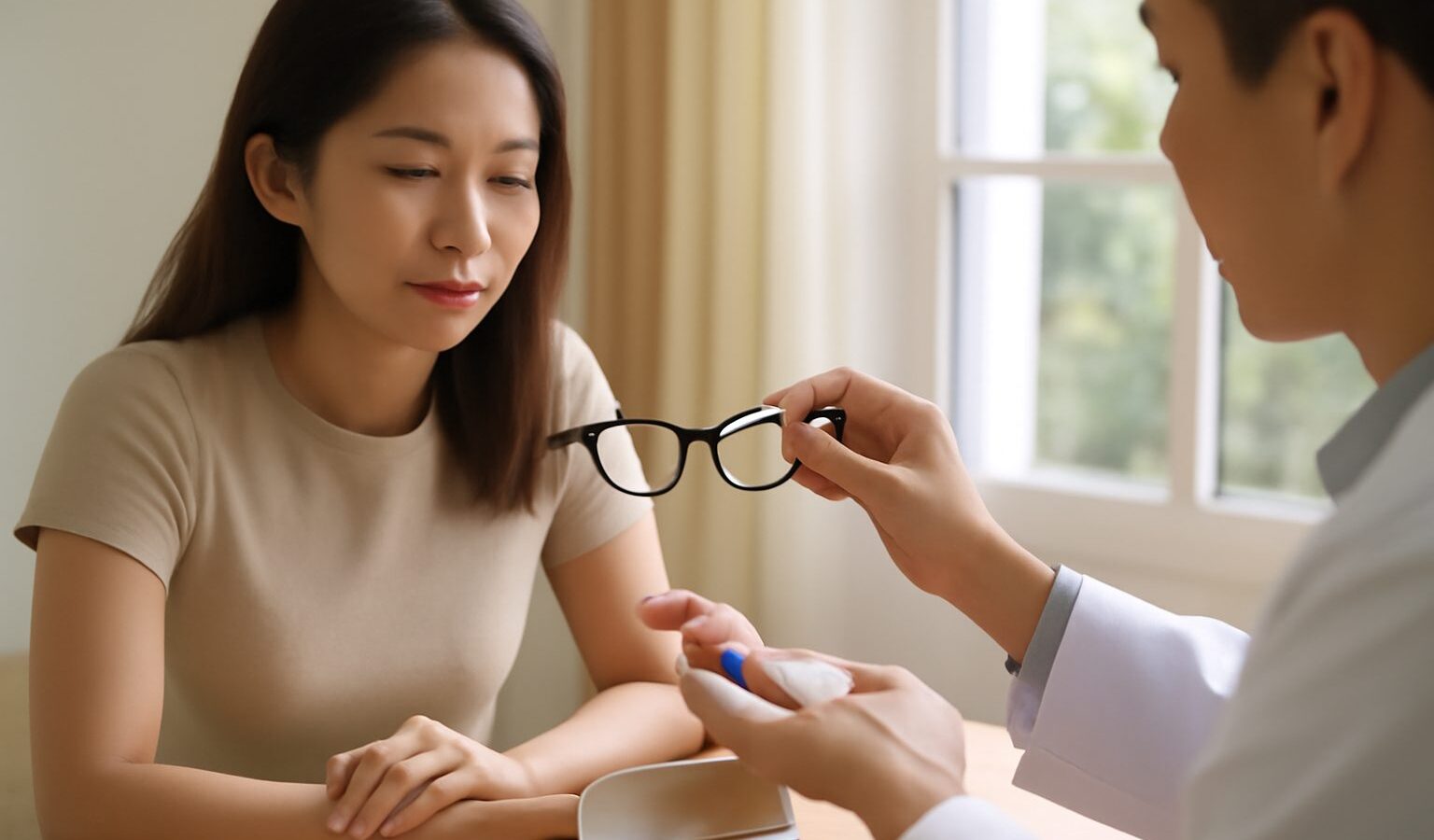
Clear vision shapes daily life, from reading a bus number to working at a screen all day. Buying spectacles Singapore residents wear every day is usually straightforward, but a little knowledge helps you get the right prescription, the right lenses and a pair that lasts. This is general information rather than medical advice, and any concern about your eyes should be discussed with an optometrist or a doctor.
Whether you are a first-time wearer or updating an old pair, the process comes down to three things: an accurate eye test, understanding what you are buying, and looking after your eyes properly once you have your glasses or lenses.
Getting an Eye Test and Reading Your Prescription
Everything starts with a proper eye examination by a trained optometrist. This is more than reading letters off a chart. A good test measures how well each eye focuses, checks how your eyes work together, and screens for early signs of eye-health problems. Many opticians offer this on the spot, and it is worth booking a test even if your current glasses still feel fine, since vision changes gradually and you may not notice until it is corrected.
Adults generally benefit from an eye check every couple of years, and sooner if you notice blurring, frequent headaches, eye strain at the screen, or trouble seeing at night. Children should be checked regularly too, as short-sightedness often develops and progresses during the school years, and Singapore’s environment sees a lot of it.
When your test is done, you receive a prescription. It can look like a jumble of numbers, but the basics are simple. The columns usually cover each eye separately. The sphere value shows the strength needed to correct short-sightedness (a minus figure) or long-sightedness (a plus figure). The cylinder and axis values describe astigmatism, a common irregularity in the shape of the eye. An addition value appears if you need extra help for close work, as with reading or varifocal glasses.
You are entitled to a copy of your prescription, and keeping it means you can compare options or shop around rather than feeling locked in. If anything on it is unclear, ask the optometrist to explain what each figure means for you.
Choosing Frames and Lenses
With a prescription in hand, the fun part begins. Frames are partly about looks and partly about fit. A frame that sits well, does not pinch behind the ears and holds its position when you look down will feel comfortable all day, so try several and move around in them rather than judging only in the mirror. Lighter materials suit strong prescriptions, and sturdier hinges suit anyone rough on their glasses.
Lenses are where quality quietly makes a difference. Thinner high-index lenses keep strong prescriptions from looking bulky. An anti-reflective coating cuts glare from screens and night driving. A scratch-resistant coating extends the life of the lens, and some people add a filter aimed at reducing screen glare during long computer sessions. If you spend time outdoors, photochromic lenses that darken in sunlight or a separate pair of prescription sunglasses protect against ultraviolet light, which matters under a strong tropical sun.
Prices vary widely between a basic pair and a fully coated, high-index one, so decide which features genuinely suit your daily habits rather than paying for extras you will not use. A clear conversation with the optician about how and where you use your eyes helps them recommend sensibly.
Contact Lenses and Eye Health
Contact lenses offer freedom for sport, travel and simply not having frames on your face, but they sit directly on the eye and so demand more care than spectacles. A first-time wearer should be fitted by a professional, who checks that the lens suits the shape of your eye and teaches you how to insert, remove and clean them.
Good hygiene is not optional. Wash and dry your hands before touching lenses, use fresh solution every time rather than topping up old liquid, and never rinse lenses or their case in tap water. Replace the case regularly and follow the wearing schedule for your lens type, whether daily disposables or a longer-wear design.
One rule protects your eyes more than any other: do not sleep in your lenses unless they are a type specifically approved for overnight wear and your optometrist has said it is fine. Sleeping in ordinary lenses starves the eye of oxygen and sharply raises the risk of infection. Likewise, do not wear lenses in a pool, the sea or the shower, where water carries organisms that can cause serious harm.
Stop wearing your lenses and see a doctor or optometrist promptly if you notice pain, persistent redness, blurred vision, unusual sensitivity to light or discharge. These can be signs of an infection that needs proper treatment, and pushing through is never worth the risk to your sight.
Here is a quick comparison to help you weigh up your options.
| Option | Best suited to | Keep in mind |
|---|---|---|
| Everyday spectacles | Most wearers, all-day comfort | Simple, low maintenance, protects the eye surface |
| Prescription sunglasses | Outdoor use, driving | Choose lenses that block ultraviolet light |
| Daily disposable lenses | Occasional or active use | Fresh pair each day, no cleaning, higher ongoing cost |
| Reusable lenses | Regular contact wearers | Strict cleaning routine, replace on schedule |
| Varifocal lenses | Needing both distance and reading | Takes time to adjust, professional fitting helps |
It also helps to have a backup pair of spectacles even if you mainly wear contact lenses. Eyes get tired, infections happen, and there will be days when lenses simply are not comfortable, so a spare pair of glasses keeps you seeing clearly without pressure to push through. Keep your old glasses when you update your prescription, as they make a useful emergency backup even if the strength is slightly out of date.
Whichever route you take, treat your eyes as worth the small effort. Book regular checks, buy from an optician who explains your options clearly, store your lenses and solutions as directed, and never ignore pain or a sudden change in vision. Good habits keep both your glasses and your eyesight serving you well for years.