
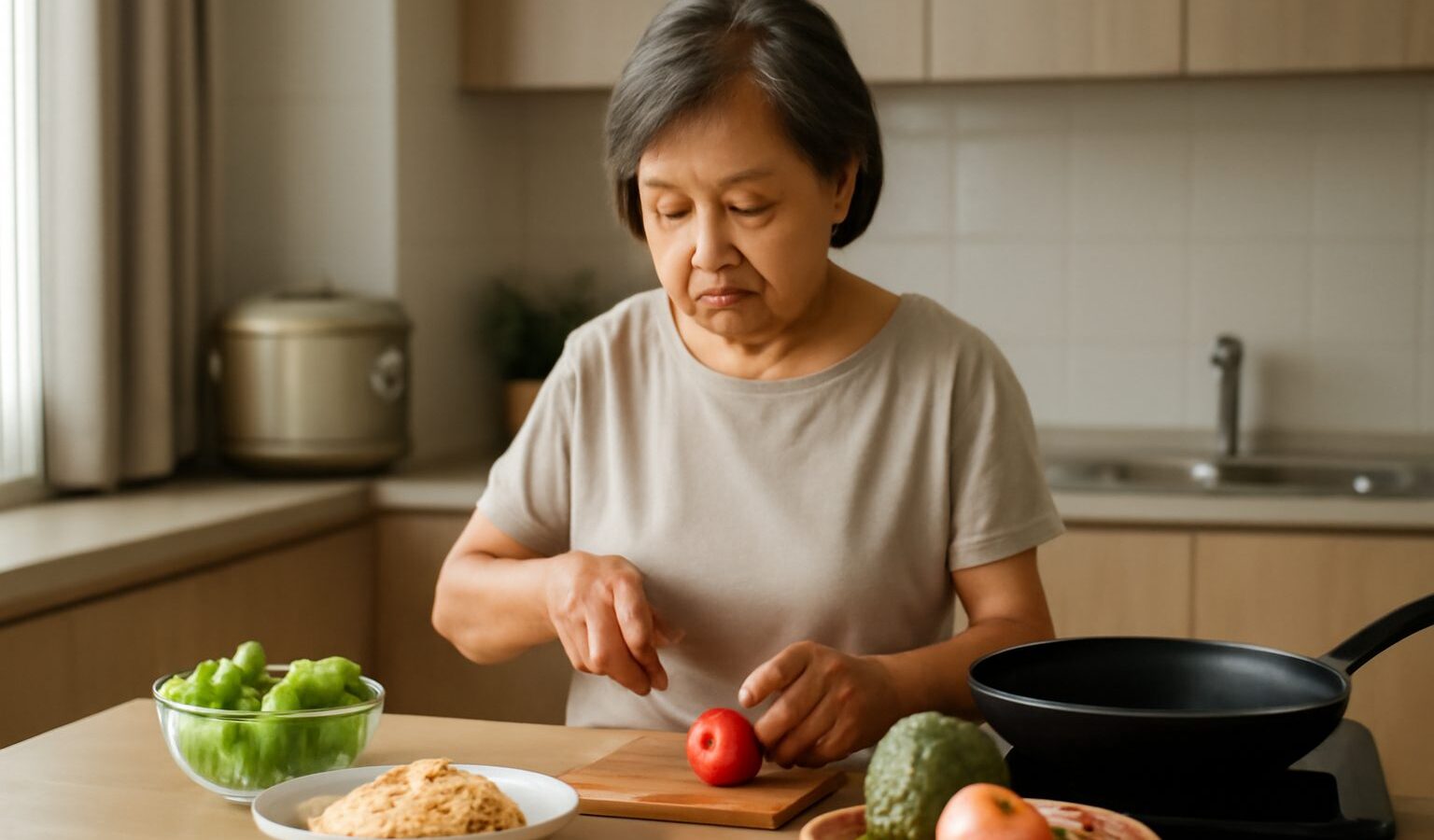
Cooking for one can feel strange after years of preparing meals for a family or a spouse. For many seniors, learning to cook just for themselves comes after the loss of a partner or a move to living alone, and it carries feelings as much as recipes. Cooking for one later life singapore residents can find manageable and even enjoyable once they settle into a rhythm that suits a single household. This article offers gentle, general ideas for eating well when it is just you at the table. It is not dietary advice for any medical condition, so if you have specific health needs, please check with your doctor or a dietitian.
When cooking alone feels heavy
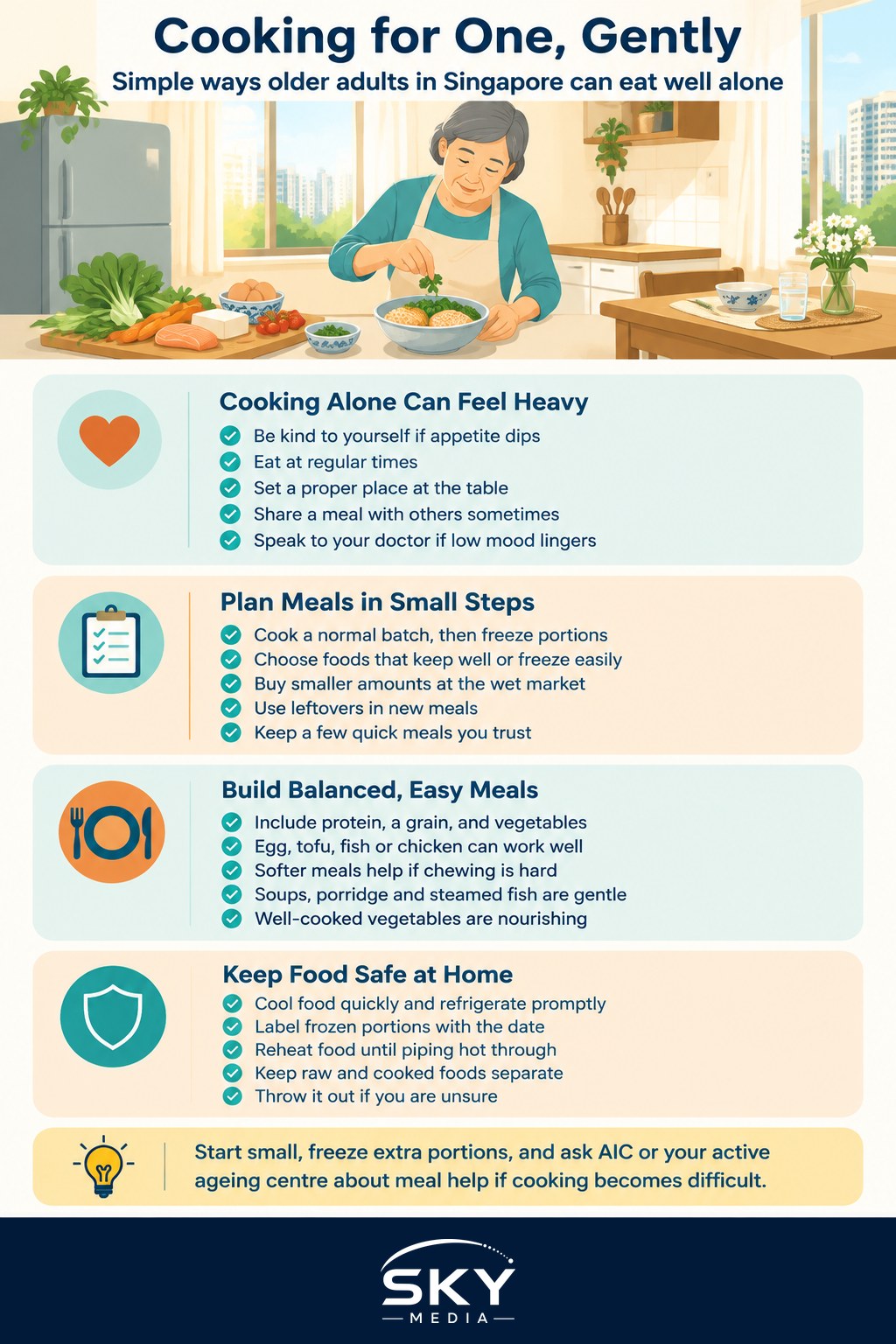
If you are cooking for yourself for the first time in a long while, be kind to yourself. It is common to lose interest in food when you eat alone, especially in the early months after losing a spouse, and appetite can dip when meals feel lonely. There is nothing wrong with you if this happens. Small steps help: eating at regular times, setting a proper place at the table, or sharing a meal with a neighbour, friend or family member now and then. If low mood or loss of appetite lingers, it is worth speaking to your doctor. Our articles on coping with the loss of a spouse and combating loneliness in older age offer companionship for this part of the journey.
Portioning and planning for one
The trickiest part of cooking for one is scale, because recipes and packets are usually made for families. A few habits make it easier:
- Cook a normal-sized batch, then divide it into single portions and freeze most of them. On tired days you have a home-cooked meal ready.
- Choose ingredients that keep well or freeze in small amounts, such as eggs, tofu, frozen fish and frozen vegetables.
- Buy smaller quantities at the wet market, where you can ask for just a piece of fish or a handful of vegetables.
- Repurpose leftovers, turning yesterday’s steamed chicken into today’s porridge or noodle bowl.
- Keep a few reliable, quick meals in your repertoire so you never feel stuck.
Nutrition still matters when you cook for one. Try to include a protein such as egg, tofu, fish or chicken, a grain, and some vegetables in most meals, because protein helps protect your muscles and keep you steady on your feet. If chewing is a challenge, softer meals like soups, porridge, steamed fish and well-cooked vegetables are gentle and nourishing. For more on building balanced meals affordably, see our guide to eating on a budget in retirement.
Food safety when you live alone
When you cook and store food for one, safe handling matters, because a small kitchen slip can lead to a stomach upset that hits older bodies harder. Keep a few basics in mind:
- Cool cooked food quickly and refrigerate it promptly, rather than leaving it out in our warm climate.
- Label frozen portions with the date, and use them within a sensible time.
- Reheat food thoroughly until it is piping hot all the way through, and do not reheat the same dish over and over.
- Keep raw and cooked foods separate, and wash hands and surfaces well.
- When in doubt about whether something has gone off, throw it out. It is not worth the risk.
If your eyesight or sense of smell has faded, dating your food and keeping your fridge tidy help you judge freshness. Simple routines protect you without fuss.
Getting help when cooking is hard
There may come a time when standing at the stove is tiring or unsafe, and that is nothing to be ashamed of. Singapore has meal delivery services and grocery help for seniors, some of which may be subsidised, and community meal programmes through active ageing centres. The Agency for Integrated Care, or AIC, and your nearest active ageing centre can advise on what is available and whether you qualify, so ask them directly since details change over time. Our guide to meal delivery and grocery help for seniors explains the options.
Cooking for one is a skill and a comfort you can grow into. Start small, keep it simple, freeze extra portions, and let others share a meal with you when they can. Nourishing yourself well is a quiet act of self-respect, and on the days it feels hard, remember that help and company are always within reach.
Frequently Asked Questions
How long can cooked food stay in the fridge or freezer? It depends on the dish, but cooked food should go into the fridge soon after cooling and be eaten within a few days. Frozen portions keep longer, though quality drops over time. Label everything with the date and throw out anything you doubt.
What are quick meals for one that need little cooking? Scrambled or steamed eggs with rice, tofu with vegetables, plain porridge topped with shredded chicken, or soup noodles with a handful of greens all take minutes. Frozen vegetables and fish make these even easier. Keep a few staples at home so you are never stuck.
Is a toaster oven or rice cooker better for a senior who lives alone? A rice cooker is simple, affordable and safe for porridge, steamed dishes and one-pot meals, and many models switch off automatically. A toaster oven suits reheating and baking. Whatever you pick, choose appliances with auto shut-off and easy controls.
How do I stop wasting food when I cook for one? Shop in small amounts, plan a few meals around the same ingredients and freeze extra portions straight away. Turn leftovers into a new dish, such as chicken into porridge. Check the fridge before shopping so you do not double up.
Why have I lost interest in eating since I started living alone? Eating alone often dulls appetite, and grief or loneliness can make it worse. Try regular mealtimes, a proper place setting, or sharing a meal with someone now and then. If it continues or you are losing weight, speak to your doctor.
Further reading: Dating and Remarriage in Later Life: A Singapore Guide