
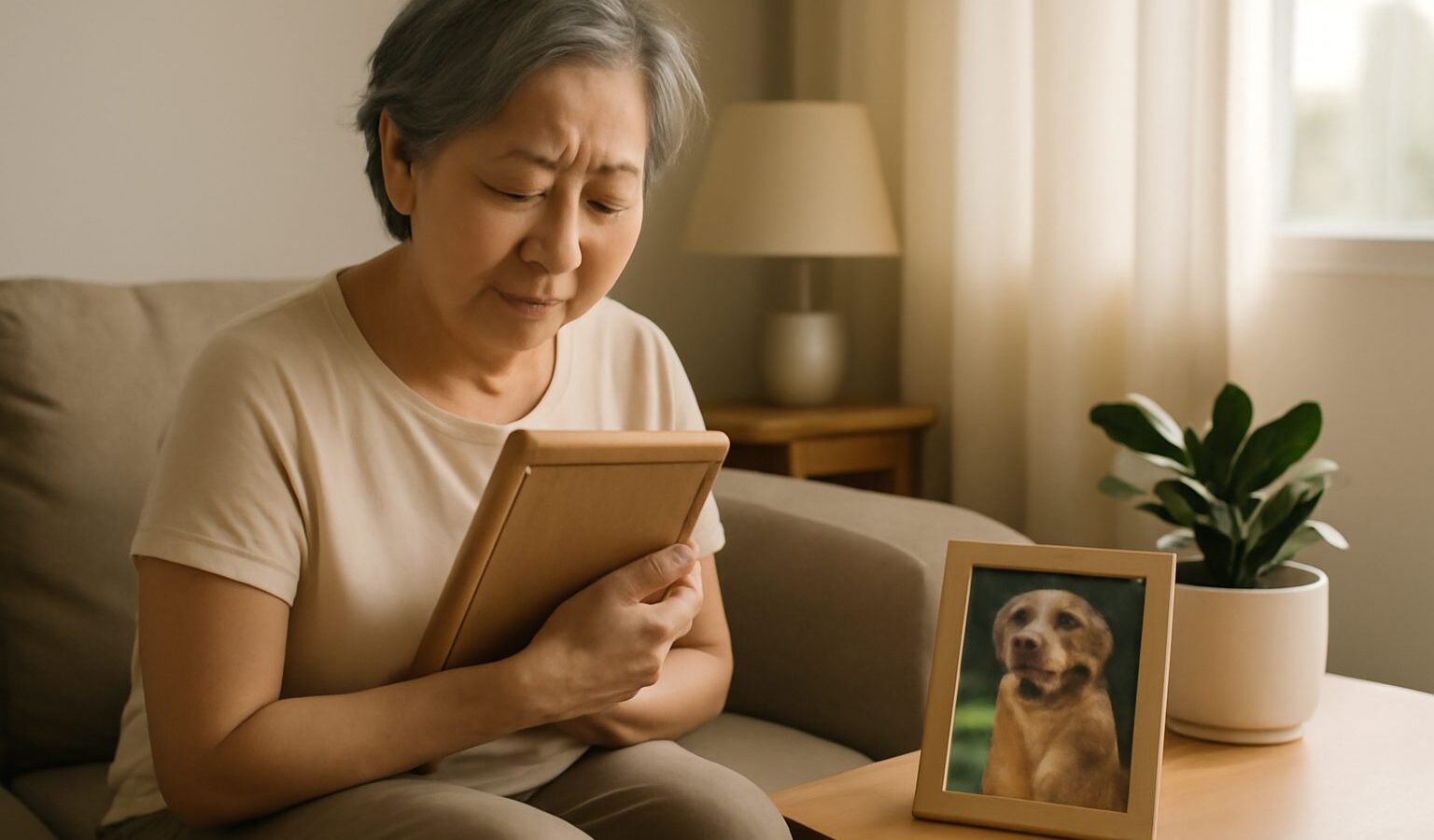
For many older people, a dog or cat is far more than a pet. It is the reason to get up at the same time every morning, the companion on evening walks, and the one who is always there when the house is quiet. So when that animal dies, the grief can be overwhelming. Pet loss grief in elderly owners is often deeper than friends and family expect, and it deserves the same care and understanding as any other loss.
This guide is for seniors who have lost a beloved animal, and for the adult children and friends supporting them. It covers why the grief can hit so hard, practical aftercare options in Singapore, ways to cope, and how to think about whether to welcome another animal.
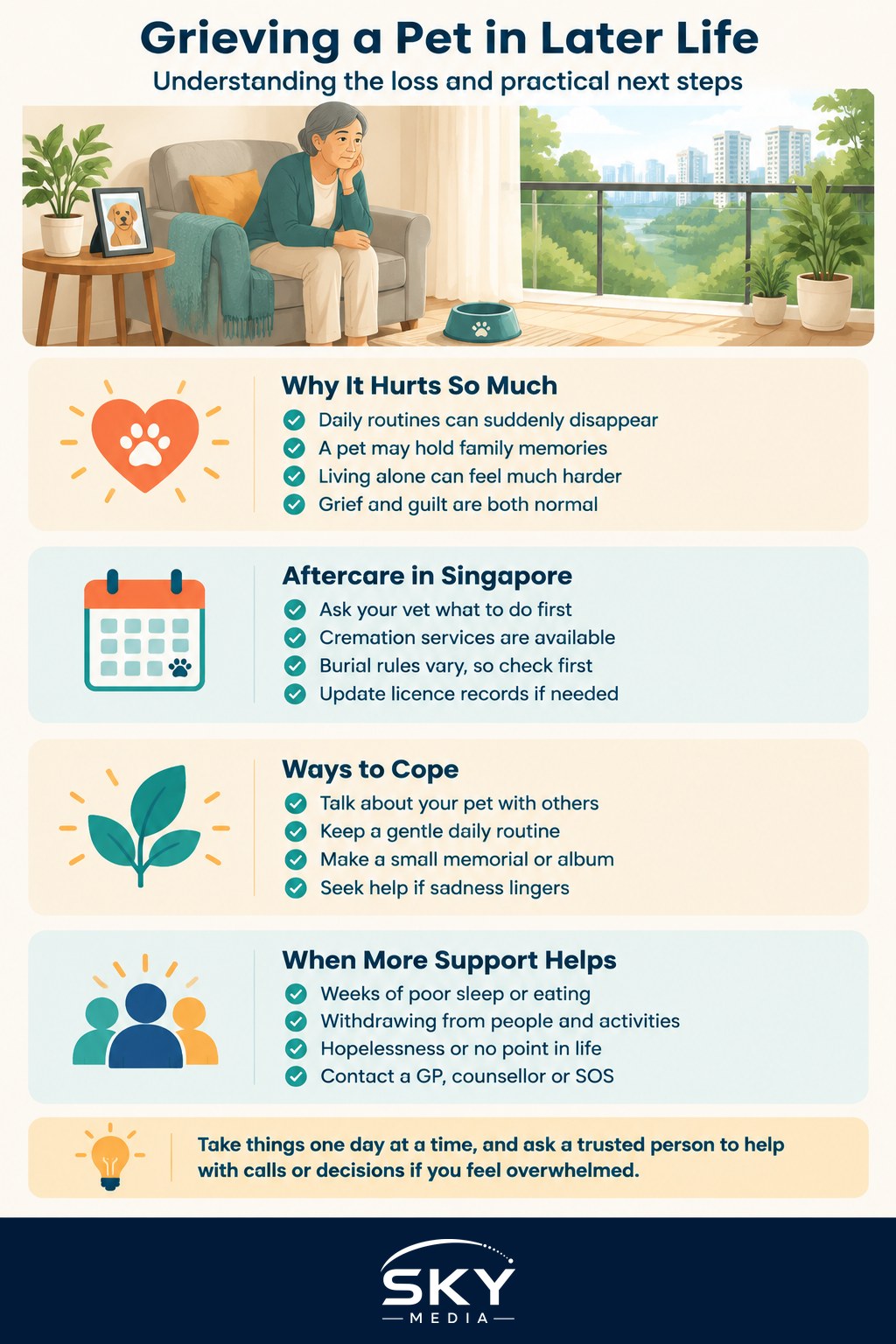
Why Losing a Pet Hurts So Much in Later Life
Older owners often share more hours of the day with their animal than anyone else. After retirement, or after losing a spouse, a pet can become the main source of routine, touch and conversation. Several things make the loss especially heavy:
- Daily structure disappears. Feeding times, walks and grooming may have shaped the whole day.
- The pet may link to other memories. Perhaps it was adopted with a late husband or wife, or given by a grandchild.
- Living alone becomes more noticeable. The silence in the flat can feel sudden and sharp.
- Others may not understand. Comments such as “It was only a cat” can make a person feel their grief is not allowed.
- Guilt is common, especially if the owner had to agree to euthanasia or feels they missed signs of illness.
All of these feelings are normal. Grief does not follow a neat timetable, and there is no “right” length of time to feel sad.
Practical Aftercare Options in Singapore
When a pet dies, there are decisions to make quickly, often at a very emotional moment. It can help to have a family member or friend handle the calls.
- Ask your vet first. If your pet died at the clinic or under its care, the vet can usually explain the options and may help arrange aftercare.
- Pet cremation services. Private companies in Singapore offer cremation. Some return the ashes, others offer communal cremation where ashes are not returned. Ask clearly what is included, how the pet is collected, and what the costs are before agreeing.
- Keeping ashes or a memorial. Many families keep ashes in an urn at home, scatter them where permitted, or keep a paw print, collar or photo.
- Burial. Burying a pet in public spaces such as parks, beaches or common areas of HDB estates is generally not permitted. Check with the relevant authority, such as NParks or AVS (the Animal and Veterinary Service), before considering any burial.
- Licence records. If your dog, or cat where licensing applies, was licensed, check with AVS on whether you need to update their records after the animal has died.
Rules and services change over time, so confirm the current details with your vet and AVS.
Healthy Ways to Cope, and What Tends to Make It Harder
| Helps | Can make grief harder |
|---|---|
| Talking about your pet with people who knew it | Keeping all feelings to yourself |
| Keeping a gentle daily routine, such as a morning walk | Staying indoors all day with nothing planned |
| Creating a small memorial or photo album | Hiding every reminder straight away out of pain |
| Allowing yourself to cry and feel sad | Telling yourself you “should” be over it |
| Reaching out to a counsellor or doctor if sadness persists | Ignoring poor sleep, appetite loss or hopelessness |
Some other ideas many people find comforting:
- Write a letter to your pet, saying what you are grateful for and what you miss.
- Keep the routine, change the purpose. If you walked your dog at 7am, keep walking at 7am, perhaps with a neighbour.
- Give away items slowly. Donating unopened food or toys to an animal welfare group can feel meaningful, when you are ready.
- Mark the date. Some people light a candle or visit a favourite spot on the anniversary.
- Find a new reason to step outside. Gardening, community activities or volunteering can gently fill the gap. See our piece on the benefits of gardening in later life for ideas.
When Grief Needs More Support
Pet grief is real grief. If it continues for a long time, or makes daily life very difficult, it is worth getting help. Watch for:
- Not eating or sleeping properly for weeks
- Withdrawing from friends, family and activities
- Feeling hopeless or that life has no point
- Grief bringing back strong feelings about earlier losses, such as a spouse
A GP or polyclinic doctor is a good first contact and can refer you for counselling. Family service centres and community organisations may also offer support or know where to point you. If you or someone you know is in distress or having thoughts of self-harm, contact the Samaritans of Singapore (SOS) on 1767, or go to the nearest hospital emergency department.
Our wider guides on coping with grief and loss and coping with the loss of a spouse may also help, especially if the death of a pet reopens older sorrows.
How Family and Friends Can Help
If your parent or older relative has lost a pet:
- Take the loss seriously. Say “I’m so sorry, I know how much she meant to you”, not “You can get another one”.
- Visit or call more often in the first weeks, when the silence is hardest.
- Help with practical tasks, such as arranging cremation or clearing away items when they are ready.
- Share memories and photos. Hearing others remember the pet fondly is comforting.
- Do not rush them into adopting again.
Should You Adopt Another Pet?
There is no single right answer. Some people feel ready within weeks, others never want another animal, and both are valid. Questions worth asking yourself:
- Am I adopting to replace, or to welcome? A new animal will have its own personality. Expecting it to be like the old one can lead to disappointment.
- Can I manage the physical demands? Consider walking, lifting, grooming and vet visits as you age.
- What happens if I can no longer care for it? Talk to family about a backup plan.
- Does my home allow it? HDB flats only allow certain dog breeds, and rules for cats have been updated in recent years, with licensing being introduced. Check the current rules with HDB and AVS before adopting.
- Would an older animal suit me better? Senior dogs and cats are often calmer and need less training. Many shelters and animal welfare groups have older animals looking for homes.
If you are not ready to commit, fostering, volunteering with an animal welfare group, or helping care for a friend’s pet can bring companionship without long-term responsibility. Our guide to companion pets for seniors looks at which animals tend to suit older owners.
A Loss Worth Honouring
A companion animal shares years of your life without asking for much in return. Missing them deeply is a sign of how much that bond mattered. Be patient with yourself, lean on the people around you, and seek help if the sadness does not ease. In time, the memories tend to bring more warmth than pain.
Frequently Asked Questions
How do we explain a pet’s death to a young grandchild? Use simple, honest words and avoid phrases such as “went to sleep”, which can frighten some children. Let them ask questions, cry and share memories, and include them in any small farewell if they wish. Seeing a grandparent grieve openly also tells a child that sadness is normal.
Will my other pet grieve when its companion dies? Many surviving animals seem unsettled, with changes in appetite, sleep or clinginess. Keep feeding and walking times steady and give extra attention without forcing it. If the changes last or your pet stops eating, ask your vet to check for a health problem.
Is there any support available for grief after losing a pet? Start with a GP or polyclinic doctor, who can refer you for counselling if needed. Family service centres and community organisations may also help or point you to the right place. In a crisis or if you have thoughts of self-harm, call Samaritans of Singapore on 1767.
Can I keep my pet’s ashes at home? Many families keep ashes in an urn at home, which is a personal choice. Scattering is only suitable where it is permitted, so check with the relevant authority before choosing a place. Ask the cremation service what is returned to you, since communal cremation may not return ashes.
What can I do if my elderly parent refuses to talk about the loss? Do not push. Stay close, keep routines steady and share a happy memory of the pet without expecting a response. Some people need time before they can speak. If your parent stops eating, sleeps badly or seems hopeless for weeks, gently suggest seeing a doctor.
Further reading: Losing an Adult Child in Later Life: Grief and Support for Older Parents