

Relocating together is hard enough. Doing it and then finding yourself alone in a new country while your other half is away on business is a particular kind of challenge. Many people move here as a couple or a family, only to discover that one partner’s job involves regular travel across the region. If your partner travels for work singapore can feel very big and very unfamiliar during those stretches, especially in the early months before you have found your feet. This guide is here to help you not just cope, but genuinely build a good life around those absences.
Acknowledge that it is genuinely hard
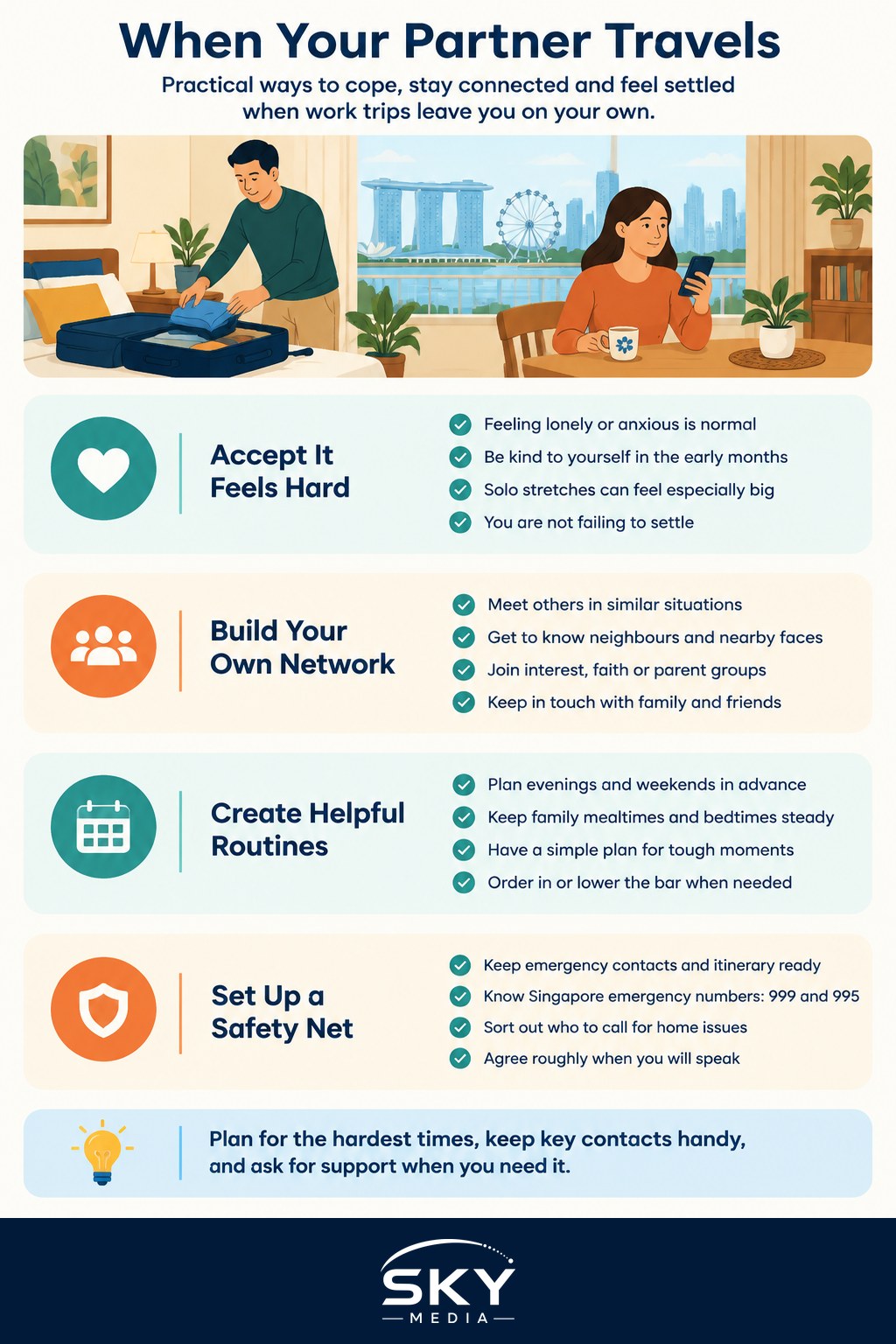
First, be kind to yourself. It is completely normal to feel wobbly when your partner is away, particularly when you are also new, still learning the systems and perhaps managing children solo. You may feel lonely, anxious or simply worn out from carrying everything. None of that means you are failing to settle. It means you are human, doing something difficult in an unfamiliar place.
Naming the feeling helps. So does remembering that Singapore is one of the safest and most convenient places in the world to be on your own, which removes a great deal of the practical worry. The task is less about survival and more about turning solo time from something you dread into something you can handle, and occasionally even enjoy.
Build your own support network
The single most important thing you can do is make sure your life here does not depend entirely on your partner. When they are the only person you know, their absence leaves a hole. When you have your own connections, the absence is manageable.
- Meet other people in similar situations. Trailing partners and travelling-spouse families are common here, and they understand exactly what you are going through. Our guide to helping your spouse settle as a trailing partner has more on building this independent footing.
- Get to know your neighbours. A friendly face on your floor or in your block is invaluable when you need a hand or just a chat, and joining a neighbourhood or residents group can speed this along.
- Find your communities. Interest groups, faith communities, parent circles and community centre classes all give you people to see whether or not your partner is around.
- Stay connected back home too. Regular calls with family and friends elsewhere are a real comfort, though try not to let them replace building a life here.
The wider effort of making friends in Singapore pays off double when you spend time solo.
Create routines that carry you through
Structure is your friend during solo stretches. Empty, shapeless days are when loneliness creeps in, so plan the times you know will be hardest. Think about the evenings and weekends your partner is usually away, and fill some of them in advance with something to look forward to, a class, a walk, a meal with a friend, a project at home.
If you have children, routines matter even more. Keeping mealtimes, bedtimes and weekend rhythms steady gives everyone a sense of security when one parent is missing. Prepare a simple plan for the tougher moments, such as a go-to activity for restless evenings or a backup for when you are exhausted. Solo parenting in a new country is genuinely demanding, so lower the bar, order in when you need to, and accept that some days you are just getting everyone to bedtime, and that is enough.
Sort out the practical safety net
A little preparation removes a lot of stress. Before your partner next travels, make sure you have the basics covered so you are never stuck.
- Keep an emergency contact list handy, including a trusted local person, your partner’s itinerary, and key numbers. Our guide to building an emergency contact list walks you through it.
- Know the emergency numbers. In Singapore, call 999 for the Police and 995 for an ambulance or the fire service.
- Have a plan for the household basics. Know who to call for a home issue, where the nearest clinic is, and how you would handle a sick child alone.
- Set up easy communication with your partner, agreeing roughly when you will speak so you are not left wondering.
Knowing you can handle whatever comes up makes the alone time far less daunting.
Look after yourself, not just everyone else
It is easy to pour all your energy into keeping things running and forget that you need care too. Protect a little time that is just for you, whether that is exercise, a hobby, rest or simply a quiet coffee. Watch out for the slow build of loneliness, and if you find your mood staying low or the isolation weighing heavily over weeks rather than days, reach out. Talk to trusted friends, and consider speaking to your GP or a support service, which can help more than you might expect. Our piece on overcoming loneliness as a new arrival offers gentle, practical steps.
It gets easier
The first few trips are usually the hardest, when everything is new and your local roots are shallow. As the months pass and your own network and routines take hold, your partner’s travel becomes just another part of life rather than a small crisis. You may even come to value the solo time, using it to pursue your own interests and prove to yourself how capable you are. Building an independent, connected life here is one of the best gifts you can give both yourself and your relationship, and it is very much within reach.
Frequently Asked Questions
How do I explain a parent’s work trips to young children? Use simple, honest words, such as telling them where the parent is going and when they will be back. A calendar or countdown helps little ones see the time. Keep routines steady, and make time for calls or messages so they stay connected.
What if I or my child falls ill while my partner is away? For minor illness, see a GP or polyclinic. For serious or sudden symptoms, call 995 or go to A&E. Keep your emergency list handy, and ask a trusted neighbour or friend in advance if they can help with children or a lift.
Is it a good idea to travel home while my partner is away? It can be, since spending that time with family is comforting and gives you support. Weigh the cost, travel time and children’s school schedules. Don’t use it as a substitute for building a life here, but as a welcome extra.
How can we stay close when we are apart so often? Agree on a rhythm of calls or messages that suits both time zones, and share small everyday details, not just logistics. Plan something to look forward to for when they return. Talk honestly about how the travel is affecting each of you.
Is it worth hiring help while my partner travels a lot? It can ease the load, especially with young children or no nearby family. Options include childcare, tutoring, occasional cleaning or a domestic helper. Weigh the cost against the support, and check the Ministry of Manpower for the rules on employing a helper.