
Done kindly, crate training a dog gives your pet a quiet, safe den of its own, a place to nap, settle and feel secure when the flat is busy or you step out. A crate is not a cage or a punishment. Used the right way, it taps into a dog’s natural liking for a small, sheltered spot, and it makes toilet training, travel and vet visits far easier. This guide walks you through choosing a crate, introducing it gently, and building up time so your dog comes to love its own space, with Singapore flats and our warm climate in mind.
Why a Crate Helps, and What It Is Not
A crate is a management and comfort tool, not a place to store a dog for hours. When your dog sees the crate as its own bedroom, you gain a calm spot for rest, a safe zone during thunderstorms or when guests visit, and a familiar bed for car rides or a stay at the vet. It also supports toilet training, because most dogs will avoid soiling where they sleep once they can hold on comfortably.
What a crate is not: it is not a solution for boredom, and it is not somewhere to shut a dog away for a full working day. Dogs are social and need company, exercise and mental stimulation. If nobody is home for long stretches, arrange a dog walker, a trusted neighbour or day care rather than relying on long crate stints. A crate should always feel like a choice, never a trap.
Choosing the Right Crate for Your Home
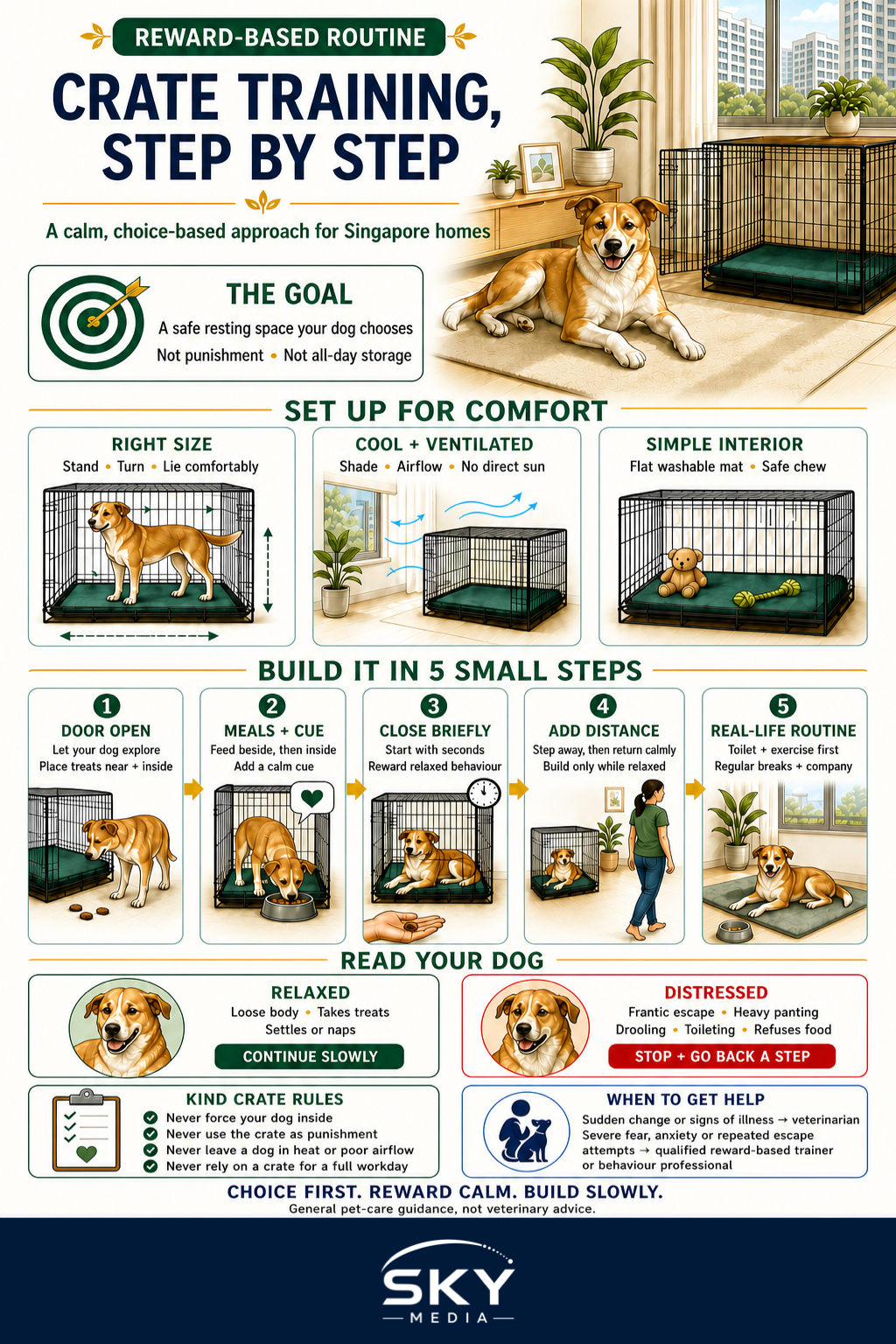
Size matters more than anything. The crate should be big enough for your dog to stand up without ducking, turn around, and lie down fully stretched, but not so cavernous that a puppy can toilet in one corner and sleep in the other. For a growing puppy, buy a crate sized for the adult dog and use a divider to shrink the usable space, moving it back as your puppy grows.
Common types you will see in Singapore pet shops:
- Wire crates: well ventilated, which suits our heat and humidity, and they fold flat for storage. A cover over part of the top can make them feel more den-like.
- Plastic airline-style crates: cosier and more enclosed, and the standard for air travel, though airflow is lower, so mind the heat.
- Fabric or soft crates: light and portable, but easy for a chewer or an anxious dog to escape or damage, so they suit dogs already settled with crating.
Set the crate in a spot the family uses but away from direct sun and out of the path of the aircon or a fan blowing straight in. Add a flat, washable mat or bed, and keep water available if your dog will be in it for more than a short spell, especially in warm weather.
Introducing the Crate Step by Step
Go at your dog’s pace. Rushing creates fear, and fear is much harder to undo than it is to prevent. Keep every session short, upbeat and reward-based. Positive reinforcement, praise, treats and calm attention, is the only method you need here. Never force your dog in, slam the door to make a point, or use the crate as a time-out for bad behaviour.
- Make it inviting. Leave the door open and let your dog explore freely. Drop a few treats near and inside, and place a favourite blanket or toy in there.
- Feed near then inside. Serve meals just outside the crate, then gradually move the bowl to the back so your dog walks in willingly to eat.
- Add a cue and reward. As your dog steps in, use a soft word like “bed” or “crate” and reward. Let your dog come and go at first.
- Close the door briefly. Once your dog is relaxed inside, shut the door for a few seconds while feeding treats, then open it before any fuss starts. Slowly extend the time.
- Add short absences. Step out of the room for a moment, then return calmly. Build up duration bit by bit, always ending on a good note.
A stuffed chew toy or a long-lasting treat gives your dog a pleasant job to do inside and helps the crate predict good things. Keep arrivals and departures low key so the crate does not become linked with the stress of you leaving.
Building Up Crate Time and Night Routines
For a puppy, the crate is a big help at night and a partner to toilet training. Puppies cannot hold their bladder for long, so a young pup will likely need a toilet break in the small hours. Place the crate in or near your bedroom at first so you can hear when your puppy stirs, take it out to toilet calmly with little fuss, then settle it back down. If you are also working on house habits, our guide to toilet training a puppy pairs neatly with a crate routine.
A rough rule for how long a dog can comfortably stay crated during the day is that a puppy manages only about its age in months plus one, in hours, and even that is a maximum, not a target. Adult dogs can rest longer but still need regular breaks, walks and company. Whenever you can, make time in the crate optional by leaving the door open around the home.
| Situation | Do | Avoid |
|---|---|---|
| First introduction | Toss treats in, door open, let the dog choose | Pushing or lifting the dog inside |
| Closing the door | A few seconds first, reward, build slowly | Long stretches on day one |
| Night-time (puppy) | Crate near you, calm toilet breaks | Ignoring genuine toilet whining |
| Whining for attention | Wait for a quiet pause, then reward calm | Letting out mid-whine every time |
| Time away from home | Walker, day care or family for long days | Using the crate for a full work day |
Learn the difference between an “I need the toilet” whine and an “I want attention” whine. Answer the first quickly and quietly. For the second, wait for a brief pause in the noise before you open the door, so calm, not fussing, is what gets rewarded.
Solving Common Crate Problems Gently
If your dog barks, whines or paws at the crate, resist the urge to punish. Usually it means you have moved too fast or the sessions have been too long. Go back a step, shorten the time, and rebuild the good associations. Make sure your dog has had a walk and a toilet break before crate time, because a dog full of energy or needing to go will not settle.
Some dogs show real distress when confined or left alone, panting hard, drooling, frantic escape attempts, toileting, or destroying bedding. This can point to separation anxiety rather than simple crate dislike, and forcing the issue makes it worse. In that case, work with a positive-reinforcement trainer or ask your vet for a referral. A sudden change in a previously settled dog, or signs your dog seems unwell, also deserves a vet check, since discomfort or illness can look like reluctance. This article is general guidance, not veterinary advice, so when something feels off, speak to a licensed vet.
Keep the crate a lifelong safe haven. Never use it in anger, never bang the door, and let your dog keep choosing to go in on its own. Done patiently, the crate becomes the one spot in the home your dog heads to for peace, which is exactly what you want.
Explore More
A crate makes house habits far easier, so read our companion guide to toilet training a puppy next. Once your dog is settled and confident at home, build outdoor manners with our guides to leash training and loose-leash walking and teaching a reliable recall.