
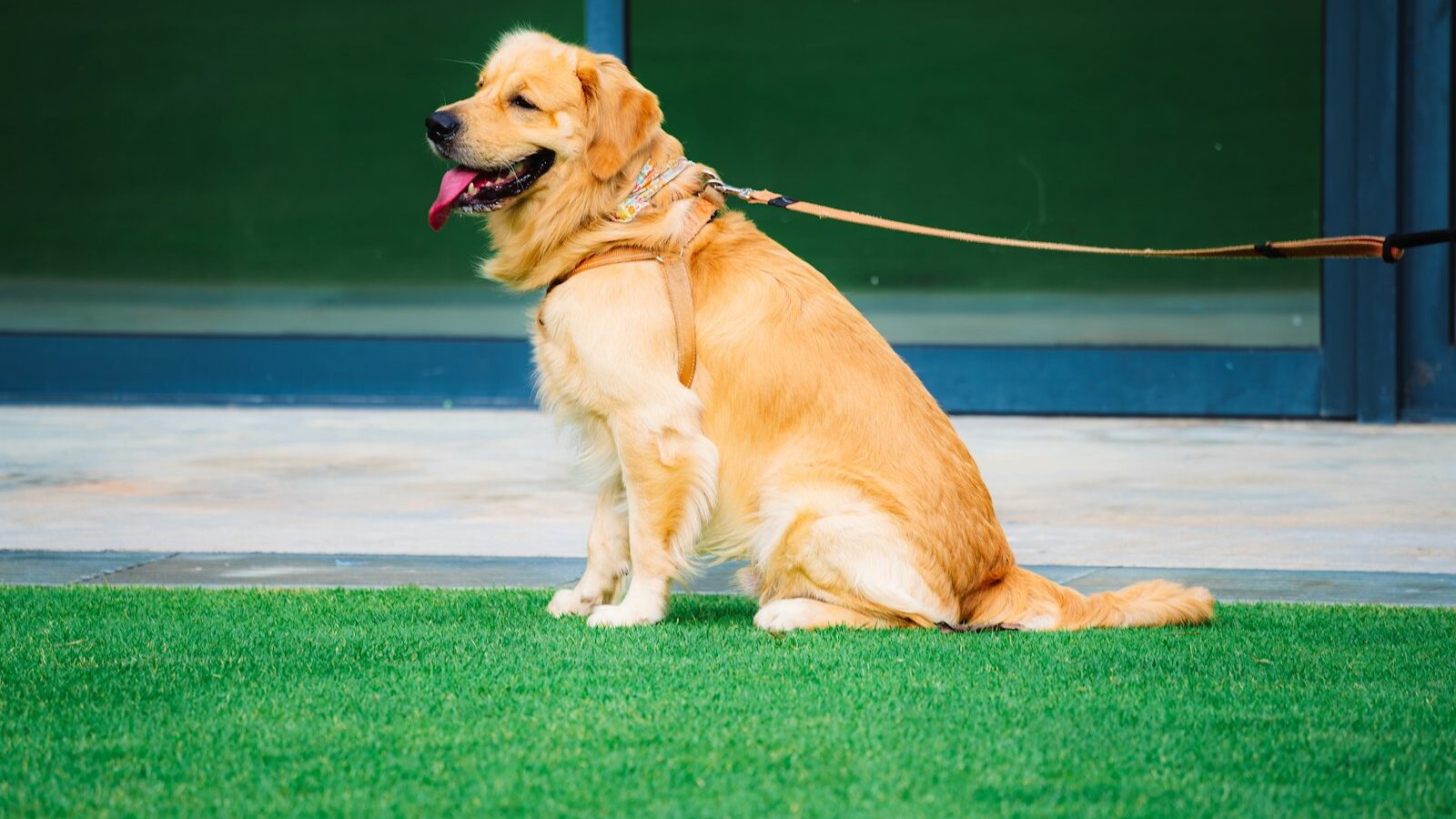
A dog that drags you down the corridor and hauls you around the block turns a pleasant walk into a workout for your shoulders. If you want to stop your dog pulling on the leash, the answer is not a harsher collar or more force, it is teaching your dog that a loose lead is the fastest way to get where it wants to go. Pulling is normal dog behaviour, not defiance: dogs walk faster than we do and the world is full of exciting smells. With the right gear, a bit of patience and reward-based training, most dogs learn to walk calmly beside you. Here is how to get there.
Why Dogs Pull, and Why Force Backfires
Dogs pull for a simple reason: it works. Every time a dog surges ahead and reaches the interesting lamp post, the tree or the friendly neighbour, the pulling is rewarded, and behaviour that gets rewarded gets repeated. Many dogs also have a natural opposition reflex, meaning that when they feel pressure on the lead, they lean into it rather than away. So the more you pull back, the harder your dog pulls forward.
This is why aversive tools such as choke chains, prong collars and shock collars are the wrong path. Beyond the welfare concerns, they can cause pain, fear and injury to the neck and throat, and they can make a dog associate the discomfort with whatever it was looking at, a person, another dog, or traffic, which can create fear or reactivity. Kind, positive-reinforcement training is both more humane and more reliable, because it teaches your dog what to do rather than punishing what not to do.
Get the Gear and Setting Right
The right equipment makes loose-leash training far easier and protects your dog’s neck.
- A well-fitted harness: a front-clip or Y-shaped harness spreads pressure across the chest instead of the throat and gives you gentle steering. This matters especially for small breeds and flat-faced dogs, whose airways are already delicate.
- A standard fixed-length lead: around 1.2 to 1.8 metres. Avoid retractable leads for training, since they teach a dog that pulling extends its range.
- High-value treats: small, soft, tasty morsels your dog does not get at other times, so walking near you is clearly worth it.
Start training somewhere calm and familiar, like a quiet corridor or void deck, before working up to busy pavements and parks full of distractions. In Singapore’s heat, walk in the cooler early morning or evening hours, bring water, and keep sessions short so neither of you overheats. Check that pavements are not scorching on paws before you set off.
Teach Loose-Leash Walking Step by Step
The core idea is straightforward: a loose lead lets the walk continue, while a tight lead makes it pause. Be consistent and your dog will quickly work out which one pays.
- Reward the right position. With your dog beside you and the lead slack, mark the moment with a word like “yes” and give a treat. Do this often at first so your dog learns that staying near you earns rewards.
- Stop when the lead tightens. The instant your dog pulls, stop walking and stand still like a tree. Do not yank back. Wait for the lead to slacken, or for your dog to glance back at you, then reward and move on.
- Change direction. If your dog fixes on something ahead, turn and walk the other way. Reward your dog for catching up and following. This teaches it to keep an eye on where you are going.
- Reward check-ins. Any time your dog chooses to look up at you on its own, praise and treat. A dog that checks in is a dog that is easy to walk.
- Add a cue. Once your dog often walks nicely, add a word like “with me” or “heel” so you can ask for it on cue.
Keep early sessions brief and upbeat. It is better to walk a short, successful distance with lots of rewards than a long, frustrating one. Progress may feel slow at first because you will stop and start a lot, but this stage teaches the habit that lasts.
Handle Distractions and Reactive Moments
Singapore walks are full of triggers: other dogs, cyclists, cats, joggers, delivery riders and the constant buzz of the neighbourhood. If your dog lunges or pulls hard towards something specific, create distance. Cross the road or step aside to give space, then reward calm behaviour and attention on you. Working under your dog’s threshold, close enough to notice the trigger but far enough to stay calm, is how confidence and focus grow.
If your dog barks, lunges or fixates on other dogs or people to the point that walks are stressful, that is reactivity, and it deserves a tailored, force-free plan. A certified positive-reinforcement trainer or a qualified behaviourist can help, and if the behaviour appeared suddenly or your dog also seems unwell or in pain, a vet check is wise first, since discomfort can drive reactivity. This is general guidance, not veterinary or behaviour advice for your specific dog.
| Approach | What it teaches | Verdict |
|---|---|---|
| Stop when the lead tightens | Pulling pauses the walk; slack keeps it going | Recommended |
| Reward check-ins and loose lead | Walking near you pays off | Recommended |
| Front-clip or Y-shaped harness | Gentle control, protects the neck | Recommended |
| Yanking back on the lead | Triggers the opposition reflex, more pulling | Avoid |
| Choke, prong or shock collars | Pain and fear, risk of injury and reactivity | Avoid |
Keep Walks Enjoyable for Both of You
Loose-leash walking is a skill you build over many short sessions, not a switch you flip once. Some days your dog will be brilliant, others it will forget itself near an irresistible smell. Stay patient, keep rewarding the behaviour you want, and lower your expectations in very distracting places until the habit is solid.
Remember that a walk is also your dog’s chance to sniff and explore, which is genuinely enriching. You can teach a relaxed “go sniff” cue that releases your dog to investigate on a loose lead, then call it back to walking. That balance, calm walking with permission to be a dog, makes outings something you both look forward to. A dog that walks nicely is safer, easier and far more welcome around HDB estates and shared paths, and that is worth the early effort to stop your dog pulling for good.
Explore More
Good walks and good recall go hand in hand, so pair this with our guide to teaching your dog to come when called. For calmer behaviour at home, see our guides to crate training your dog and stopping excessive barking.