
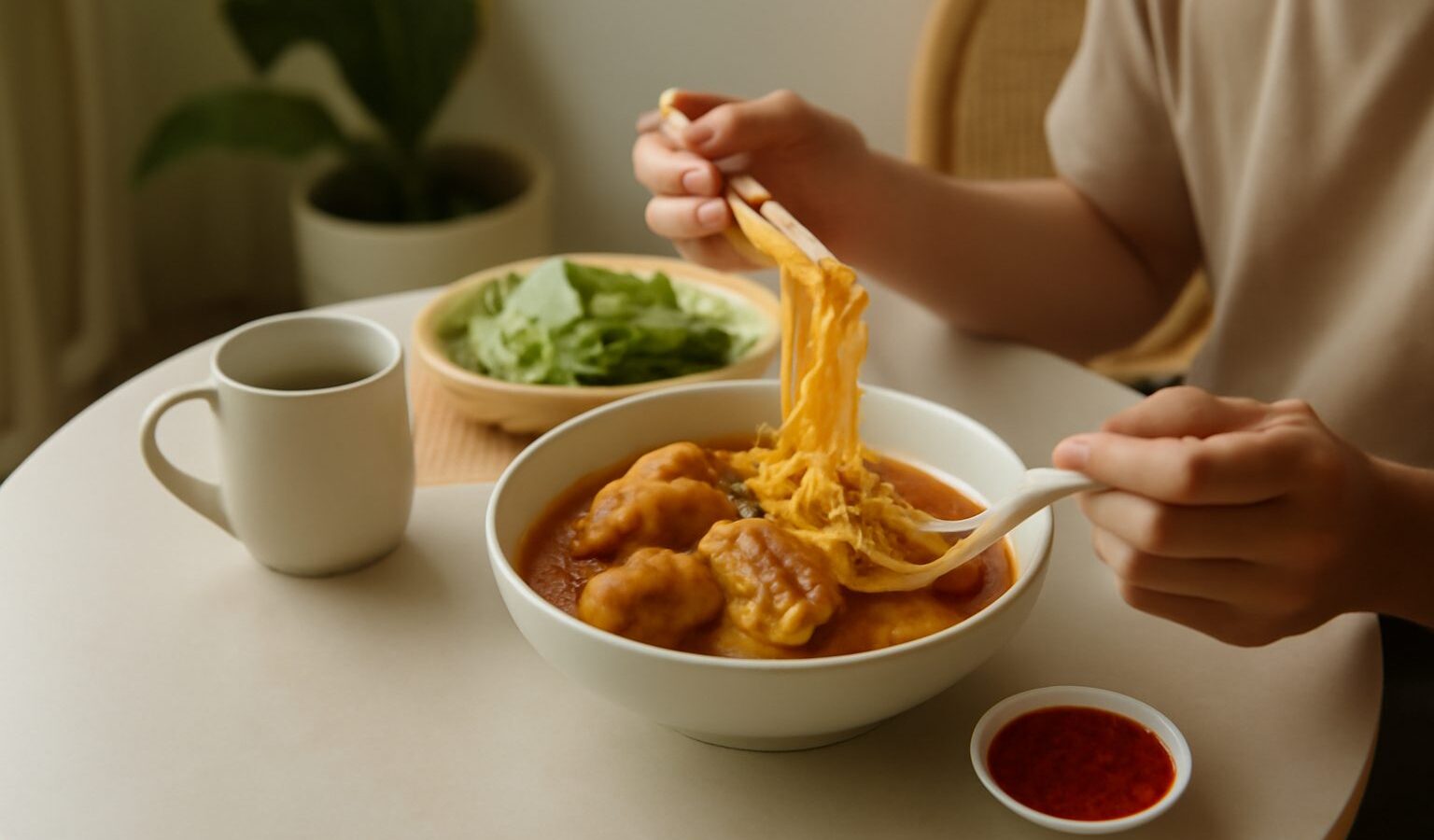
Curry chicken noodles in Singapore are one of those hawker dishes that seem simple until you start paying attention. A bowl of rich, spiced, coconut-tinged broth poured over noodles, with tender chicken, soaked tau pok and potato, is comfort food for many people here, especially on a rainy day. Yet stalls differ a lot in how thick, spicy or lemak (rich with coconut milk) the curry is, which noodles they offer and what goes on top. This guide explains the broth styles, the toppings and the ordering terms, so you can walk up to any stall and get the bowl you want.
What Curry Chicken Noodles Are
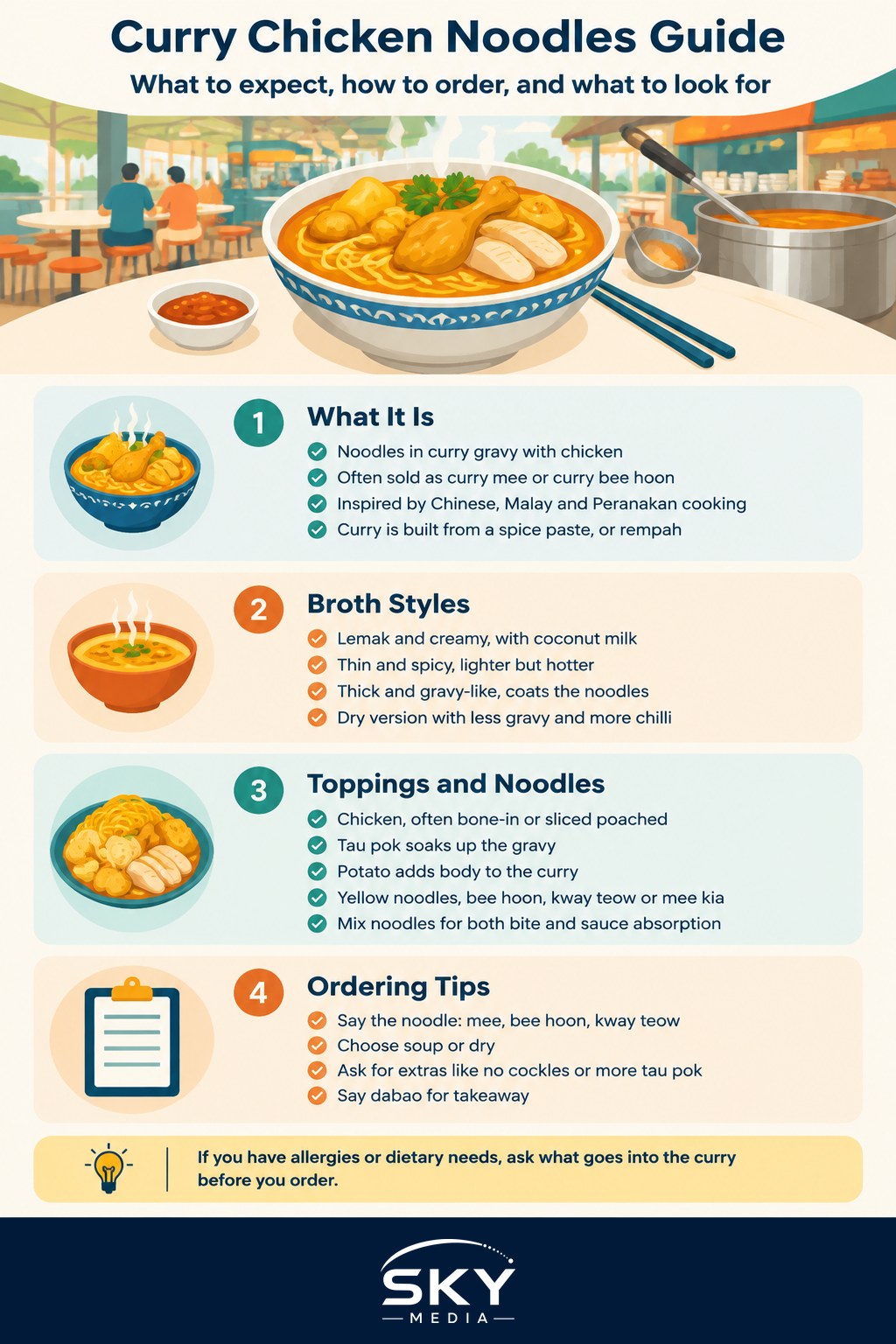
At its core, the dish is a bowl of noodles in a curry gravy with chicken. Many stalls sell it under names such as curry chicken noodle, curry chicken bee hoon or curry mee. The dish draws on Chinese, Malay and Peranakan cooking traditions, which is why you will find versions that taste quite different from one another.
The curry itself is usually built on a rempah, a spice paste of ingredients such as chilli, shallots, garlic, lemongrass and turmeric, fried until fragrant and then simmered with stock and coconut milk. The chicken is often cooked in the curry, though some stalls poach or steam it separately and add it to the bowl.
The Main Broth Styles You Will Meet
No two stalls are the same, but most curries fall somewhere along a few spectrums.
- Lemak and creamy. Generous coconut milk gives a rich, mellow, slightly sweet gravy. Easy for those who prefer less heat.
- Thin and spicy. A lighter, soupier curry that is more about chilli and spice than richness. It can be quite fiery.
- Thick and gravy-like. Closer to a curry you would eat with rice, clinging to the noodles rather than pooling in the bowl.
- Dry version. Some stalls offer the noodles tossed with a spoonful of curry and chilli, with the gravy on the side or in smaller quantity.
Many stalls add a spoonful of sambal chilli on top, which you can stir in for more heat. If you want to recreate the base at home, our guide to cooking a simple curry at home covers the basic technique of frying a spice paste.
Classic Toppings and What They Add
The toppings are part of the pleasure, and stalls vary in what they include.
- Chicken. Often bone-in chicken pieces cooked in the curry, or sliced poached chicken. Ask if you prefer boneless.
- Tau pok. Puffy fried bean curd that soaks up the gravy like a sponge. Many regulars consider it essential.
- Potato. Soft chunks that thicken the gravy and add body.
- Fish cake. Slices of springy fish cake appear in some versions.
- Bean sprouts. Blanched for crunch and freshness.
- Long beans or other vegetables. Less common, but seen at some stalls.
- Cockles. Usually associated with curry mee styles; some stalls offer them as an option.
- Egg. A hard-boiled egg is sometimes added.
Choosing Your Noodles
Most stalls let you pick one noodle type or mix two. The choice changes the texture of the whole bowl.
| Noodle | Texture | Pairs best with |
|---|---|---|
| Yellow noodles | Springy and slightly chewy | Thick or lemak gravies |
| Bee hoon (thin rice vermicelli) | Light, soaks up curry well | Thin and spicy broths |
| Kway teow (flat rice noodles) | Soft and slippery | Creamy gravies |
| Mee kia (thin egg noodles) | Fine and firm | Dry versions |
| Mixed (e.g. yellow noodles with bee hoon) | A bit of both | Most styles, a popular default |
A common local order is yellow noodles mixed with bee hoon, which gives you both bite and gravy absorption.
How to Order Like a Local
Hawker stalls move quickly at peak hours, so it helps to know the short forms many uncles and aunties use. Not every stall uses all of these, and terms can vary, but these are widely understood:
- Say the noodle. “Mee”, “bee hoon”, “kway teow”, or “mee and bee hoon”.
- Choose soup or dry. Most stalls default to soup.
- Say your size. Some stalls offer a regular and a larger portion, or extra chicken.
- Adjust the extras. “No cockles”, “more tau pok”, “add egg”, “less chilli” or “chilli separate”.
- Mention takeaway. Say “dabao” (takeaway) if you want to take it home. Bringing your own container helps reduce waste.
A typical order might sound like: “Curry chicken, mee and bee hoon, soup, no cockles, chilli separate, dabao.” Prices vary by stall and location, so check the signboard.
Eating It Well
A few small habits make a better bowl:
- Stir before you eat. The sambal and gravy settle, so mix gently.
- Start with the tau pok. It is best when it has just soaked up the gravy.
- Go easy on the chilli at first. You can always add more, but you cannot take it out.
- Eat it fresh. If taking away, ask for the gravy separately where possible so the noodles do not go soggy.
Curry gravy is rich, so pair the bowl with a plain drink such as barley water or kopi-o if you need something to cut through it.
Where Curry Chicken Noodles Fit in the Hawker Scene
Curry chicken noodles sit alongside other curry dishes in Singapore, each with its own character. Hainanese curry rice, for example, uses a milder, more starchy gravy ladled over rice and side dishes, while curry puffs pack a dry potato and chicken curry inside flaky pastry. Our guides to Hainanese curry rice and curry puffs in Singapore explore those cousins.
You will find curry chicken noodle stalls in hawker centres and coffee shops across the island, often as a stall that specialises in just this dish or alongside laksa or other noodle soups. Since stalls change hands and recipes evolve, the best way to find your favourite is to try a few nearby and notice which style you prefer, whether that is creamy, fiery or somewhere in between.
A Quick Note on Diet and Allergies
Curry gravies usually contain coconut milk and may contain shrimp paste, peanuts or other allergens depending on the recipe. Some stalls are halal certified and display the certificate from MUIS (the Islamic Religious Council of Singapore); others are not. If you have dietary requirements or allergies, ask the stall owner what goes into the curry before ordering.
Frequently Asked Questions
Is curry chicken noodles halal, and how can I tell? It depends on the stall. Some are halal certified and display a certificate from MUIS, while others are not. Look for the certificate on display, or ask the stall owner before ordering if it matters to you.
Does curry chicken noodle gravy contain allergens like shrimp paste or peanuts? It can. Curry gravies usually contain coconut milk and, depending on the recipe, may include shrimp paste, peanuts or other allergens. Each stall’s recipe is different, so ask the stall owner exactly what goes into the curry before you order.
How do I stop takeaway curry noodles going soggy? Ask for the gravy packed separately where the stall allows it, and combine at home. Say “dabao” when ordering, and bring your own container to cut down on waste. Eating it soon after collection also keeps the noodles at their best.
What is the difference between curry chicken noodles and Hainanese curry rice? Curry chicken noodles put chicken and a curry gravy over noodles, while Hainanese curry rice uses a milder, more starchy gravy ladled over rice and side dishes. The first is a one-bowl noodle dish, whereas the second is built from a plate of sides.
What drink goes well with a rich curry noodle bowl? A plain, light drink works best, such as barley water or kopi-o. Curry gravy is rich with coconut milk, so something unsweetened or mildly sweet helps cut through it. Avoid heavy milky drinks if you find the bowl filling already.