
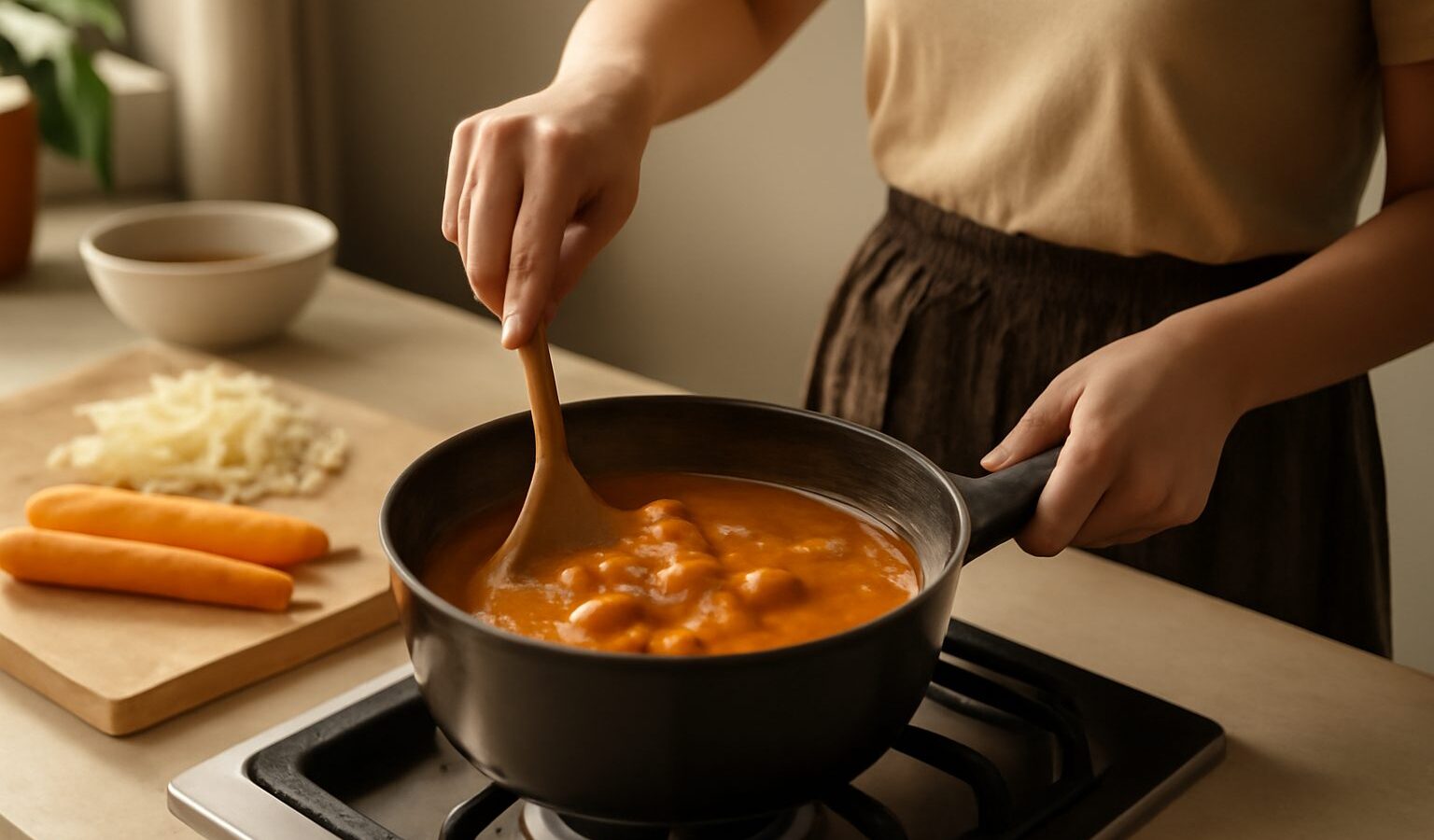
A pot of homemade curry in Singapore is one of the most comforting things you can cook, and it is far more forgiving than it looks. Whether you grew up with a Chinese-style curry chicken, an Indian-style curry rich with spices, or a Nyonya version fragrant with lemongrass, they all follow the same simple rhythm: build a flavour base, fry it well, then simmer your ingredients in a coconut or stock gravy. You do not need to grind spices for an hour or own special pots. With a supermarket curry paste or powder, some coconut milk and a bit of patience, a weeknight curry is completely doable in a small kitchen.
The Simple Logic of a Good Curry
Every curry, no matter the style, is built in the same order, and once you see the pattern you can improvise with confidence. First you make or choose a flavour base, whether that is a ready-made curry paste, a curry powder mixed into a slurry, or a homemade spice paste. Then you fry that base in oil with aromatics until it smells deep and fragrant. Next you add your main ingredient, chicken, potatoes, vegetables or fish, and coat it in the paste. Finally you add liquid, simmer until tender, and enrich with coconut milk near the end.
Keeping this four-step shape in mind takes the fear out of curry. You are not memorising a rigid recipe, you are following a reliable sequence. Change the paste and the protein and you have a different curry, but the method stays the same every time.
Choosing Your Base: Paste, Powder or Scratch
For a simple curry, you have three honest options, and none of them is cheating. A ready-made curry paste is the fastest route and gives consistent results, and the supermarket carries several local styles. A curry powder, the fragrant meat-curry or fish-curry blends found on every shelf here, is mixed with a little water into a paste before frying. A from-scratch spice paste gives the deepest flavour but takes the most effort.
| Base option | Effort | Flavour | Best for |
|---|---|---|---|
| Ready-made curry paste | Low | Good and consistent | Busy weeknights |
| Curry powder slurry | Medium | Fragrant and flexible | Everyday cooking |
| Homemade spice paste | High | Deepest and freshest | Weekend cooking |
| Powder plus fresh aromatics | Medium | Well-rounded | A reliable middle path |
A practical middle path many home cooks love is to start with a good curry powder but add fresh aromatics, sliced onion, garlic, ginger and a sprig of curry leaves, so it tastes homemade without the full grind. Buy curry leaves fresh from the wet market or the supermarket chiller, since they add a fragrance that dried versions cannot match.
Cooking a Simple Chicken Curry Step by Step
Here is a straightforward chicken curry to anchor the method. Start with chicken pieces on the bone if you can, since they stay juicier and give the gravy more flavour, along with a couple of potatoes cut into chunks.
Heat oil in a pot and fry sliced onion, garlic and ginger until soft and fragrant, then toss in a sprig of curry leaves. Add your curry paste or powder slurry and fry it on medium to low heat, stirring, until the oil begins to separate and the raw smell disappears, which is the same frying-off step that underpins all local pastes. This patient fry is what gives the curry its depth, so do not rush it.
Add the chicken and stir to coat every piece in the paste, letting it brown a little. Add the potatoes, then pour in enough water or stock to almost cover everything. Bring it to a boil, then lower to a gentle simmer, cover, and cook until the chicken is fully done and the potatoes are soft, usually around 25 to 35 minutes. Make sure the chicken is cooked right through with no pink at the bone before serving. Stir in coconut milk in the last few minutes and warm it gently without a hard boil, then season with salt to taste.
Coconut Milk, Vegetables and Meat-Free Versions
Coconut milk is what gives many local curries their richness, and the key rule is to add it late and keep the heat gentle, because boiling it hard can make it split into a grainy mess. If you prefer a lighter curry, use less coconut milk or swap in evaporated milk or even a splash of yoghurt stirred in off the heat, though yoghurt can curdle if boiled.
Curry adapts beautifully to whatever you have. A vegetable curry with potato, carrot, long beans, tau pok and hard-boiled eggs is hearty and cheap, and it cooks faster than a meat curry. For a fish curry, add firm fish or fish-head pieces towards the end so they do not fall apart, and finish with tamarind for a tangy assam-style gravy. Firm tofu and chickpeas make a satisfying meat-free main that soaks up the gravy well. Whatever you choose, taste as you go and adjust salt, heat and richness to suit your table.
Common Problems, Fixes and Storage
Curry rarely goes badly wrong, but a few issues come up often. If your curry tastes flat, it usually needs more salt or a longer fry of the paste to build depth. If it is too spicy, more coconut milk, a little sugar or a starchy potato will calm it down. If the gravy is too thin, simmer it uncovered to reduce, or mash a soft potato into it to thicken. If the coconut milk looks split, you boiled it too hard, so keep it gentle next time.
Curry is famously better the next day, as the flavours deepen overnight, which makes it great for cooking ahead. In our hot, humid climate, cool leftovers quickly and refrigerate them promptly rather than leaving the pot on the stove, and finish cooked curry within a couple of days. Reheat it thoroughly until piping hot, and if it contains coconut milk, warm it gently and stir. A note on allergens, since coconut-based curries and any shrimp paste in the base can matter for allergies, so check your ingredients when cooking for others.
Your first curry does not need to taste like your favourite hawker stall. It just needs to be warm, fragrant and yours, and that is a very achievable first win.
Explore more
The paste is the heart of any curry, so build your skills with how to make a rempah spice paste and add heat on the side with how to make sambal chilli from scratch. For another coconut-rich classic, try how to make laksa from scratch, and for more everyday dishes see how to cook hawker favourites at home.