
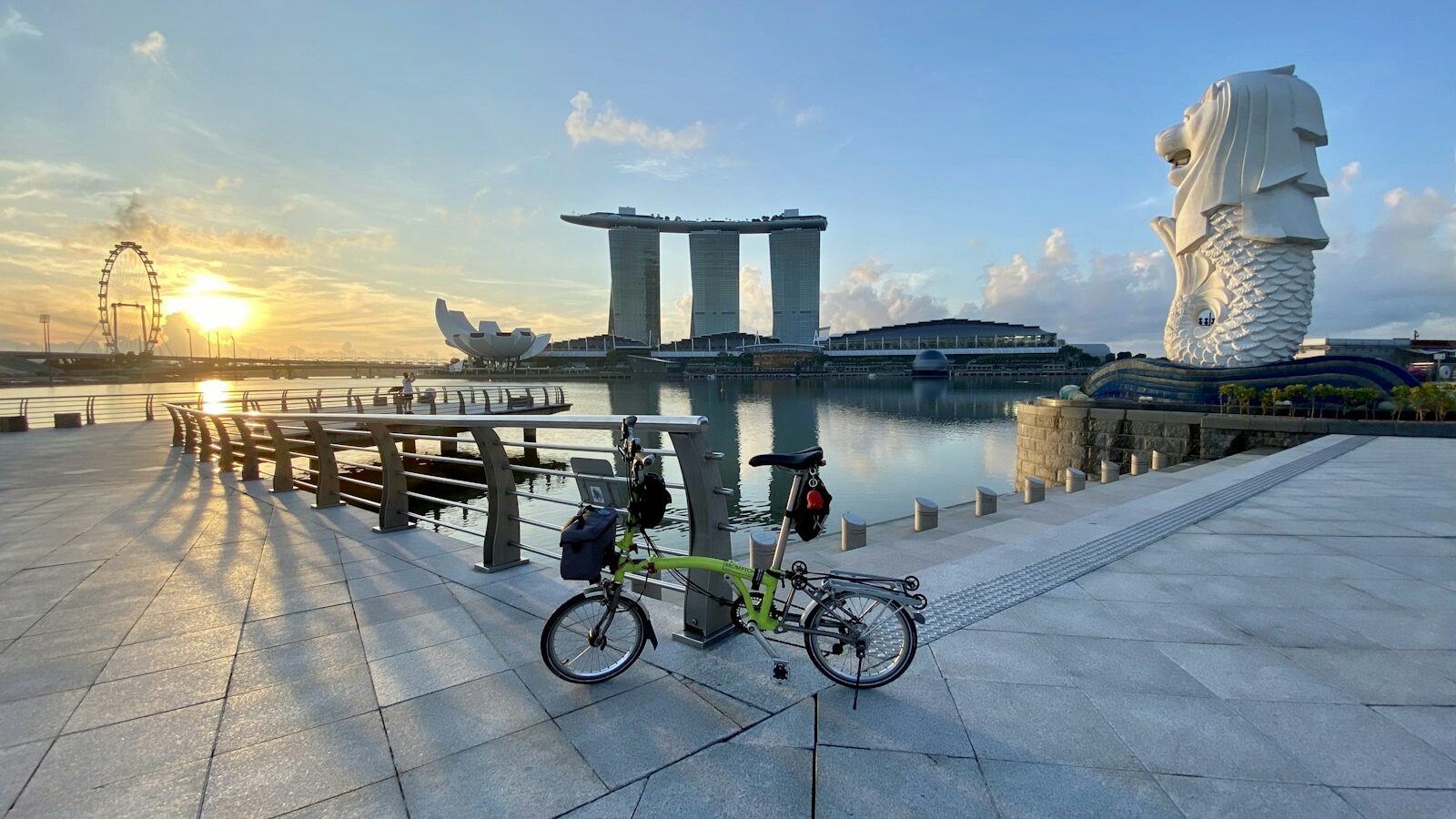
Plenty of people cycle here for fun on a weekend, but cycling Singapore commuters actually rely on to get to work or the MRT is a different question. The good news is that the island is flat, compact and increasingly threaded with dedicated paths, which makes the bicycle a genuinely practical way to move around for a lot of trips. The complications are the tropical heat, the rules about where you can and cannot ride, and the everyday realities of parking a bike safely and arriving presentable. This guide looks at bike commuting honestly: the network you will ride on, the rules that keep you legal and safe, the sweat problem, your options if you do not own a bike, and whether swapping some of your journeys for two wheels is realistic. For the exact and current active-mobility rules, always check the Land Transport Authority (LTA), because the rules on devices, paths and speed limits are updated from time to time.
The Park Connector Network and Cycling Paths
The backbone of practical cycling here is the Park Connector Network (PCN), a growing web of paved paths that links parks, housing estates and green spaces across the island, often running along canals and reserves away from traffic. For a commuter, the PCN is gold: it lets you cover real distances without mixing with cars for long stretches, and it keeps improving as new segments and the round-island route come together.
Alongside the PCN, many towns have dedicated cycling paths and shared footpaths built under the national push for active mobility, so more neighbourhoods now connect to MRT stations and town centres by bike. The practical approach is to plan a route that strings together park connectors and cycling paths rather than defaulting to the most direct road. It may add a little distance, but it is calmer, cooler and safer. Mapping apps and LTA’s cycling maps help you find the green route, and a quick trial run on a weekend tells you how long your real commute will take.
Road Rules, Paths and Safety
Singapore sets clear rules for where different devices and riders belong, and staying on the right side of them keeps you safe and legal. In broad terms, bicycles may be ridden on roads, on cycling paths and on shared paths, while footpaths have their own rules, and different speed limits apply on paths versus roads. Because these active-mobility rules are periodically revised, confirm the current path rules, speed limits and device categories on the LTA website before you settle into a routine.
Whatever the specifics, the safety fundamentals hold steady:
- Give way to pedestrians on shared paths, slow down near the young and elderly, and use your bell to signal rather than surprise people.
- Ride predictably in a single file where required, keep left, and signal your turns clearly with hand signals.
- Follow traffic rules on the road, obey signals, and treat yourself as part of the traffic, not an exception to it.
- Never ride carelessly through crowds; dismount and push where paths are busy or where required.
On the road, ride defensively. Assume drivers have not seen you, watch for opening car doors, keep out of large-vehicle blind spots, and take a clear position in the lane where hugging the kerb would invite an unsafe squeeze. A calm, visible, law-abiding rider is a safe one.
The Heat, the Rain and Arriving Presentable
The single most underrated obstacle to bike commuting here is not traffic, it is the climate. It is hot and humid almost every day, and a sudden downpour can arrive with little warning. Anyone selling you a frictionless cycling commute is glossing over the sweat.
You can manage it, though, with a few habits:
- Ride at an easy pace. Treat the commute as a gentle roll, not a workout, and you will sweat far less.
- Go early. The cooler morning hours are far kinder than the midday sun.
- Plan for a freshen-up. Many workplaces have showers or end-of-trip facilities; failing that, a change of shirt, a small towel and wet wipes go a long way.
- Pack for rain. A light poncho, a waterproof bag or cover for your laptop, and a willingness to shelter for ten minutes during a passing storm save the day.
Being realistic about the heat is what separates people who cycle once and quit from those who make it a lasting habit. Build the freshen-up into your routine and it stops being a problem.
Bike-Sharing, Folding Bikes and Public Transport
You do not have to own a bicycle to start. Shared bikes, picked up and dropped through an app, suit short first-and-last-mile hops between home, the MRT and the office without the worry of owning and storing a bike. They are ideal for testing whether cycling suits your route before you invest.
If you want the flexibility of mixing bike and train, a folding bike is the classic Singapore answer. Foldable bicycles that meet the size rules are generally allowed on trains and buses, subject to conditions and to timing restrictions during the busiest periods, which lets you ride one end of your journey and take public transport for the rest. Because the exact dimensions, timings and conditions for bringing bikes and devices onto public transport are set by the operators and LTA and do change, confirm the current rules before you rely on them. A folding bike also solves much of the parking and theft problem, because it comes indoors with you.
Securing Your Bike and Beating Theft
Bike theft is real, and a good bike left on a flimsy lock is a target. Protecting it is mostly about sensible habits:
- Buy a solid lock, a sturdy D-lock or a hardened chain, and spend a fair share of the bike’s value on it.
- Lock the frame to a fixed, immovable rack or structure, not just the wheel, and secure the wheels too if they release quickly.
- Park in sight, in well-used, lit and ideally covered bicycle parking rather than a quiet corner.
- Register or note the details, keep your serial number and photos, which help if the bike is stolen or recovered.
For an everyday commuter bike, some people deliberately choose a modest, unflashy bike precisely so it draws less attention. A folding bike sidesteps the issue by never being left outside at all.
Is Bike-Commuting Realistic Here?
Honestly, it depends on your route and your workplace. The table below lays out the main factors against what to expect, so you can judge your own case.
| Factor | What to know before you commit |
|---|---|
| Distance and terrain | Flat and compact; short to medium commutes are very doable |
| Route options | Plan via the Park Connector Network and cycling paths, not the busiest roads |
| Heat and humidity | The real hurdle; ride easy, go early, and plan a freshen-up |
| Rain | Frequent and sudden; pack a poncho and waterproof your bag |
| End-of-trip facilities | Showers or a change of clothes make or break the daily habit |
| Getting a bike | Bike-sharing for trials, a folding bike for train-mixing, or your own |
| Parking and theft | Use a strong lock and lit racks, or keep a folding bike with you |
If your commute is a few kilometres, connects well by park connectors, and you have somewhere to freshen up, cycling can be faster, cheaper and more pleasant than you expect, and it doubles as daily exercise. If you face a long ride on busy roads with nowhere to change, it may be better as a first-and-last-mile link to the MRT than a full door-to-door commute. Start small, trial your route on a quiet day, and let the reality of the heat and the roads guide how much of your travel you shift to two wheels.
Explore more
Cycling sits alongside going on foot in Singapore’s active-mobility picture, so see our guide to park connectors and walking in Singapore for the wider network. And if you are weighing an e-scooter or similar device instead, read up first on the personal mobility device rules in Singapore.