
If you have ever seen someone kneeling by a temple, rhythmically whacking a paper figure with an old shoe while chanting, you have probably witnessed da xiao ren. In Mandarin, da xiao ren (打小人) literally means “hitting the petty person”. It is a Chinese folk ritual meant to drive away people who gossip, backstab or bring bad luck into your life. This guide explains where the custom comes from, why it is linked to the solar term Jing Zhe, what typically happens during a session, and how and where it is practised in Singapore.
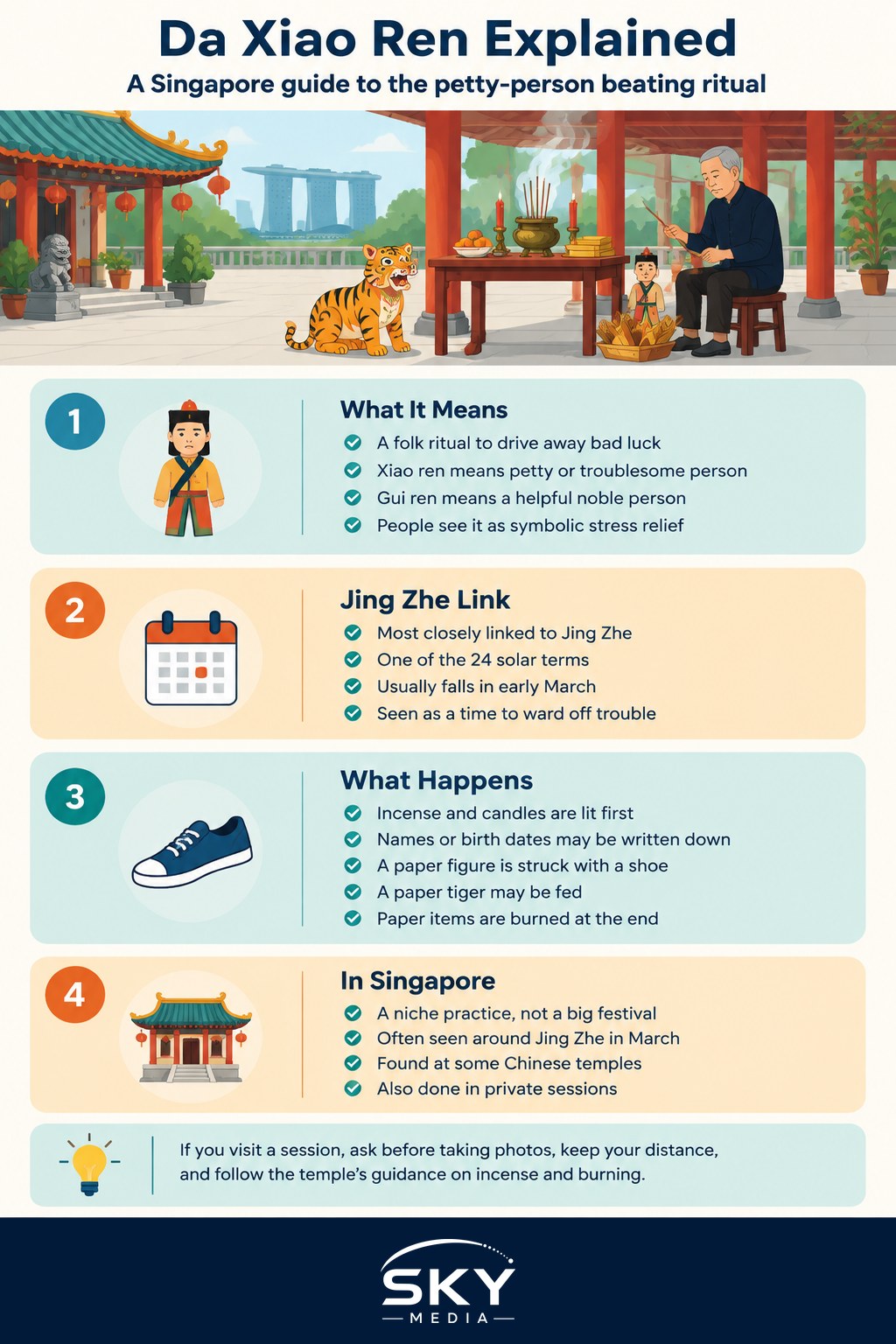
What “Petty Person” Means
In Chinese culture, a xiao ren (小人) is not a small person in size. It refers to someone of petty character: a gossip, a schemer, a colleague who takes credit for your work, or simply bad influences that create obstacles. The opposite is a gui ren (贵人), a “noble person” or helpful benefactor.
Da xiao ren is a symbolic way of dealing with these worries. Instead of confronting anyone, participants direct their frustration at paper effigies. Many people today describe it as a form of stress relief and a way to “reset” their luck for the year, rather than an attempt to harm a real person. Beliefs and practices vary widely between families, dialect groups and practitioners.
Origins and the Link to Jing Zhe
The ritual is most closely associated with Jing Zhe (惊蛰), often translated as “Awakening of Insects”. It is one of the 24 solar terms in the traditional Chinese calendar and usually falls in early March. The name refers to the time when spring thunder was believed to wake insects and creatures from winter hibernation.
Traditional explanations connect several ideas:
- Pests waking up. Just as insects and vermin stir in spring, people believed troublesome influences also become active. Driving them away at the start of the season was seen as protective.
- The White Tiger. In folk belief, a White Tiger (白虎) spirit is said to be hungry around this time and may “bite” people, bringing quarrels or misfortune. Offerings are made to feed and calm it.
- Southern Chinese folk practice. The ritual is especially associated with Cantonese communities. It became widely known through Hong Kong, where practitioners have long gathered under a flyover in Causeway Bay, and the practice travelled with migrants across Southeast Asia.
Exact origins are hard to pin down, and accounts differ. It is best understood as a folk custom shaped by local communities over generations rather than a formal religious rite.
What Happens During a Session
Sessions are often carried out by a practitioner, commonly an older woman experienced in the ritual, though some people perform a simple version themselves. The steps below describe a commonly seen sequence, which varies from practitioner to practitioner:
- Offering to deities. Incense and candles are lit to invite protection.
- Writing the details. The client’s name and birth date may be written on paper, and sometimes the name of a specific troublemaker, though many people leave the effigy anonymous.
- Beating the effigy. A paper figure representing the petty person is struck repeatedly with a shoe or slipper while the practitioner chants rhyming verses that wish away bad luck and gossip.
- Feeding the White Tiger. A paper tiger is “fed”, often by smearing a bit of pork fat or similar offering on its mouth, so it is too full to cause harm.
- Burning the paper. The beaten effigy and paper items are burned to symbolically send the bad influences away.
- Blessing and closing. Rice or beans may be scattered, and divining blocks are sometimes cast to confirm the ritual is complete.
The table summarises key elements and their usual symbolism.
| Element | What it looks like | Common symbolism |
|---|---|---|
| Paper effigy | A small paper figure, often printed | The petty person or bad influences |
| Shoe or slipper | An old shoe used to strike the figure | Stamping out gossip and obstacles |
| Paper White Tiger | Printed tiger, fed with fat or offerings | Calming a spirit believed to cause quarrels |
| Burning | Effigies burned at the end | Sending misfortune away for good |
| Chanted verses | Rhythmic rhymes in Cantonese or other dialects | Wishing for smooth relationships and luck |
Where Da Xiao Ren Is Seen in Singapore
In Singapore, da xiao ren is a niche practice rather than a mainstream festival. You are most likely to come across it around Jing Zhe in early March, though some practitioners offer sessions throughout the year.
It is generally seen at:
- Some Chinese temples, especially those with folk or Taoist traditions, which may run Jing Zhe prayers or White Tiger offerings
- Practitioners near temple grounds who set up a small table with paper materials
- Private sessions arranged through word of mouth or community contacts
Whether a temple offers it, and how, varies a great deal. Some temples focus instead on making offerings to the Tiger God (虎爷), a related practice in Hokkien and Teochew traditions, while others do not practise it at all. If you are curious, ask the temple directly or check its notices closer to the date. Fees, timings and formats differ between temples and practitioners, so confirm details with them beforehand.
Etiquette for Curious Visitors
You do not need to share the beliefs to watch respectfully. If you are visiting as an observer:
- Ask before taking photos. For many participants, this is a personal moment. Photographing them or the practitioner without permission can feel intrusive.
- Keep a respectful distance and avoid laughing or mocking, even if the ritual looks unusual to you.
- Follow temple rules, including any guidance on dress, incense and where burning is permitted.
- Mind the heat and smoke. Incense and burning paper produce smoke, so step back if you are sensitive to it.
- Do not touch offerings or ritual items unless invited.
If you want to try a session yourself, approach a practitioner politely and ask how it works before agreeing. Many treat it as a light-hearted, cathartic experience.
A Living Folk Tradition
Da xiao ren sits alongside other Chinese customs that mark the rhythm of the year, such as Ren Ri, the seventh day of Chinese New Year, and temple practices like the Bathing the Buddha ritual. Each reflects how communities have used ritual to cope with uncertainty, hope for good fortune and build a sense of togetherness.
For some people, da xiao ren is a sincere spiritual practice. For others, it is a cultural curiosity or a cheerful way to let off steam. Either way, it offers a vivid glimpse into Singapore’s layered Chinese heritage, and a reminder that the wish to keep troublemakers at bay is something almost everyone can relate to.
Frequently Asked Questions
Is da xiao ren only done during Jing Zhe? It is most closely associated with Jing Zhe, usually in early March, but some practitioners offer sessions throughout the year. Availability varies, so ask the temple or practitioner directly.
What is the White Tiger that is fed during the ritual? In folk belief, a White Tiger spirit is hungry around this time and may bring quarrels or misfortune. A paper tiger is symbolically fed, often with pork fat, so it is too full to cause harm.
Do I have to name a real person for da xiao ren? No. The client’s name and birth date may be written down, and some practitioners note a specific troublemaker, but many people leave the effigy anonymous. Many see it as stress relief, not harm.
Can visitors watch or photograph a da xiao ren session? You can watch respectfully, but ask before taking photos, since it is a personal moment for many. Keep your distance, avoid mocking, follow temple rules and do not touch the offerings unless invited.
Where can I find da xiao ren in Singapore? It is a niche practice rather than a mainstream festival. Some Chinese temples with folk or Taoist traditions, practitioners near temple grounds and private sessions offer it. Ask the temple directly, and confirm fees and timings beforehand.