
Most Deepavali explainers focus on the lights, the sweets and the Little India bazaar. For many Hindu families in Singapore, though, the most meaningful part of the festival happens quietly at home, before sunrise. The Deepavali oil bath ritual, known in Tamil households as ganga snanam, opens the day, and it leads into home prayers, new clothes and a temple visit before the visiting and feasting begin.
This guide walks through that morning sequence. Customs vary by family, region of origin and community, so treat what follows as commonly seen practice rather than a fixed rulebook.
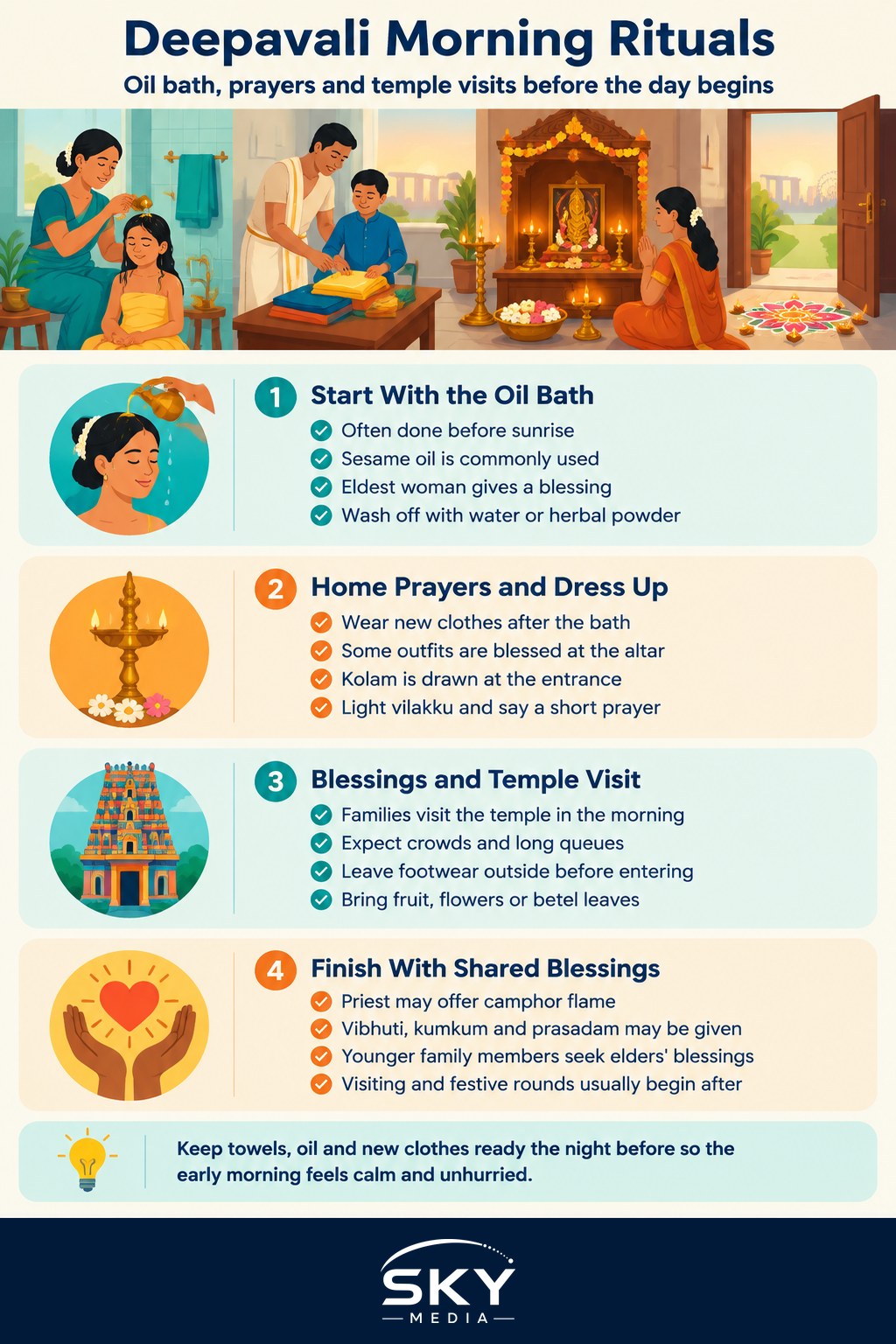
Why the Day Starts With an Oil Bath
In Singapore, Deepavali is observed mainly according to the Tamil calendar, and the South Indian story behind the morning is the defeat of the demon king Narakasura by Lord Krishna. In many tellings, Narakasura asked as he was dying that his end be remembered with lights and celebration. The day is sometimes called Naraka Chaturdasi for this reason.
The oil bath connects to this story in two ways:
- Purification. Bathing before dawn is a symbolic cleansing, washing away the old and starting fresh.
- The Ganges in every drop. A widely held belief is that on Deepavali morning, the sacred waters of the river Ganga are present in all water. That is why the bath is called ganga snanam (Ganges bath), and why a classic Deepavali greeting among Tamil speakers is to ask whether someone has had their “Ganga bath” yet.
North Indian families may place more emphasis on the evening Lakshmi puja (prayer to the goddess of prosperity), and many Singapore households blend elements of both.
The Ganga Snanam: How the Oil Bath Is Done
The bath usually takes place in the dark, before sunrise, often in the early hours of the morning. A typical sequence in a Tamil household looks something like this:
- Warming the oil. Sesame oil (also called gingelly oil) is the most common choice. Some families warm it gently with a few peppercorns, a betel leaf or a pinch of cumin, depending on what their elders did.
- The elder’s blessing. The eldest woman of the house, often a mother or grandmother, applies a little oil to the head of each family member, sometimes touching a few drops to the crown as a blessing. In some homes the family sits in order of age.
- Massaging the oil in. The oil is worked into the hair and scalp, and sometimes over the body, and left on for a short while.
- Washing off. The oil is washed out with warm water and a traditional herbal powder such as shikakai (a soap pod), or simply with regular shampoo. Getting all the oil out of thick hair takes patience.
Many families also give everyone a spoonful of Deepavali legiyam (sometimes called marundhu, meaning “medicine”) after the bath. This is a homemade or shop-bought herbal paste of spices like ginger and pepper, traditionally eaten to help digestion before a day of rich food.
New Clothes, Kolam and Prayers at Home
After the bath, the household turns to the home altar or prayer corner.
- New clothes. Wearing new clothes on Deepavali is one of the most widely shared customs. Some families place the new outfits at the altar the night before so they are blessed, and a small dab of turmeric is sometimes put on a corner of the fabric.
- The kolam. Many homes have a kolam at the entrance, a pattern made from rice flour or coloured powder, often drawn the evening before. It is a welcoming sign and is meant to invite good fortune in.
- Lamps. Oil lamps called vilakku, from small clay lamps to tall brass standing lamps, are lit at the altar. Light pushing back darkness is at the heart of the festival’s meaning.
- Offerings and prayer. Flowers, fruit, betel leaves, sweets and sometimes the first batch of festive snacks are placed before images of the family’s chosen deities. A short prayer is said, often with camphor lit and waved in a circle (an act called arati).
- Blessings from elders. Younger family members commonly touch the feet of parents and grandparents or bow to them to receive blessings. Elders may give small gifts or money.
Households that grow their own jasmine or marigold can see our guide to growing flowers for prayers and offerings.
The Morning Sequence at a Glance
| Step | What usually happens | Practical tip |
|---|---|---|
| Pre-dawn oil bath | Elder applies warm sesame oil, family washes it off | Lay out towels and old clothes the night before; oil stains |
| Herbal paste | A spoonful of legiyam for digestion | Shop-bought versions are common if no one makes it at home |
| New clothes | Freshly blessed outfits are worn for the first time | Iron and lay them out early to avoid a morning rush |
| Home prayers | Lamps lit, offerings placed, arati performed | Keep lamps away from curtains and children’s reach |
| Temple visit | Family prays at a temple, often in the morning | Expect crowds and queues; go early if you can |
| Visiting begins | Elders and relatives visited, open houses start | Bring sweets or a small gift when visiting |
Visiting the Temple on Deepavali Morning
Many families head to a temple after the home prayers, and Hindu temples across Singapore, especially in and around Little India, are busy from early morning. Expect:
- Crowds. Queues to enter the inner shrine can be long. Families often go as early as they can manage after the bath.
- Footwear off. Shoes are left outside or at a designated rack before entering.
- Offerings. Many worshippers bring a small tray or bag of fruit, flowers, coconut or betel leaves, which can usually be bought near temples.
- Receiving blessings. After prayers, the priest may offer the camphor flame (worshippers pass their hands over it and then touch their eyes), holy ash (vibhuti), kumkum and sometimes a little sweet prasadam to take away.
If you are joining a Hindu friend at the temple for the first time, our guide to praying at a Hindu temple in Singapore explains etiquette, dress and what to do inside. Visitors who are not Hindu are generally welcome as respectful guests, but follow your host’s lead and any signs posted at the temple.
Practical Tips for Families and Guests
For families keeping the tradition alive in a busy household:
- Set out the oil, towels, herbal powder and new clothes the night before so the dawn bath is calm rather than rushed.
- Use an older towel; sesame oil is hard to wash out of fabric.
- For young children, a lighter touch of oil on the head is enough to mark the ritual without a long hair-washing battle.
For ideas on passing rituals down the generations, see creating family traditions and rituals.
For guests staying with a Hindu family:
- You will probably not be expected to take part in the oil bath, but you may be invited to. It is fine to politely ask what the family would like you to do.
- Wear something new or at least neat and festive if you are joining the temple visit or the visiting rounds. Cover shoulders and knees for the temple.
- Greet your hosts with “Happy Deepavali” or, in Tamil, “Deepavali Nalvazhthukkal”.
- Accept sweets and food with your right hand, and try a little of everything offered if you can.
Keeping the Meaning in Focus
Plenty of households simplify the morning to fit work schedules, small flats or elderly parents’ needs. What stays constant is the idea: starting the day clean, in new clothes, with light, prayer and blessings from elders. For many Hindu Singaporeans, Deepavali truly begins long before the first visitor rings the doorbell.
Explore more: Praying at a Hindu Temple in Singapore · Growing Flowers for Prayers and Offerings in Singapore · Creating Family Traditions and Rituals
Frequently Asked Questions
Can a non-Hindu friend join the Deepavali oil bath or temple visit? You will probably not be expected to join the oil bath, though you may be invited. Non-Hindu visitors are generally welcome at temples as respectful guests. Follow your host’s lead and any signs, remove shoes, cover shoulders and knees and ask before taking photographs.
What is Deepavali legiyam and is it okay to skip it? Legiyam is a herbal paste of spices such as ginger and pepper, traditionally eaten after the bath to help digestion before a day of rich food. Shop-bought versions are common. If you have health conditions or allergies, check the ingredients, and ask your doctor if unsure.
How can I make the oil bath easier with young children? A lighter touch of oil on the head is enough to mark the ritual without a long hair-washing battle. Lay out towels and old clothes the night before, since sesame oil stains fabric. Warm water makes washing out easier.
Why do some families put the new clothes at the altar? Some families place the new outfits at the altar the night before so they are blessed, and a small dab of turmeric is sometimes put on a corner of the fabric. Customs vary by family, so ask your elders what theirs do.
How do I greet Hindu friends on Deepavali morning? Say “Happy Deepavali”, or in Tamil, “Deepavali Nalvazhthukkal”. Tamil speakers may also ask if you have had your Ganga bath yet. Bring sweets or a small gift when visiting, and accept food with your right hand.
Further reading: Hindu Deities Explained: Lakshmi, Ganesha and Rama at Deepavali