
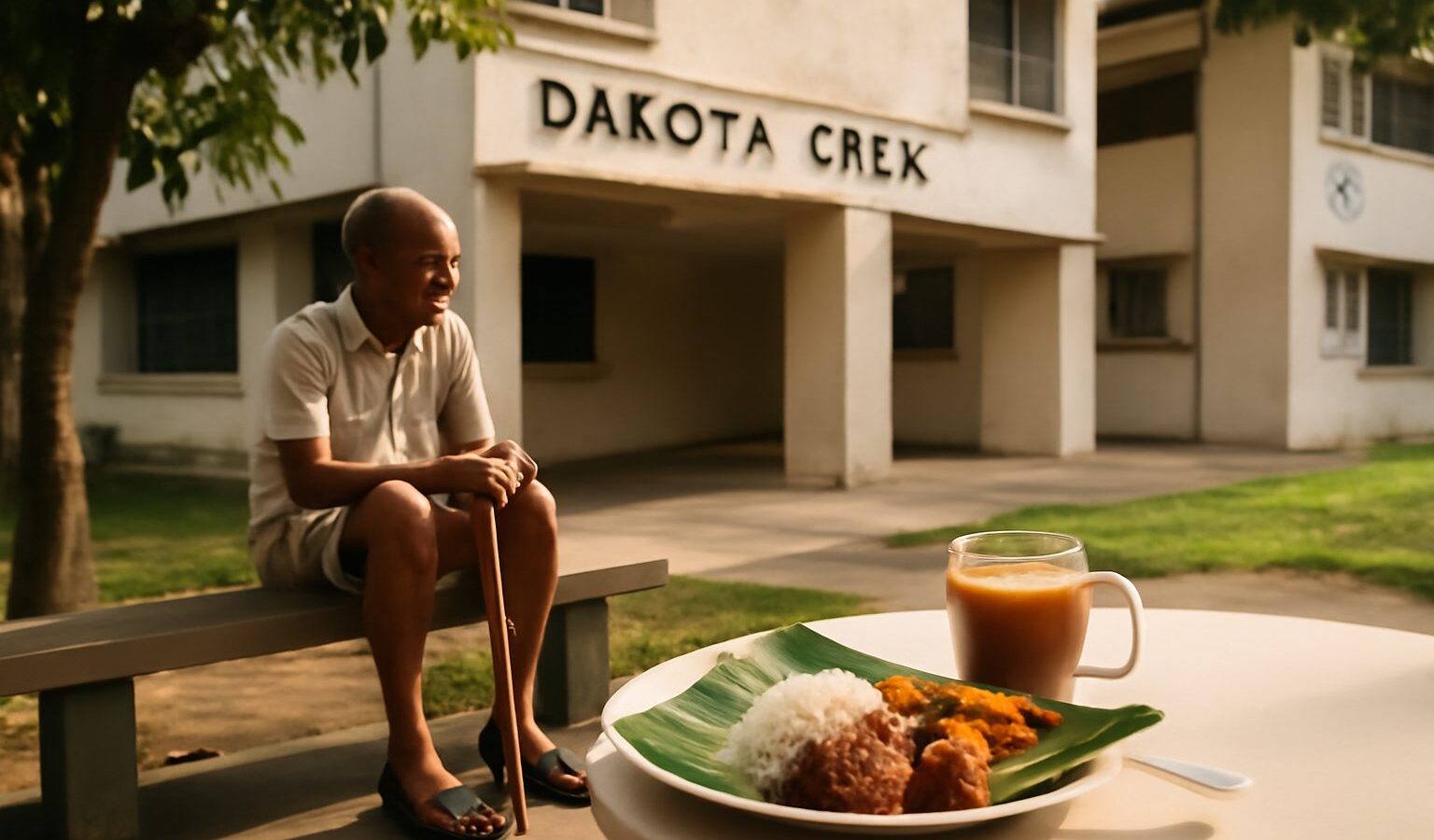
Not every piece of Singapore’s heritage is grand. Some of it is low-rise, weathered, and quietly beloved, the kind of place that carries decades of everyday life in its walls and courtyards. Dakota Crescent is one such place, one of the oldest surviving public housing estates on the island and home to a mosaic-tiled dove playground that generations remember. Exploring Dakota Crescent heritage in Singapore is a reminder that ordinary neighbourhoods can hold extraordinary meaning. This guide traces the estate’s origins, its landmark playground, and why so many hoped to see it preserved.
Origins of an early estate
Dakota Crescent belongs to the early era of public housing in Singapore, built in the years before the Housing and Development Board era to help address the island’s pressing housing needs. Its low-rise blocks, laid out around open courtyards and communal spaces, reflect the design thinking of that period, when estates were built at a human scale with room to breathe between the buildings.
The name Dakota itself points to the area’s aviation history. This part of Singapore lies near the old Kallang Airport, the country’s first purpose-built civil airport, and the Dakota name recalls the aircraft associated with that era of early flight. The estate grew up in a district shaped by the airport and by the Kallang waterfront, giving it a distinctive place in the eastern-central map of the city.
For the specific dates, agencies, and figures behind the estate’s construction, the National Heritage Board (roots.gov.sg) and official housing histories are the sources to rely on rather than assumption.
The dove playground and everyday landmarks
If Dakota Crescent has one icon, it is the dove playground. This modest structure, with its bird-shaped centrepiece and terrazzo-and-mosaic finish, belongs to a lineage of imaginative Singapore playgrounds designed to give estates their own character. Over the years it became a much-loved landmark, a backdrop to childhood and later a magnet for photographers, artists, and heritage enthusiasts.
The playground matters because it represents a whole generation of neighbourhood play spaces, most of which have since disappeared as estates were renewed. Its survival gives visitors a rare chance to see the kind of communal design that once defined the shared life of an estate.
Beyond the playground, the estate’s charm lies in its ensemble: the low blocks, the mature trees, the corridors and void decks, and the quiet courtyards that encouraged neighbours to know one another. It is the ordinariness, preserved, that makes Dakota Crescent feel special.
Change, conservation, and debate
As Singapore’s housing stock aged and land needs shifted, the future of older estates like Dakota Crescent came under review, and residents were eventually rehoused as part of the area’s redevelopment. The prospect of losing a rare early estate prompted a public conversation about heritage, memory, and what a growing city chooses to keep.
That discussion reflected a wider shift in how Singapore thinks about its recent past. Where once older estates were simply cleared, there is now greater appreciation for the value of vernacular heritage, the everyday architecture that shaped how people actually lived. The dove playground in particular became a focal point for calls to retain a piece of the estate’s identity.
Decisions about what is conserved, retained, or redeveloped rest with the authorities, and the URA and relevant agencies are the bodies to consult for the definitive position on the site’s status and any future plans. Readers should check official sources for the current situation rather than rely on older accounts.
| Feature | What it is | Why it matters |
|---|---|---|
| Low-rise blocks | Early public housing at a human scale | Among the oldest surviving estates in Singapore |
| Dove playground | Mosaic-tiled bird-shaped play structure | A rare surviving vintage neighbourhood playground |
| Courtyards and void decks | Shared communal spaces between blocks | Reflect an earlier, community-centred estate design |
| Kallang and airport setting | Near the historic Old Kallang Airport | Links the estate to Singapore’s early aviation era |
Why Dakota Crescent endures in memory
Dakota Crescent holds a special place in Singapore’s heritage conversation because it stands for the value of the everyday. It is not a palace or a temple; it is where families lived, where children played on a concrete dove, and where a neighbourhood formed. That is exactly why it resonates. In a city that rebuilds constantly, a surviving early estate offers a tangible link to how earlier generations of Singaporeans made their homes.
For newcomers, Dakota Crescent is a gentle introduction to the social history of public housing, the foundation on which modern Singapore was built. For those who grew up in similar estates, it is a mirror of their own childhoods.
Visiting Dakota Crescent
The estate is easy to reach on the Circle Line: Dakota MRT station is named for the area, and from there it is a short walk into the low-rise streets, with the nearby Kallang and Old Airport Road districts adding to the outing. The surrounding neighbourhood is well known for its food, making it easy to combine a heritage stroll with a meal.
A relaxed visit might mean wandering the courtyards, pausing at the dove playground, and taking in the low-rise atmosphere so different from the high towers around it. Please treat the area and any residents or works with courtesy, keep to public spaces, and check current access and any conservation or redevelopment updates on official pages before you go, as the site’s status may change over time. Dakota Crescent is best appreciated slowly, as a quiet lesson in how much heritage can live in the most modest of places.
Explore more
For another story of a beloved estate and its heritage, read our Kampong Lorong Buangkok guide to Singapore’s last surviving village. To see how early planned towns preserve their identity, explore the Queenstown heritage guide, and continue with our Toa Payoh heritage guide for more on the public housing story.