
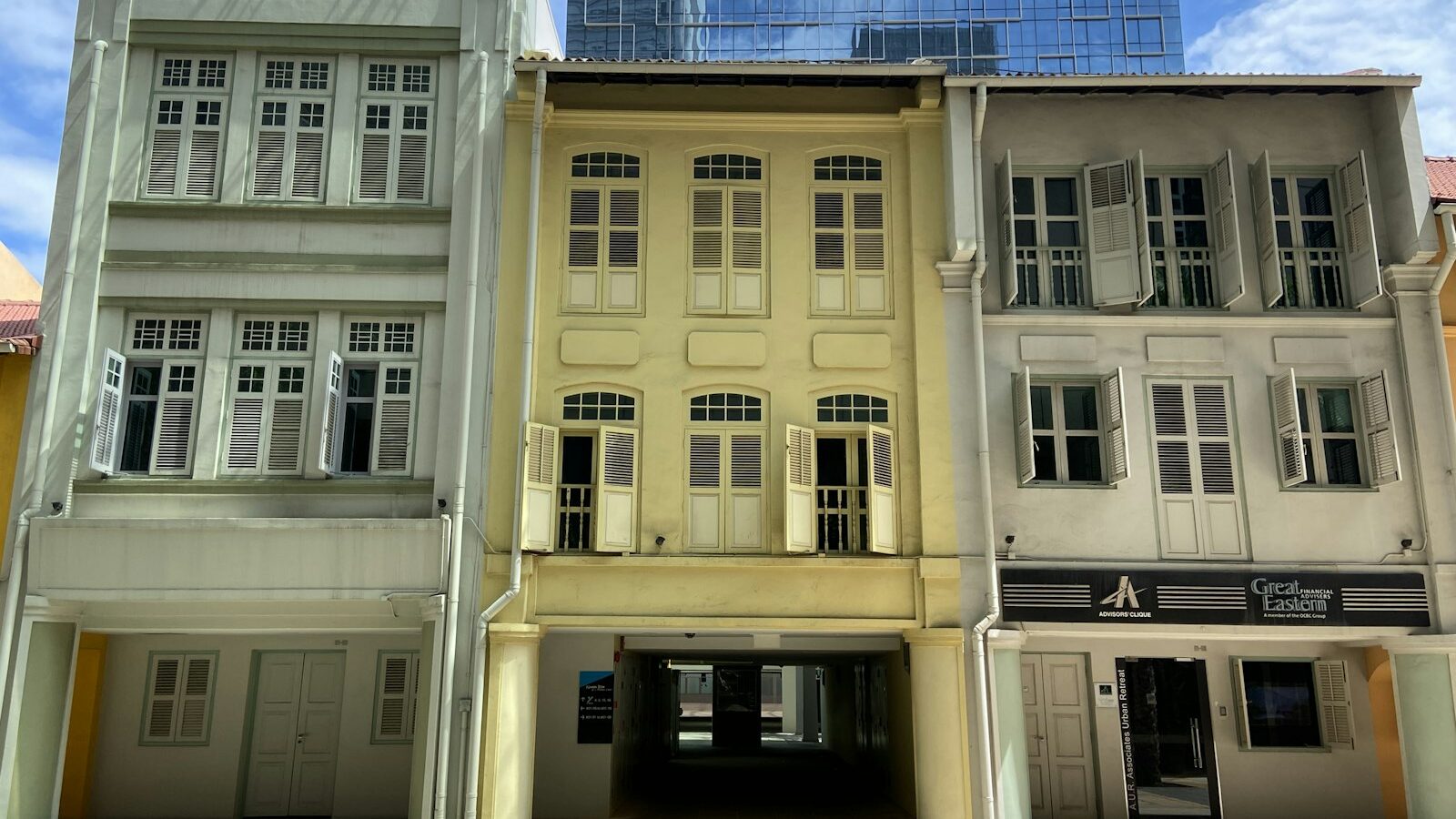
If you want to understand Singapore in a single building, look at a shophouse. The shophouses of Singapore are narrow, terraced buildings that once combined a business on the ground floor with a family home above, and they line some of the city’s most loved streets. Pastel facades, timber shutters, ornate plasterwork, and a covered walkway out front: these are the details that make so many visitors reach for a camera, and that make longtime residents feel instantly at home. This guide walks you through what shophouses are, how their styles changed over time, the features to look for, where to find them, and how they live on today.
What Is a Shophouse?
A shophouse is exactly what the name suggests: a shop and a house rolled into one. Built in long, narrow rows, each unit is typically two or three storeys tall, only a few metres wide, and surprisingly deep from front to back. The ground floor traditionally held a trade, a provision store, a medicine hall, a tailor, a coffee shop, while the family lived upstairs. Rows of them share side walls, forming continuous terraces along a street.
This form arrived with the waves of migrants who built early Singapore. Chinese, Indian, Malay, and other communities all made these buildings their own, adapting a practical design to a hot, wet, crowded port town. The shophouse became the everyday backdrop of migrant life: a place to earn a living, raise a family, and keep culture alive under one roof. That layered, mixed heritage is a big part of why the shophouse feels so distinctly Singaporean, and why it is treated today as a piece of the nation’s story rather than just old real estate.
A Short History in Styles
Shophouses were built across roughly a century, and tastes shifted as they went. You do not need to be an architect to enjoy spotting the differences. Broadly, people group them into a handful of styles, and once you know them you will start reading the streets like a timeline.
- Early Style. The oldest and plainest. These are usually low, squat, and simple, with small windows and very little ornament. They speak of a young, practical town where function came first.
- First Transitional Style. A step up in confidence. Facades grew a little taller and began to carry modest decoration, hinting at the flourishes to come.
- Late Style, sometimes called Rococo. This is the show-off era, and the one many people picture first. Facades burst with colour and detail: elaborate plaster mouldings, decorative columns, glazed tiles, and richly framed windows. If a shophouse looks like a wedding cake, this is usually why.
- Art Deco Style. The later, cleaner look. Ornament gave way to bolder geometric lines, streamlined shapes, and sometimes a datestone proudly marking the year. It feels more modern while keeping the familiar shophouse footprint.
Reading a shophouse street is a quiet pleasure. Start at the plainest building, then walk toward the most decorated one, and you can almost watch the town grow richer and more confident with every facade.
These styles are a helpful guide rather than strict rules. Many streets mix eras happily, and some buildings were altered over the decades, so treat the labels as a lens, not a law.
Signature Features to Look For
Half the joy of shophouses is in the details. Here are the elements that give them their character, and what makes each one worth a second glance.
The Five Foot Way
The single most useful feature is the five foot way, a covered walkway that runs along the front of the ground floor, formed as the upper storeys extend over the pavement. The name comes from its roughly five-foot width. In a place of sudden downpours and fierce midday sun, this sheltered corridor is pure practicality: you can walk a whole street, browse the shops, and stay dry and shaded the entire way. It also created a shared, semi-public space where hawkers, cobblers, and letter-writers once set up, giving the street its social life. Walk any old shophouse row and you will feel how thoughtful this simple idea is.
Ornate Facades
The front of a shophouse is its face, and older ones were dressed to impress. Look for decorative plaster mouldings, carved timber, ceramic ornaments, columns and pilasters, and colourful painted surfaces. Many carry symbolic motifs, flowers, animals, and auspicious emblems drawn from the owners’ cultures. This decorative richness is a highlight of Singapore’s heritage architecture, and it rewards you for slowing down and looking up above the shopfronts.
Air Wells and Deep Floor Plans
Because shophouses are long and narrow with shared side walls, getting light and air into the middle was a real challenge. The clever answer was the air well, an open shaft within the building that lets sunlight in and lets hot air escape, while also catching rainwater. It is a piece of natural, low-tech climate design that kept these homes livable long before air conditioning, and a reminder that the shophouse was built for the tropics.
Peranakan Tiles
Few details are as beloved as the peranakan tiles that decorate many facades and entrances. These glazed ceramic tiles, often called majolica tiles, come in bright colours and repeating floral or geometric patterns. Set into walls, columns, and steps, they add a jewel-like sparkle to a facade and are closely tied to the Straits Chinese aesthetic. Once you notice them, you will spot them everywhere, and no two runs of tiles feel quite the same.
Shuttered Windows and Timber Details
Upstairs, the windows are usually tall and fitted with timber shutters or louvres. These let residents control light, air, and privacy, opening wide to catch a breeze or closing against sun and rain. Together with fretwork, carved brackets, and swing doors called pintu pagar on some homes, the timber details give shophouses their warm, handmade texture.
Where to See Shophouses in Singapore
You do not have to search hard, as whole districts are lined with them. A few well-known areas to start:
- Chinatown. One of the richest concentrations of shophouses in the city, with busy five foot ways, colourful facades, and streets that still hum with trade and food.
- Katong and Joo Chiat. The eastern heartland of Peranakan heritage, famous for its especially photogenic, pastel-coloured terraces and their fine tilework.
- Tiong Bahru. Known for its clean, curved Art Deco lines and a calmer, more residential feel, now a favourite for cafes and quiet strolls.
- Little India. Vibrant rows of shophouses filled with shops, eateries, and garland sellers, best enjoyed on foot as the colours and scents change block by block.
- Emerald Hill. A gently sloping lane of beautifully restored terraces just off a major shopping belt, prized for its ornate facades and peaceful atmosphere.
Quick tips for a shophouse walk
- Look up. The best detail lives above the shopfronts, on the upper storeys and rooflines.
- Notice the ground underfoot and the columns beside you, where tiles often hide in plain sight.
- Walk the five foot way rather than the road to feel how the buildings were meant to be used.
- Go early or late for softer light and cooler air, and be respectful, as many shophouses are private homes and working businesses.
- Compare a plain facade with an ornate one nearby to spot the change in styles.
Shophouses Today: Cafes, Bars, and Conservation
Shophouses are not frozen in the past. Many have been lovingly restored and now house some of the city’s most characterful cafes, cocktail bars, restaurants, boutiques, design studios, and small hotels. There is a particular charm to sipping a coffee behind a century-old facade, or ducking into a tucked-away bar through an original timber doorway. This reinvention has kept the buildings alive and given them a new, everyday purpose that fits modern Singapore.
Much of this survival is thanks to conservation. From the 1980s onward, many shophouses were formally protected, and there are now clear guidelines that shape how a conservation shophouse can be repaired and reused. The general idea is to keep the historic character, the facade, the five foot way, the key features, while allowing the inside to be adapted for contemporary life. Rules and details change over time and vary by area, so if you ever plan to buy, rent, or renovate one, treat this as background only and confirm the current requirements with the relevant authorities, such as the Urban Redevelopment Authority.
For newcomers, shophouses are one of the friendliest doors into Singapore’s history, a reminder that this global city grew from small streets and hard-working families. For locals, they are a chance to look again at something familiar and see the craft, the climate-smart design, and the layered heritage in it. Either way, the next time you pass a row of them, slow down, step under the five foot way, and let the details tell their story.
Explore more: Singapore’s ethnic enclaves · A beginner’s guide to Peranakan culture · A short Singapore history timeline