

Dating after losing a spouse is not the same as dating after a divorce or a breakup. Your marriage did not end because something went wrong between you. It ended because someone you loved died, and the love itself often carries on. That makes the idea of meeting someone new feel complicated: hopeful one day, disloyal the next.
This guide is for widows and widowers in Singapore, many of them in their fifties, sixties or older, who are wondering whether it is all right to want company again, and how to handle the grief, guilt and family reactions that tend to come with it.
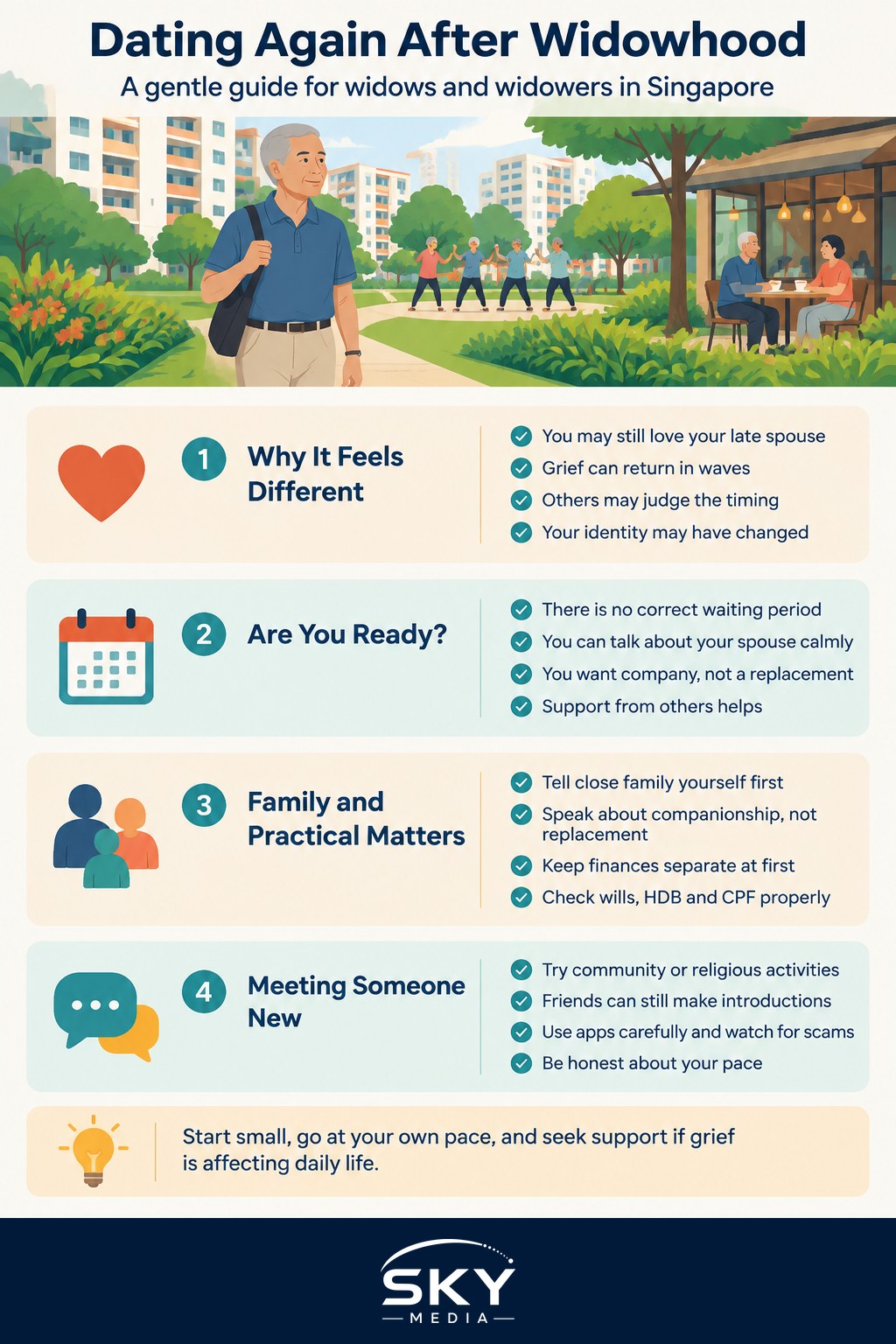
Why Widowhood Feels Different From Other Endings
People who have been through divorce often date again partly to move on from a relationship that did not work. In widowhood, there is usually nothing to move on from in that sense. Some differences worth naming:
- You may still love your late spouse. That does not stop, and it does not need to. A new relationship can sit alongside that love rather than replacing it.
- Grief comes in waves. An anniversary, a song or a hawker stall you used to visit together can bring it back years later, even when you are happy with someone new.
- Others have opinions about timing. Relatives, friends and even fellow congregation members may have views on how long you “should” wait, which rarely come up after a divorce.
- Your identity has shifted. You may have been part of a couple for decades. Learning who you are on your own is part of the process, and it affects what you want from a partner.
If you have read general advice on dating again after a breakup, you will notice that much of it assumes anger or disappointment. Widowhood more often involves sorrow and loyalty, which need a gentler approach.
How to Tell Whether You Are Ready
There is no correct waiting period. Some people feel ready within a year; others take many years or decide they prefer companionship without romance. Instead of watching the calendar, look at how you feel:
- Can you talk about your late spouse without it overwhelming you most of the time?
- Are you looking for a person to know, rather than someone to fill the empty chair at dinner?
- Could you enjoy an outing with someone new without constantly comparing them?
- Do you have support from friends, family or a counsellor, so a new relationship is not carrying all your emotional weight?
If most answers are no, that is not failure. It may mean some time for healing before you date again would serve you better. Grief support groups run by hospices, family service centres and some religious organisations can help, and your polyclinic doctor or a counsellor can point you to them if grief is affecting your sleep, appetite or daily life.
Working Through Guilt
Guilt is the feeling widows and widowers mention most. It can show up as a sense of betraying your spouse, or as worry about what they would think. A few ways people find helpful:
- Remember what your spouse wanted for you. Some couples talked about this openly before a death. If yours did not, think about what they would have wanted for your happiness.
- Separate love from loyalty. Caring for someone new does not mean you loved your spouse less.
- Allow mixed feelings. You can enjoy a lovely afternoon and feel sad on the way home. Both are normal.
- Keep rituals that matter. Visiting the columbarium, observing Qing Ming or a memorial mass, or marking anniversaries can continue. A respectful new partner will understand.
Handling Family Reactions
In Singapore, family often plays a big role, and adult children’s reactions can be the hardest part of dating again. Common responses, and what tends to help:
| Family reaction | What may be behind it | A helpful response |
|---|---|---|
| “It’s too soon” | They are still grieving their parent and fear being forgotten | Reassure them their parent remains important, and give them time |
| Worry about money or property | Concerns about the flat, savings or inheritance | Keep finances separate at first and get proper advice on wills before any big commitment |
| Suspicion of the new person | Fear you will be taken advantage of, especially online | Introduce them gradually, and listen if they spot genuine warning signs |
| Quiet acceptance or relief | They worried about you being lonely | Thank them and keep them informed without oversharing |
Some practical points for these conversations:
- Tell close family yourself before they hear it from someone else.
- Speak about companionship, not replacement. Many adult children relax once they understand their parent is not being “replaced”.
- Keep grandchildren’s routines steady. Introduce a new partner slowly and casually.
- Get proper advice on wills and property if the relationship becomes serious. The Public Trustee’s Office and the Office of the Public Guardian have general information on wills and Lasting Power of Attorney, and a lawyer can advise on your situation. Rules on HDB flat ownership and CPF nominations can be complex, so check directly with HDB and the CPF Board before making changes.
Where Widows and Widowers Meet New People
Many people in later life prefer to meet someone through shared activities rather than dating apps. Options include:
- Community activities at community centres, Active Ageing Centres and senior activity groups, such as line dancing, choir, walking groups or courses.
- Religious and volunteer groups, where shared values come built in.
- Introductions through friends, still one of the most comfortable routes for many seniors.
- Dating apps and websites, which some older Singaporeans use successfully. Our broader guide to dating again later in life covers choosing platforms and first-date safety in more detail.
Be especially careful with online contacts who quickly profess love, avoid meeting in person or video calls, or ask for money for an emergency. Romance scams often target people who are newly widowed and lonely. ScamShield, run by the police and the National Crime Prevention Council, describes the common patterns, and you should never transfer money to someone you have not met.
Bringing Your Late Spouse Into a New Relationship
You do not have to hide your past. Most people dating in later life have history, and a good partner will understand. Some things to think about:
- Talk about your spouse naturally, but not constantly on early dates. A few warm stories are enough at first.
- Decide what to do with photos and belongings in your own time. There is no need to clear the home before you are ready.
- Notice how the other person responds. Someone who is jealous of your late spouse, or demands you stop mentioning them, may not be the right fit.
- Be honest about your pace. If you want companionship but not marriage, or want to keep separate homes, say so early.
Moving at Your Own Pace
You might find that what you want is a regular kopi companion, a travel buddy or someone to attend family dinners with, rather than a full romance. All of these are valid. Start with low-pressure outings, check in with yourself afterwards, and stop if it does not feel right yet. You can always try again later.
If grief feels heavy or you are struggling to cope, speak to a doctor or counsellor. Wanting connection again is not a sign that you have forgotten. It is often a sign that you are still able to love.
Further reading: Dating a Widow or Widower: Being Patient and Respectful