

Falling for someone whose background differs from your own can feel like discovering a whole new world inside a person you already adore. In a city as mixed as ours, intercultural dating in Singapore is simply part of everyday life, yet it still carries its own tender questions about food, festivals, faith, and family. This guide is here to walk with you through those questions with warmth and honesty, so that your differences become something you build on rather than something you brace against.
There is no single script for loving someone from another culture, because Singapore is not one culture but many, layered across races, religions, languages, and family histories. What follows is not a rulebook. It is a gentle set of ideas to help two people stay curious, kind, and clear as they figure out a shared life.
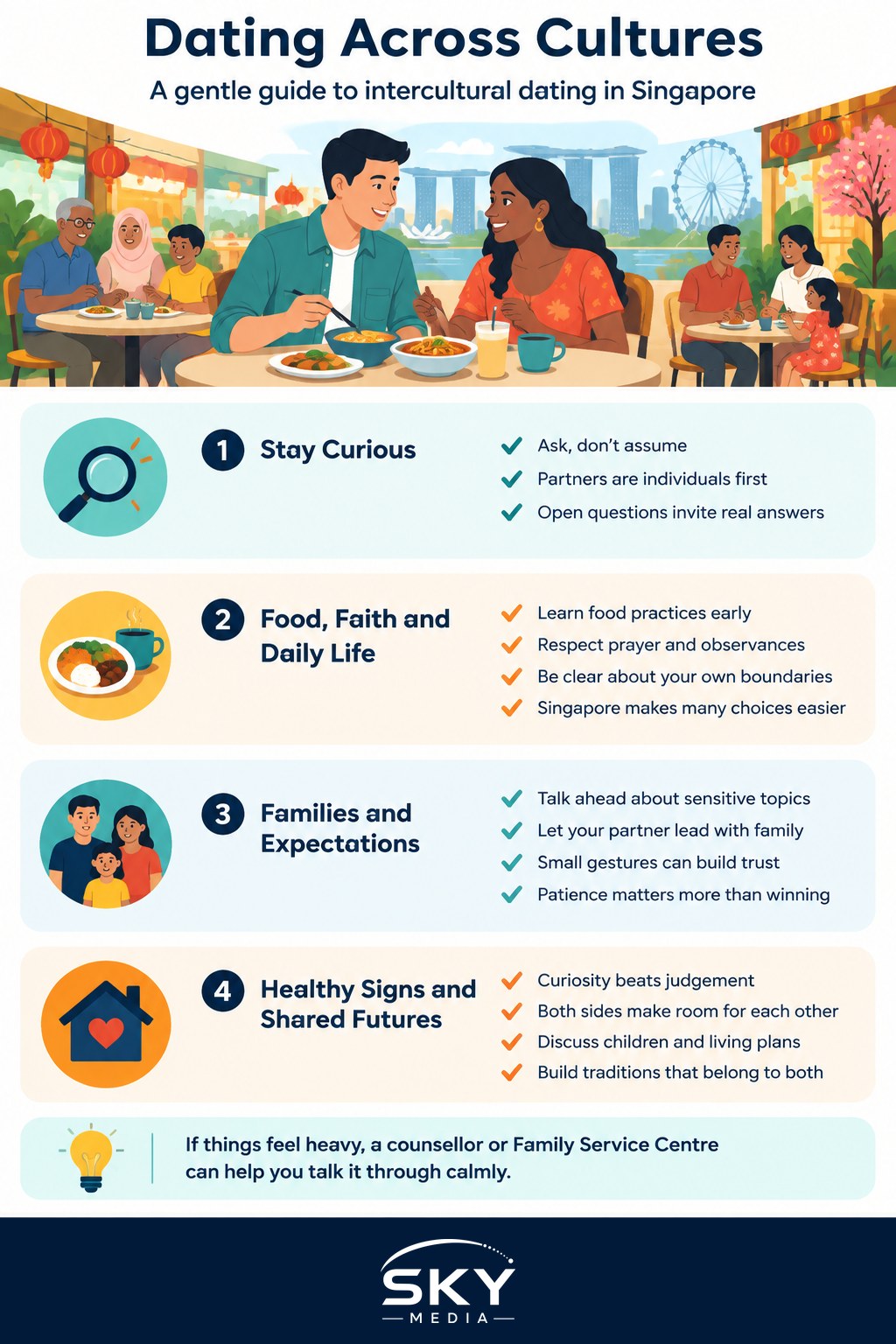
Why Curiosity Matters More Than Getting It Right
The first thing to let go of is the fear of getting everything perfect. You will mispronounce a dish, forget which festival falls when, or accidentally ask a question that lands awkwardly. That is normal, and in most cases it is forgivable when it comes from genuine interest rather than judgement.
Curiosity is the quiet engine of an intercultural relationship. Instead of assuming you know what your partner believes because of their race or religion, ask them. Two people from the same background can hold very different views on food rules, prayer, money, and family duty. Your partner is an individual first, shaped by their upbringing but never reducible to it.
Try asking open questions like “what did this festival mean in your home growing up” or “is this something your family feels strongly about, or more of a personal choice”. These invite a real answer rather than a yes or no. Over time, this habit of asking becomes one of the most loving things you do, because it tells your partner that you see the whole of them.
Talking About Faith, Food, and Daily Life
Practical differences often show up first around the dinner table and the calendar. One of you may keep halal or vegetarian, observe fasting periods, avoid certain meats, or set aside time for prayer. None of these are small details to be negotiated away. They are part of who someone is, and treating them with respect early on sets the tone for everything after.
A few gentle starting points can help:
- Learn the basics of your partner’s food practices before you plan dates, so choosing where to eat feels easy rather than tense.
- Ask which festivals or observances matter most, and offer to take part in the ways you are welcome to.
- Be honest about your own practices and boundaries too, so respect flows both ways.
- Notice the difference between what your partner personally believes and what their family expects, as these are not always the same.
Singapore makes a lot of this easier than it might be elsewhere. Halal, vegetarian, and mixed options sit side by side at almost every hawker centre, and public holidays across faiths give you natural chances to share each other’s celebrations. Use that everyday variety as an invitation to learn, not a hurdle to clear.
Meeting the Families and Managing Expectations
For many couples in Singapore, the relationship does not feel fully real until families are involved, and this is often where intercultural dating gets its most delicate. Families vary enormously. Some are relaxed and welcoming from the first hello, while others carry strong hopes about race, religion, language, or tradition, sometimes rooted in worry rather than unkindness.
It helps to remember that families and customs vary, even within the same community. Do not assume the worst before you have met anyone, and do not assume it will be effortless either. Talk with your partner ahead of time about what to expect, what topics are sensitive, and how you will support each other in the room. Small gestures go a long way, such as learning a few words of greeting in their language or bringing something thoughtful for the elders.
When there is resistance, patience and teamwork matter more than winning an argument. Let your partner take the lead with their own family, since they understand the history and the tone that works. Give parents time to see the relationship through your actions rather than only your words. Some families come around slowly, and while there are no guarantees, steady respect gives you the best chance of building trust.
Green Flags and Gentle Warning Signs
Every relationship has friction, but it helps to know the difference between healthy adjustment and patterns that quietly wear you down. The table below offers a simple way to reflect on how your differences are being handled by both of you.
| Situation | Healthy sign | Worth a gentle conversation |
|---|---|---|
| Talking about faith or customs | Curiosity and honest questions | Mocking, dismissing, or pressure to change |
| Sharing festivals and food | Both make room for each other | Only one culture ever accommodated |
| Family disapproval | You face it as a team | You are left to cope alone |
| Language differences | Effort to include one another | Being talked over or shut out |
| Future plans | Open talks about raising children or where to live | Big assumptions made without you |
None of these warning signs mean a relationship is doomed. They are prompts for an honest chat rather than a verdict. The healthiest couples return to these questions again and again as life changes, rather than deciding everything once and never revisiting it.
Building Traditions That Belong to Both of You
One of the quiet joys of intercultural love is that you get to author new traditions instead of only inheriting old ones. You might celebrate two sets of festivals, blend dishes from both childhoods into your own weekly rituals, or raise future children with more than one language and more than one story of where they come from.
Talk openly and early about the bigger questions, without pressure to solve them all at once. How might you mark religious differences with respect if you hold different faiths. Whose customs matter most at which moments. If children are something you both want, how will you share your backgrounds with them. These conversations are ongoing, and there is no shame in saying you are still working it out.
If any of this starts to feel genuinely heavy, or if family conflict is affecting your wellbeing, it is okay to seek support. A counsellor or a Family Service Centre can offer a calm, neutral space to talk things through. Reaching out is a sign of care for the relationship, not a sign that something is broken beyond repair.
Above all, treat your differences as a source of richness rather than a problem to fix. Love across cultures asks a little more attention, and in return it can offer a wider, warmer world for both of you to live in.
Explore More
Ready for the next steps together? When families enter the picture, our guide to meeting the parents for the first time can steady your nerves, and defining the relationship helps you get clear on where you both stand. If commitment is on your mind, read up on knowing when you are ready to commit so your shared future feels grounded and honest.
Frequently Asked Questions
How do I learn about my partner’s religion without sounding intrusive? Ask because you are interested, not to test or challenge them, and choose a relaxed moment. Questions about what a practice means to them personally usually go down well. You can also read from respectful sources, so your partner does not have to explain everything from scratch.
Does one of us have to convert if we marry? Not always, because it depends on the faiths involved, your families and your own wishes. Some religious traditions have specific requirements for marriage, while others do not. Speak to the relevant religious authority early, and discuss openly what each of you is and is not willing to do.
How do we split festival time when our families celebrate on different days? Talk it through early and plan together, rather than letting each family pull you in two directions. Some couples alternate festivals each year, while others attend both and keep visits shorter. Whatever you choose, tell both families your plan in advance so nobody feels forgotten.
What if my parents disapprove of my partner’s race or religion? Stay calm and listen first, because their worry is often rooted in fear of the unknown. Let them get to know your partner over time through everyday interactions. Stand united with your partner, and avoid ultimatums. If tension lingers, a counsellor or trusted elder can help mediate.
How do we handle jokes or stereotypes about each other’s culture? Agree on what is fine and what is hurtful, because that line differs from person to person. Jokes that pass between friends may sting coming from a partner, so ask before assuming. If a comment hurts, say so calmly and early, and expect the same courtesy back.
Further reading: Dating Someone on a Work Pass in Singapore: Planning a Future Together · How to Explain Singapore Dating Culture to Your China Partner · Dating Someone With Children: A Kind, Honest Singapore Guide