
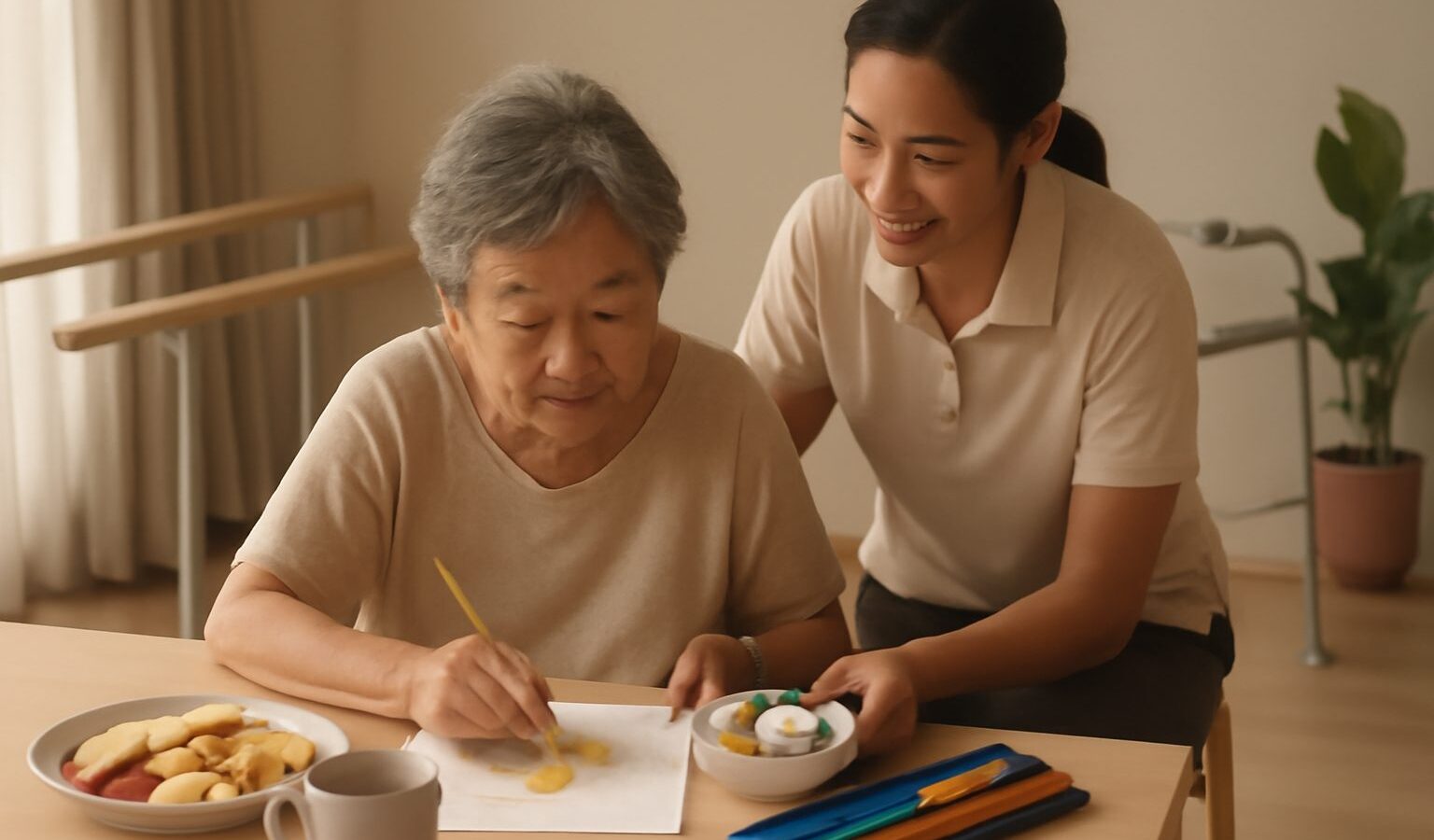
When an elderly parent comes home after a fall, a stroke or a hospital stay, families often discover that recovery does not end at discharge. Walking, getting out of a chair, climbing stairs or managing daily tasks may still be hard for weeks or months. This is where a day rehabilitation centre in Singapore can help. If you are searching for a day rehabilitation centre Singapore families can rely on, it helps to first understand what this service actually is, who it suits, and how it differs from the other eldercare options you may have heard about.
This article is general information, not medical advice. Your parent’s doctor, therapist or hospital care team is the best guide to what they need.
What a Day Rehabilitation Centre Actually Does
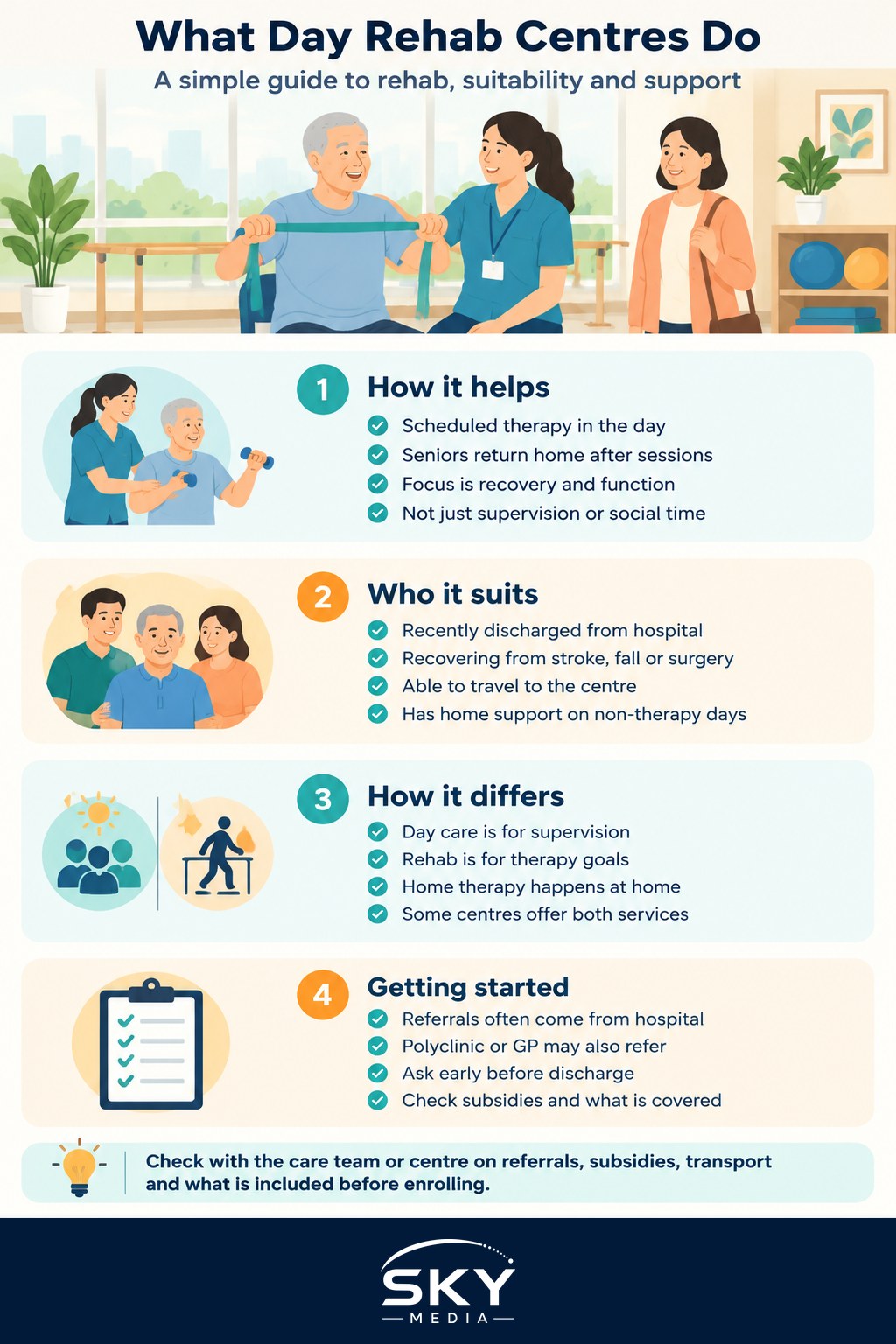
A day rehabilitation centre is a community-based facility where seniors attend scheduled therapy sessions during the day and return home afterwards. The focus is on recovery and function, not supervision or social activity alone.
Services commonly include:
- Physiotherapy to rebuild strength, balance, mobility and walking ability, often after a fall, fracture, joint surgery or stroke.
- Occupational therapy to help seniors manage everyday tasks such as dressing, bathing, cooking and moving safely around the home.
- Speech therapy at some centres, for swallowing or communication difficulties, though not every centre offers this.
- Caregiver training, so family members and helpers learn safe ways to assist with transfers, walking and exercises at home.
- Progress reviews, where therapists set goals and track improvement over a course of sessions.
The aim is usually time-limited: to help a senior regain as much independence as possible, then continue with a home exercise programme. Some seniors with long-term conditions may attend for maintenance therapy to slow decline, depending on their needs and the centre’s assessment.
Who a Day Rehabilitation Centre Suits
A day rehabilitation centre tends to suit seniors who:
- Have recently been discharged from hospital and still need therapy to recover function.
- Are recovering from a stroke, fall, fracture or joint replacement.
- Live with conditions such as Parkinson’s disease or arthritis that affect mobility.
- Are well enough to travel to a centre, with or without assistance, and to take part in exercise sessions.
- Live with family or a helper who can support them at home on non-therapy days.
It may not be the right fit if your parent needs constant supervision throughout the day, is medically unstable, or cannot travel safely. In those cases, the care team may suggest home-based therapy, a day care centre, or another arrangement.
How It Differs From Day Care and Home Care
Families often confuse rehabilitation with day care, because both involve a senior spending part of the day at a centre. The difference is the purpose. Day care is about supervision, engagement and giving caregivers a break. Rehabilitation is about therapy goals. In practice, some senior care centres in Singapore offer both services under one roof, so it is worth asking exactly which service your parent is being enrolled in.
| Option | Main purpose | Typical setting | Best suited for |
|---|---|---|---|
| Day rehabilitation | Therapy to regain or maintain function | Community centre, scheduled sessions | Seniors recovering after illness, injury or surgery |
| Day care | Supervision, activities and caregiver respite | Centre-based, often most of the day | Seniors who cannot be left alone while family works |
| Home therapy | Therapy delivered in the senior’s own home | At home | Seniors who cannot travel or need home-specific training |
| Home care | Nursing, personal care or medical support | At home | Seniors with ongoing nursing or personal care needs |
| Senior activity centre | Social activities and community engagement | Drop-in, neighbourhood based | Active seniors who want company and routine |
For a broader look at the centre-based options, see our guide to eldercare day centres and respite care, and for at-home support, read home care and day care for seniors. If your parent is fairly independent and mainly needs social contact, our guide on how to choose a senior activity centre near you may be more relevant.
How Referrals and Subsidies Generally Work
In Singapore, community rehabilitation is usually arranged through a referral. Commonly, this comes from a hospital before discharge, a polyclinic, or a family doctor. The Agency for Integrated Care (AIC), the national body that coordinates community and eldercare services, plays a central role in matching seniors to suitable services, and its website explains the current referral process.
Some general points to know:
- Ask early. If your parent is in hospital, raise rehabilitation with the ward team or medical social worker before discharge, so arrangements can be made in time.
- Government subsidies may apply. Subsidies for community care services are generally means-tested and depend on factors such as household income and citizenship or residency status. The rules and amounts can change, so check current details with AIC or the care centre.
- Private options exist. Some families choose private rehabilitation services, which may not require a referral but are usually unsubsidised.
- Check what is covered. Ask whether assessments, therapy sessions and transport are charged separately, and whether MediSave or other schemes can be used for any part of the cost. Confirm with the provider and CPF Board.
Practical Questions to Ask Before Enrolling
Before your parent starts, visit the centre if you can and ask:
- What therapy goals will be set, and how will progress be measured?
- How many sessions per week are planned, and for how long overall?
- Which therapists are involved, and will my parent see the same therapist each time?
- Is transport available, and how does it work for seniors using wheelchairs or walking aids?
- Can a family member or helper sit in on sessions to learn the exercises?
- What happens when the programme ends? Is there a home exercise plan or a follow-up review?
- What languages and dialects do staff speak, so your parent feels comfortable?
Supporting Your Parent Between Sessions
Rehabilitation works best when the effort continues at home. Encourage your parent to practise the exercises the therapist recommends, but do not push beyond what has been advised. Keep walkways clear, consider grab bars in the bathroom, and make sure footwear is secure and non-slip. Celebrate small wins, such as standing up unaided or walking to the lift, because motivation often dips in the middle of a long recovery.
Watch for signs of pain, dizziness, breathlessness or low mood, and raise them with the therapist or doctor promptly. Caring for a recovering parent is tiring, so look after yourself too. Many centres can point caregivers to support groups and training resources.
A day rehabilitation centre is not a permanent arrangement for most seniors. It is a bridge between hospital and home life, helping your parent regain confidence and independence, one session at a time.
Official sources: Agency for Integrated Care
Further reading: How to Choose a Rehab Centre for Seniors in Singapore · How to Choose a Senior Day Care Near Your Home · How to Choose an Elderly Day Care Centre in Singapore