
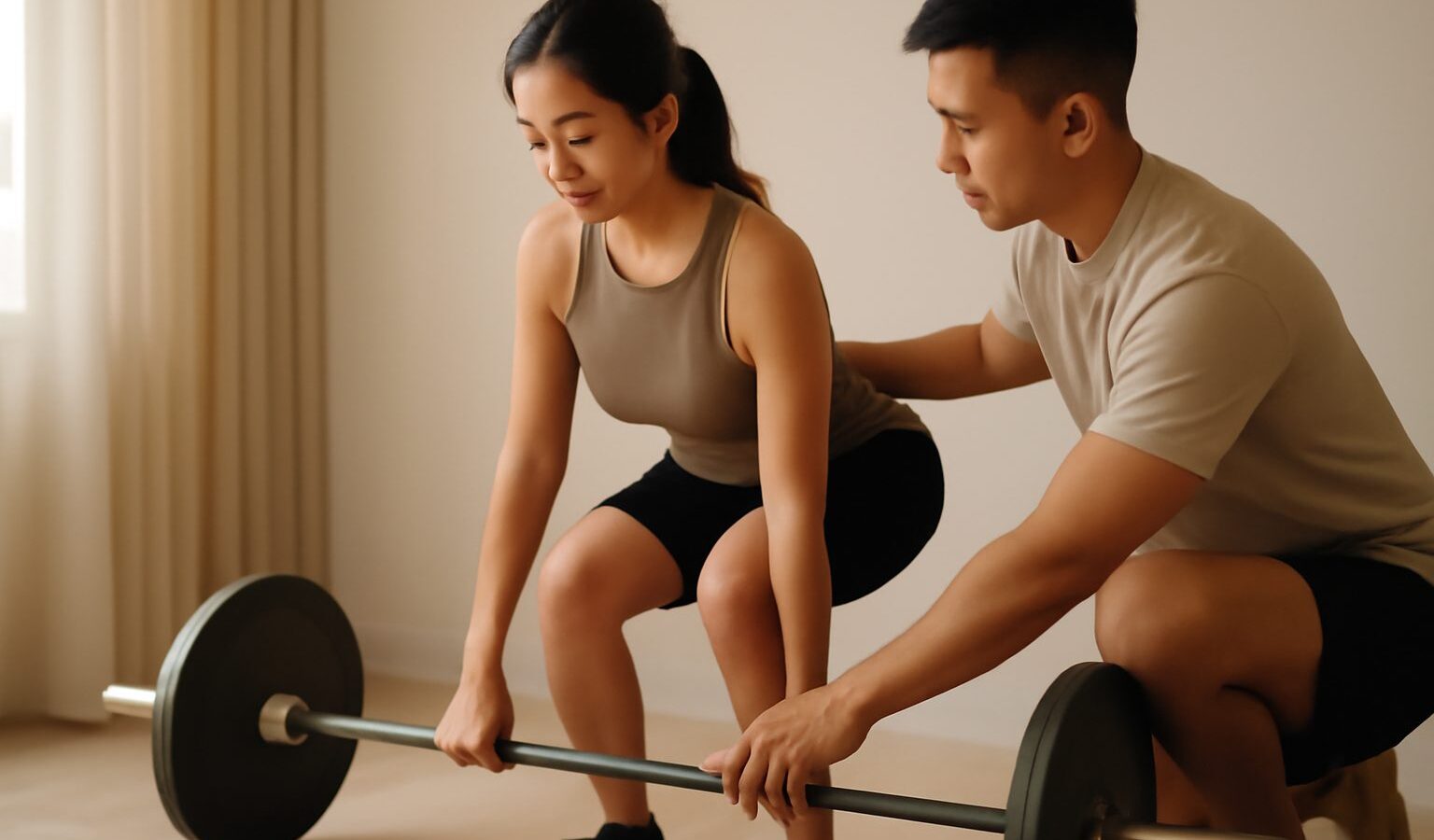
Good deadlift form is the difference between one of the most useful strength exercises you can learn and a sore lower back. The deadlift is simply picking a weight up off the floor with your whole body working together, a movement you already do when you lift a full laundry basket or hoist a suitcase into the car boot. Learning to do it well teaches you to hinge at the hips and keep a neutral spine, which protects your back in daily life. This beginner’s guide focuses on the movement pattern first, because technique, not weight, is what makes the deadlift safe.
Before you start, a word of care. If you are older, sedentary, pregnant, or have any back issue, heart condition, high blood pressure or other health concern, check with a doctor first. This is general information, not physiotherapy or personal coaching. The deadlift loads the spine, so it is one lift where getting a qualified trainer to check your technique in person is genuinely worthwhile.
What the Deadlift Actually Trains
The deadlift is a hip hinge, which means the movement comes mainly from your hips folding back and then driving forward, rather than from your knees or your lower back. When done correctly, it strengthens the whole back of your body: the glutes, hamstrings, and the muscles that keep your spine stable. That posterior chain is often weak in people who sit for long hours, and strengthening it can help everyday posture and lifting confidence.
Because it recruits so much muscle at once, the deadlift is efficient. You get a lot of strength work from a single, simple movement. It also teaches a skill worth having for life: how to pick things up from the floor safely by hinging and bracing rather than bending and yanking with a rounded back. That lesson carries over every time you lift a heavy box or a squirming toddler.
The Hip Hinge: The Skill Behind the Lift
Before touching any weight, practise the hinge itself. This is the core pattern of the deadlift.
- Stand tall with feet about hip-width apart and a soft bend in the knees.
- Push your hips straight back as if closing a car door behind you with your backside, letting your torso tip forward.
- Keep your back flat and neutral throughout, with your chest proud and your gaze a few steps ahead on the floor.
- Feel a gentle stretch in your hamstrings as your hips travel back, not a strain in your lower back.
- Drive your hips forward to stand tall again, squeezing your glutes at the top without over-arching.
A useful drill is to hinge with a broomstick or dowel held against your back, touching your head, upper back and tailbone. If all three stay in contact as you hinge, your spine is staying neutral. Groove this pattern until it feels natural before adding any load.
Setting Up and Performing the Lift
Once the hinge is comfortable, you can add a light load, such as a kettlebell or a lightly loaded barbell on the floor. Move through the setup deliberately every single rep.
- Stand with the bar over your midfoot, feet about hip-width apart, shins close to the bar.
- Hinge down and grip the bar just outside your knees, arms straight and hanging.
- Set your back flat and neutral, chest up, and take the slack out of the bar by pulling gently until it feels tight.
- Brace your core hard, as if bracing for a light punch to the stomach.
- Drive through the floor with your legs and push your hips forward, keeping the bar close to your body as it travels up your shins and thighs.
- Stand tall at the top without leaning back, then hinge and control the weight back down under tension. Do not drop or round on the way down.
Keep the bar path vertical and close to you. A weight that drifts away from your body forces your lower back to work far harder than it should.
Deadlift Do’s and Don’ts
Small habits make a big difference. Keep this table in mind as you practise.
| Do | Don’t |
|---|---|
| Keep a neutral, flat back throughout | Round your lower back to reach the bar |
| Start light and master the pattern | Chase heavy weight before form is solid |
| Keep the bar close to your shins and legs | Let the bar drift out in front of you |
| Brace your core before every rep | Hold your breath and strain with a loose trunk |
| Warm up thoroughly first | Walk in cold and pull heavy on your first set |
| Stop if you feel sharp back pain | Push through a sharp or pinching sensation |
Muscle soreness a day or two after training is normal and expected. Sharp pain in your back during or right after a lift is not, and it means you should stop, rest, and see a doctor or physiotherapist if it does not settle.
Building Up Sensibly in Singapore
The golden rule for beginners is to start lighter than you think you need to. Spend your first weeks owning the movement with a manageable load, because a clean pattern under light weight builds the exact habits that keep you safe when the weight climbs later. Adding load gradually over time is the idea behind progressive overload, and it works far better than big jumps that outrun your technique.
Never skip your warm-up. A few minutes of light movement and hinge practice, along with some warming up and cooling down work, prepares your hips and back and is doubly sensible in Singapore’s heat, where stiff, under-prepared muscles and a rushed session are a poor mix. Stay hydrated and train in the cooler parts of the day if you are at an outdoor or non-air-conditioned space.
Many ActiveSG and community gyms have barbells, and staff or a qualified personal trainer can check your setup. For a lift that loads the spine, that in-person eye is worth more than any number of videos. The deadlift shares its hip-hinge DNA with squats and glute work, so as your confidence grows you might revisit how to do a proper squat and build the posterior chain further with glute training for strength.
Respect the pattern, respect any pain, and let the load rise slowly. Learn deadlift form properly as a beginner and you gain a strong, resilient back that serves you far beyond the gym.