

It is Sunday afternoon. You are having kopi with friends or lying on the sofa, and then a heavy feeling creeps in. Your mind jumps to the inbox, the Monday meeting, the assignment you have not started. The rest of the evening feels shadowed by the week ahead. This is what people call the Sunday scaries, and it is extremely common, especially among young adults in their first few years of work or university.
The good news is that this dread usually has identifiable causes, and small changes to how you end your Friday and spend your Sunday can take a lot of the sting out of it.
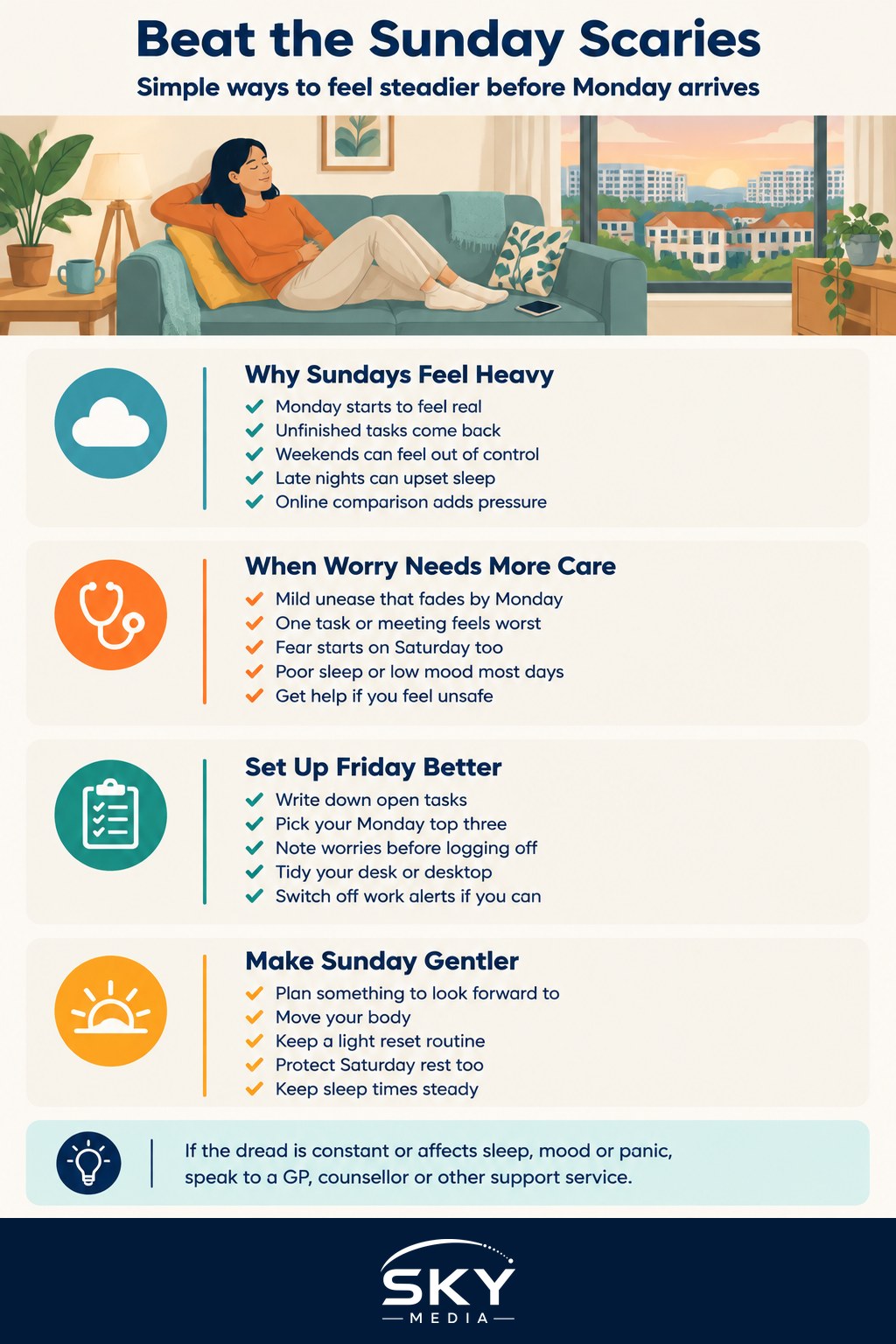
Why Dread Builds on Sunday Evenings
The Sunday scaries are a form of anticipatory anxiety: worry about something that has not happened yet. A few things make Sunday the perfect time for it.
- The boundary effect. Sunday evening is the line between freedom and obligation. Your brain notices the shift and starts scanning for threats.
- Unfinished business. Tasks left hanging on Friday sit in the back of your mind all weekend, then surface when Monday becomes real.
- Loss of control. On weekends you choose your schedule. Monday brings meetings, deadlines and other people’s priorities.
- Body clock disruption. Late nights and lie-ins on Friday and Saturday can make it harder to sleep on Sunday, and lying awake feeds worry.
- Comparison and scrolling. Seeing others’ perfect weekends online can leave you feeling you did not “use” yours well enough.
For many young adults in Singapore, there are extra layers: long hours, the pressure to perform early in a career, part-time work squeezed alongside studies, or a weekend already partly given to family commitments. It is not a personal failing to feel the dip.
Is It Normal Dread or Something More?
A bit of Sunday unease is ordinary. It becomes worth paying closer attention to if it starts to take over.
| What you notice | Likely meaning | What to try |
|---|---|---|
| Mild unease on Sunday evening that fades by Monday lunch | Common anticipatory anxiety | The habits in this article |
| Dread focused on one task, person or meeting | A specific stressor that needs addressing | Plan for it, talk to your manager or lecturer |
| Dread that starts on Saturday and lasts all week | Your role or workload may be a poor fit | Review workload, boundaries or longer-term direction |
| Poor sleep, low mood or panic most days | Possible ongoing anxiety or burnout | Speak to a GP, counsellor or mental health professional |
If the last row sounds familiar, please do reach out. Your GP, a polyclinic, your school’s counselling service, or an employee assistance programme at work are good places to start. If you ever feel unsafe, contact emergency services or a crisis helpline straight away.
Close the Week on Friday
A lot of Sunday dread is really Friday’s unfinished thinking. Ten to fifteen minutes before you log off on Friday can change your whole weekend.
- Write down what is still open. Get every loose end out of your head and into a list.
- Pick your Monday top three. Decide the first things you will do, so Monday morning has a clear starting point.
- Note anything you are worried about. Naming the difficult conversation or the deadline makes it smaller.
- Tidy your desk or desktop. Coming back to order is easier than coming back to chaos.
- Log off properly. Turn off notifications for work chat on your phone if your role allows it.
Students can do the same thing with assignments and readings at the end of the school week.
Reshape Your Sunday
How you spend the day itself matters as much as how you think about Monday.
- Plan something good for Sunday evening. A dinner with friends, a class, a walk at a park connector or a favourite show gives the evening something to look forward to, rather than leaving it empty for worry to fill.
- Move your body. A swim, run, or even a slow walk around your neighbourhood helps burn off restless energy.
- Keep a light reset routine. Laundry, meal prep or checking your calendar for an hour on Sunday afternoon can make you feel prepared. Keep it short so it does not swallow the day.
- Protect Saturday too. If Sunday is the only day you rest, every hour of it feels precious and slipping away. Spread rest across the weekend.
- Go easy on late-night scrolling. Comparison and blue light are a poor mix before a work day.
- Keep your sleep times steady. Try not to stay up very late on Saturday, so Sunday night sleep comes more easily.
Work With Your Thoughts, Not Against Them
When the dread arrives, telling yourself to “stop worrying” rarely works. Try these instead:
- Name it. Saying “this is the Sunday scaries” reminds you it is a pattern, not a prediction.
- Ask what exactly you are dreading. Vague dread is bigger than specific worry. Often it narrows down to one task or one person.
- Do one tiny action. If a single email is looming, drafting two lines can release a surprising amount of tension. Just do not let it turn into a full work session.
- Breathe slowly. A few minutes of slow breathing, with a longer out-breath than in-breath, can calm your body.
- Remember past Mondays. Most of the time, Monday turns out more manageable than Sunday evening imagined.
If self-criticism is part of the picture, our guide on how to deal with self-doubt has more tools. And if a particular colleague is the main source of your dread, how to deal with difficult people can help you plan your approach.
When the Scaries Are a Signal
Sometimes the Sunday scaries are telling you something useful. If the feeling is constant and tied to the same job, course or team, it is worth asking bigger questions:
- Is your workload realistic, and have you raised it with your manager?
- Are there unclear expectations you could clarify?
- Is there a boundary, such as answering messages at night, that you could reset?
- Does this role or course still fit where you want to go?
You do not need to make a dramatic change. Even one honest conversation can shift how Monday feels. Treat your Sunday evenings as information, be kind to yourself, and build a few habits that help you head into the week steadier.
Further reading: How to Deal with Overwhelm When Everything Feels Like Too Much