
Few things make a parent’s scalp itch quite like the words “head lice went round the class”. If your child has come home scratching, take a breath. Head lice are extremely common, especially among young children who play closely together, and they are nothing to be ashamed of. This guide to managing head lice singapore families can use covers how to check, how to treat, and how to stop the cycle, all in a calm and practical way. Please treat it as general information and not medical advice, and not a tool for self-diagnosis. If you are unsure or worried, speak with your doctor or pharmacist.
The most important thing to know up front is this. Having head lice does not mean your home is dirty or your child is unclean. Lice are equal-opportunity visitors who actually prefer clean hair. They spread through direct head-to-head contact, which is exactly what happens when children hug, huddle over a phone, or lean in to share secrets.
What Head Lice Actually Are
Head lice are tiny wingless insects that live close to the scalp and feed on small amounts of blood. They cannot fly or jump. They move by crawling, and they pass from person to person mainly through direct hair contact. Adult lice are roughly the size of a sesame seed and can be hard to spot because they move quickly and shy away from light.
The eggs, called nits, are a different story. They are tiny and glued firmly to the hair shaft close to the scalp. Live eggs are often a greyish or brownish colour, while empty shells look white and sit further down the hair as it grows out. Nits are stuck fast, which is how you can tell them apart from flakes of dandruff, which brush away easily.
How to Check for Head Lice
The itch of head lice is caused by a reaction to their bites, and not everyone itches, so checking is the only reliable way to be sure. The best method is wet combing, also called detection combing.
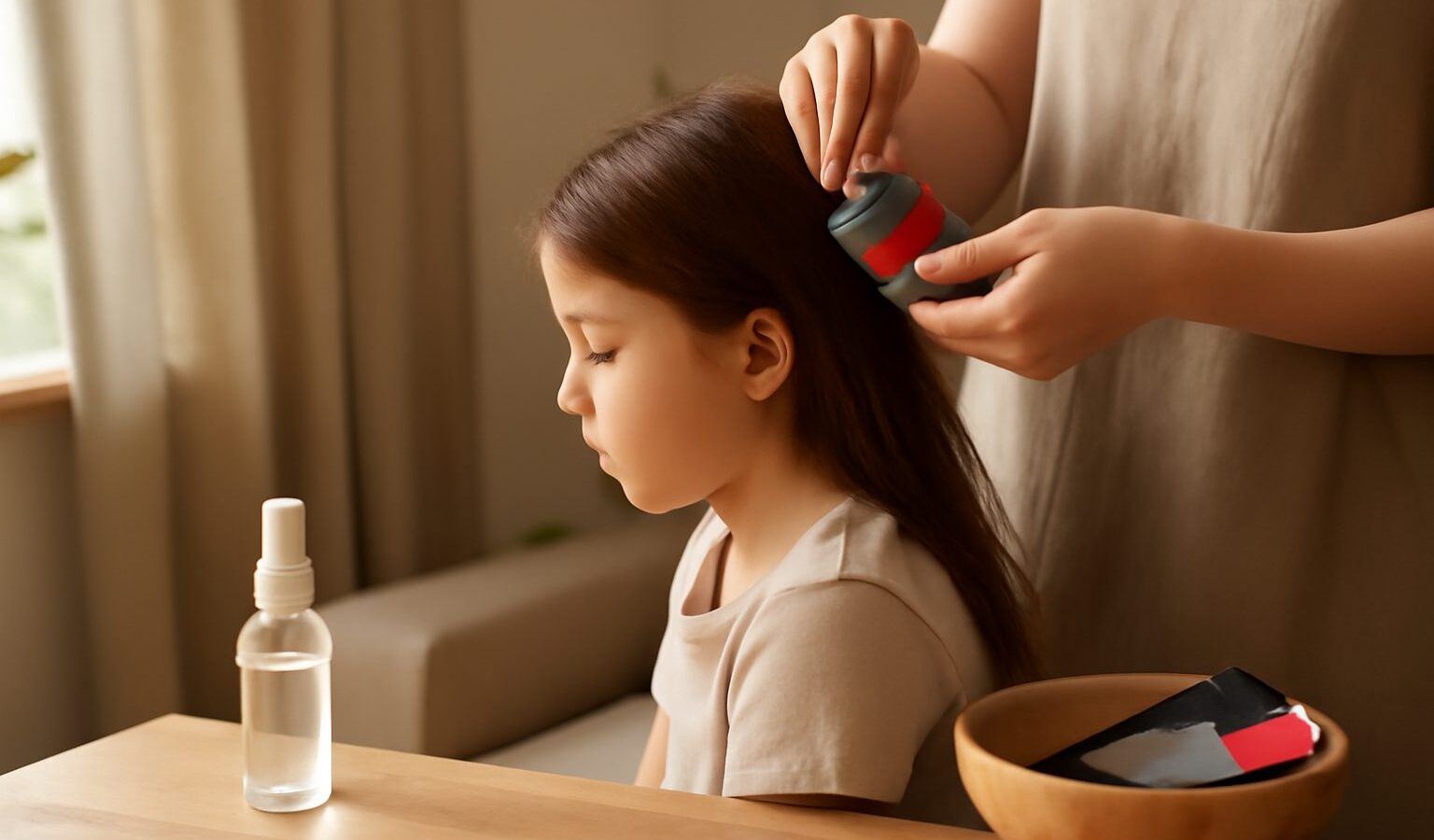
Wash your child’s hair as usual, then work in plenty of conditioner while it is still wet. The conditioner stuns the lice and helps a fine-toothed comb glide through. Using a proper fine-toothed lice comb, comb from the scalp to the very ends of the hair, section by section, wiping the comb on a white tissue after each stroke. Work under a good light and take your time, paying attention to the nape of the neck and behind the ears, where lice love to gather. If you see moving lice on the tissue or comb, your child has an active case.
Treating Head Lice Safely
If you find live lice, there are two main approaches, and you can use them together. The first is wet combing on its own, repeated regularly. The second is a treatment lotion or spray from the pharmacy. Because guidance and products change, and because the right choice can depend on your child’s age, ask your pharmacist which option suits your family, and always follow the instructions on the pack exactly.
| Approach | How it works | Key reminder |
|---|---|---|
| Wet combing | Removes lice and eggs by combing wet, conditioned hair | Repeat every few days over about two weeks |
| Pharmacy treatment | A lotion or spray that treats live lice | Follow pack instructions and repeat if directed |
| Combing after treatment | Comb through to remove remaining eggs | Keep checking for two weeks |
| Checking the household | Look at everyone in the home | Only treat those who actually have live lice |
Whichever route you choose, the key is thoroughness and repetition. Lice eggs hatch a few days after they are laid, so a single treatment rarely gets everyone. Most methods need to be repeated after about a week to catch newly hatched lice, and wet combing every few days for a couple of weeks helps break the cycle. Never use more than one chemical treatment at a time, and do not use them as a preventative. Keep all products away from the eyes and out of reach of children.
Tell the School or Childcare
Once you have confirmed head lice, let your child’s school, childcare centre, or preschool know. This is not embarrassing. It helps the class check their own children and stops the lice from bouncing back and forth. Schools are used to these messages, and a quick, matter-of-fact note is all that is needed. Your child usually does not need to stay home, but do check your centre’s own guidance.
Treat Close Contacts, Not the Whole Street
Head lice pass through close head-to-head contact, so the people most at risk are those who live with your child or hug them often. Check everyone in the household on the same day using the wet combing method. Only treat the people who actually have live lice, rather than treating everyone as a precaution. Let close friends and relatives who have had head-to-head contact know so they can check too.
It is worth gently reminding children to avoid pressing heads together during play or selfies for a little while, though this is tricky to enforce and lice are not a sign that anyone did anything wrong.
What About Cleaning the House
You can relax here. Lice cannot survive long away from the scalp, so you do not need to fumigate your home or throw anything away. It is enough to wash recently used bedding, hats, and hair accessories in hot water, or seal items you cannot wash in a bag for a couple of days. Give combs and brushes a good clean. Deep cleaning the whole house does not help, because the lice live on heads, not on furniture.
When to Seek Extra Help
Most cases clear up with careful home treatment. Do see a doctor or pharmacist if the lice keep coming back despite proper treatment, if your child’s scalp looks infected with redness, weeping, or crusting from scratching, if there is significant swelling, or if your child is very young and you are unsure which product is safe. A pharmacist is a friendly first port of call for advice on suitable treatments.
Above all, stay kind about it. Head lice are a normal part of childhood for many families, they say nothing about your care, and with a little patience they clear up completely.
Explore more
Common Baby Illnesses and When to Worry
Choosing a Paediatrician
Children’s Fever and When to See a Doctor
When to Take Your Child to A&E vs a GP