
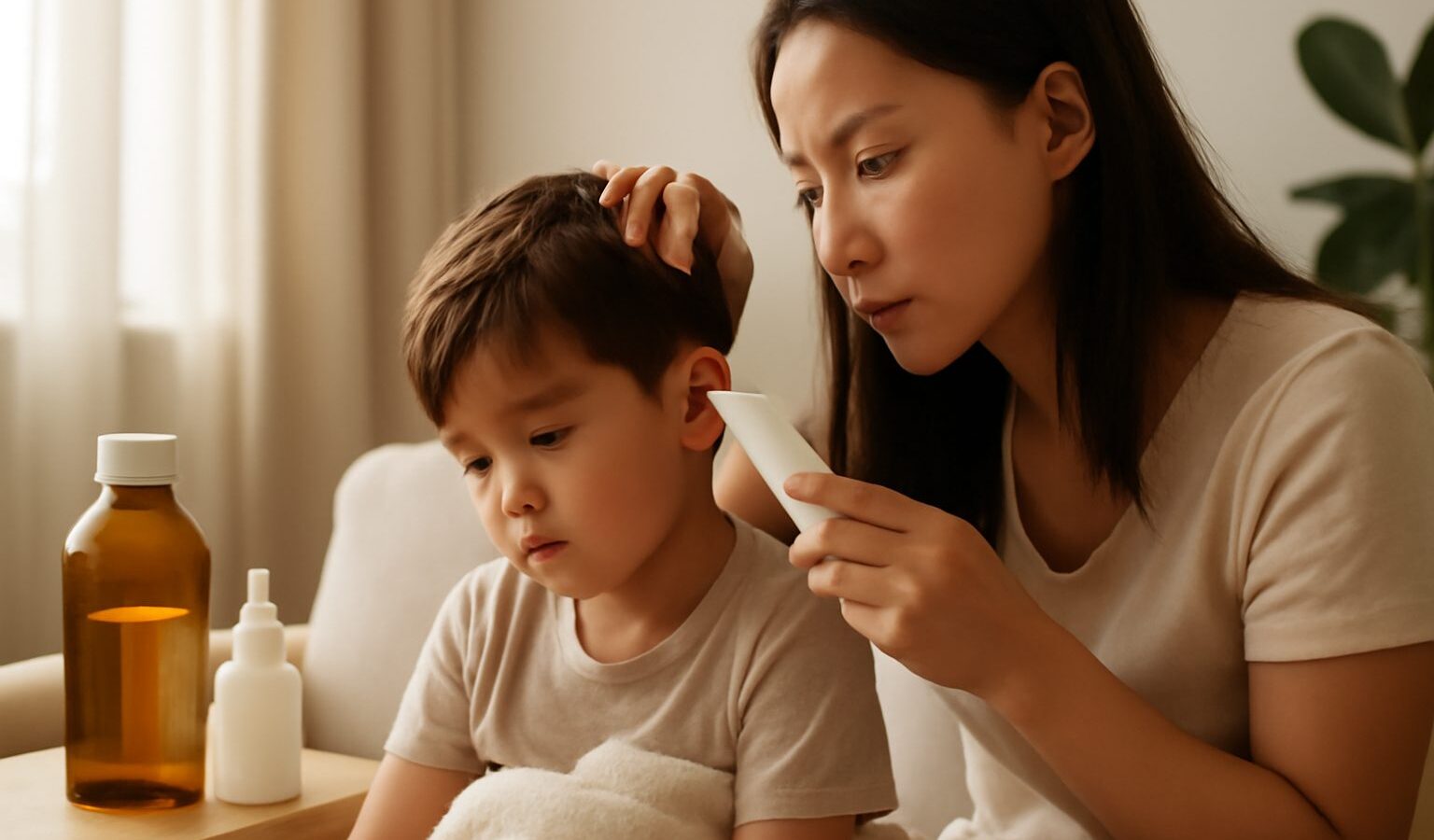
If your little one has ever tugged at their ear, been unusually fussy, and struggled to sleep, you may have found yourself facing a common childhood ailment: an ear infection. Ear infections are one of the most frequent reasons parents bring young children to see a doctor, and most children will have at least one before they start school. While they can be painful and distressing for a child, and worrying for parents, they are usually manageable and most children recover well.
Before we go further, please remember that this article provides general information only. It is not medical advice and should not be used to diagnose your child. If you think your child has an ear infection, or if you are worried about their symptoms, please see a doctor or paediatrician. For any emergency, go straight to A&E or call 995.
Recognising the Signs
Spotting an ear infection can be tricky, especially in babies and toddlers who cannot yet tell you where it hurts. Instead, you often have to read the clues in their behaviour. Understanding the common signs of ear infections in children in Singapore helps you respond quickly and comfort your little one while you arrange to see a doctor.
Common signs to look out for include:
- Pulling, tugging, or rubbing at one or both ears.
- Crying more than usual, being irritable, or seeming generally unsettled.
- Difficulty sleeping, as lying down can make ear pain worse.
- A fever, or a child who seems warm and out of sorts.
- Trouble hearing or responding to sounds, or a lack of appetite.
- Fluid or discharge draining from the ear.
Young children often develop ear infections after a cold, when congestion affects the small tubes that drain the ears. Because babies cannot describe their discomfort, any combination of unexplained fussiness, fever, and disturbed sleep, especially following a cold, is worth paying attention to. When in doubt, it is always best to have your child checked by a doctor.
Comfort Measures at Home
While you arrange a doctor’s visit, there is a lot you can do to help your child feel more comfortable. Ear pain can be very distressing, so your calm presence and gentle care make a real difference. The aim at home is simply to soothe your child and keep them settled, not to treat the infection itself, which is something a doctor will assess.
Keep your child well rested and offer plenty of fluids, as staying hydrated helps when they are feeling unwell, particularly if they also have a fever. Our guide on caring for a sick child at home has plenty of gentle, reassuring ideas for these recovery days, and you may also find our tips on hydration and fluids for a sick child helpful.
Some children find that keeping their head slightly raised while resting eases the pressure and discomfort. A cuddle, a favourite story, or quiet time together can be wonderfully calming when a child is in pain. Importantly, do not put anything into your child’s ear, including cotton buds, ear drops, oils, or home remedies, unless a doctor has specifically advised it. The delicate ear canal is easily damaged, and only a healthcare professional can safely examine and treat the ear. If there is any discharge, gently wipe away what appears on the outer ear without poking inside.
Avoid getting water into the affected ear during baths, and hold off on swimming until your child has recovered and a doctor is happy for them to return to the water.
When to See a Doctor
Because it is difficult to tell at home how serious an ear infection is, it is generally wise to have your child seen by a doctor if you suspect one. A doctor can look inside the ear, work out what is going on, and advise on the right care for your child. This is especially important for younger children and babies, who should always be seen by a doctor.
Please see a doctor if your child has:
- Significant or ongoing ear pain, or pain that is not improving.
- A fever alongside ear symptoms.
- Fluid, pus, or blood draining from the ear.
- Symptoms that are getting worse rather than better, or that do not improve after a day or two.
- Swelling, redness, or tenderness around the ear.
You should also seek medical advice if your child seems very unwell, is not feeding, or is difficult to wake. Trust your instincts, as you know your child better than anyone. If your child becomes seriously unwell, is very drowsy, has a stiff neck, or you feel it is an emergency, go straight to A&E or call 995. If you are unsure whether to visit a clinic or the hospital, our guide on when to take your child to A&E vs the GP can help you weigh things up. And whenever a fever has you concerned, our guide on children’s fever and when to see a doctor is a helpful read.
Ear infections, though painful, are a common part of childhood, and with a doctor’s care and lots of comfort at home, most little ones are back to their cheerful selves before long. Stay calm, watch the symptoms closely, and never hesitate to get your child checked when something does not feel right. Your loving care and quick attention are the best support your child could have.