
House flies are more than an annoyance buzzing around your kitchen. They land on rubbish and waste one moment and on your food the next, carrying germs on their bodies and legs. In Singapore’s warm, humid climate they breed all year round, so a few flies can quickly become a persistent problem. Controlling house flies in Singapore homes comes down to a simple idea. Remove what attracts them, block the ways they get in, and stop them breeding.
This guide covers practical, low toxicity steps you can take today, plus when the problem points to something bigger that needs professional help.
Why flies are a health concern
Flies feed on decaying matter, food waste, faeces and other filth, then move straight onto your kitchen counters, dishes and uncovered food. In doing so they can transfer bacteria and other germs onto the surfaces you eat from. That is why fly control is really about hygiene, not just comfort.
A female fly can lay many eggs in moist, rotting material, and in our heat those eggs develop into new flies fast. This means a small oversight, like a bin left uncovered or food scraps stuck in a drain, can turn into a steady supply of flies within days. Break that cycle and the flies have nowhere to multiply.
Keep them out and take away the attraction
The most effective, least toxic approach is denying flies food and entry. Do these consistently and you will see a real drop in numbers.
Cover food and drinks. Never leave food uncovered on the counter or table. Use lids, mesh covers or the fridge. Wipe up spills and crumbs promptly, clear dirty dishes rather than leaving them to sit, and store fruit sensibly, since overripe fruit is a strong lure.
Manage your bins. Rubbish is the number one fly magnet. Keep kitchen bins covered with a tight fitting lid, empty them regularly before they overflow, and rinse them out now and then so residue does not build up. Bag wet waste and food scraps well. Do not let refuse sit around in the heat.
Keep drains and sinks clean. Flies, including the small drain flies, breed in the gunk that collects in drains and floor traps. Clear food debris from the sink strainer, flush drains, and keep floor traps in the kitchen and bathroom clean and running freely. A clean kitchen naturally supports this, and our guide on how to deep clean your kitchen helps you stay on top of it.
Fix screens and gaps. Physical barriers are your friend. Fit or repair window and door screens, and make sure they close snugly. In an HDB flat or condo, check that screens have no tears and that gaps around windows are sealed. Keeping doors and windows to common corridors shut when flies are active helps too.
Clean up pet waste and standing organic matter. If you have pets, remove waste promptly. Clear rotting leaves, stagnant water and any decaying matter from balconies, corridors and drains, as these all breed flies and other insects. Standing water is also a mosquito breeding risk, so clearing it serves double duty. For that side of things, see our guide on preventing mosquitoes at home, and follow the National Environment Agency guidance on removing stagnant water and keeping your surroundings clean.
Safe control methods
When flies are already indoors, reach for the gentlest effective tools first.
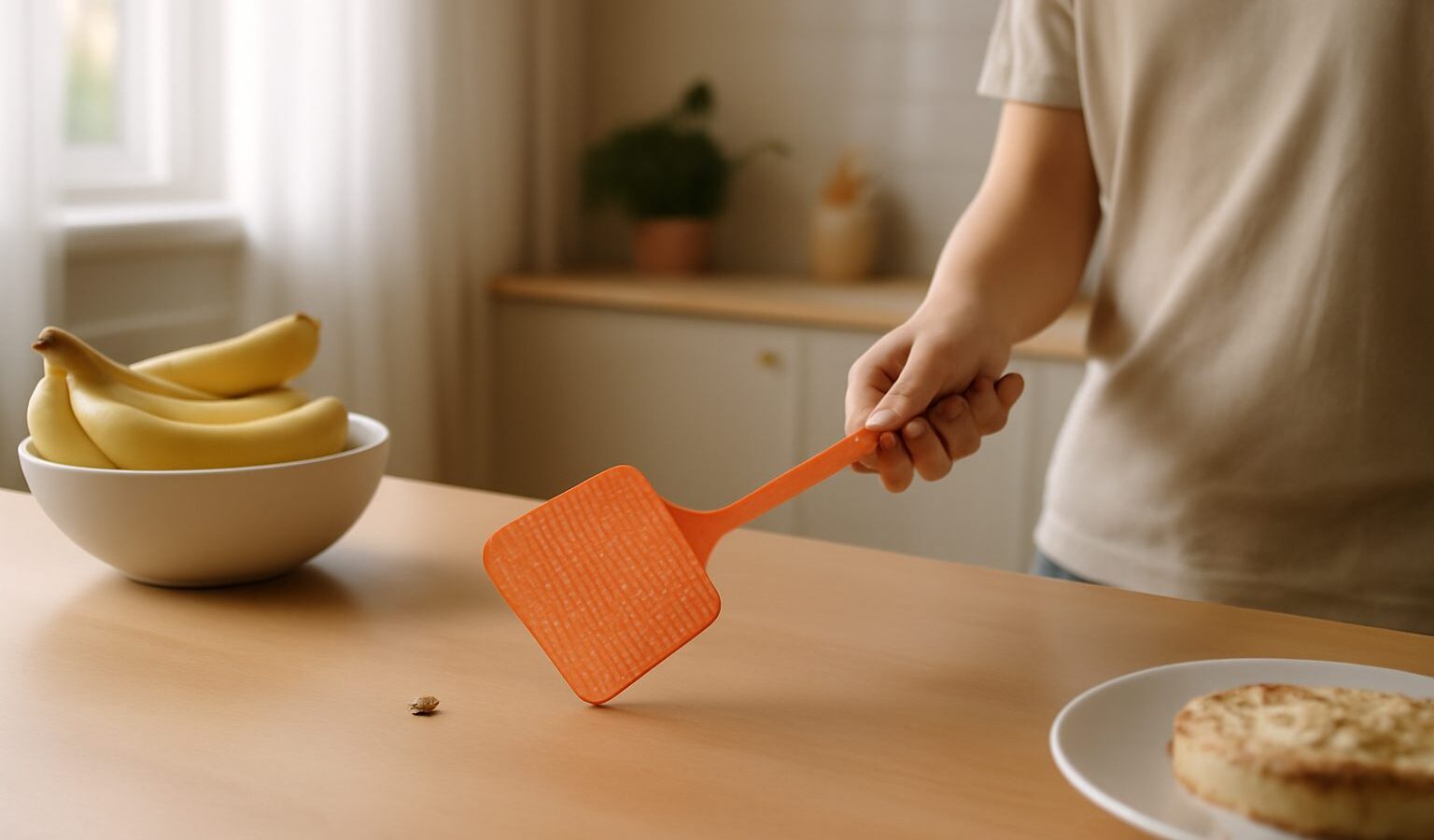
Physical removal. A fly swatter is simple, cheap and toxin free. Sticky fly papers and traps hung away from food catch flies without chemicals. These are ideal in a kitchen where you want no spray near food.
Reduce entry at peak times. Flies are most active in daylight and warmth. Keep screened windows as your ventilation and close open doors during the busiest fly hours.
Insecticides, used carefully. If you choose to use a fly spray, treat it as a last resort and follow the label exactly. Never spray onto or near food, food surfaces, or where children and pets eat and play. Ventilate the area, and store all products safely out of reach. Remember that spraying kills the flies you see but does nothing about the breeding source, so it works only alongside the cleanliness steps above.
Least toxic methods first, chemicals strictly per label and away from food, children and pets. That order keeps your home both fly free and safe.
When to call a professional
Most fly problems clear up once you remove the food, seal the entry points and clean the breeding spots. But if flies keep coming in large numbers despite a clean, well sealed home, there is usually a hidden breeding source you have not found, such as waste trapped somewhere, a dead animal in a void, or a drainage issue. A sudden swarm can also signal a bigger sanitation problem nearby.
In these cases a licensed pest control operator can locate and treat the source properly. If the problem clearly comes from common areas, shared refuse points or drainage in an HDB block or condo, raise it with your town council or building management, since the breeding site may be outside your unit and a shared responsibility.
For a broader look at keeping insects out of your home, see the guides below. Persistent flies are almost always a hygiene signal, so start there, and the rest usually follows.
Related reading: Pest Control in Singapore, Preventing Mosquitoes at Home, Getting Rid of Cockroaches at Home, and How to Deep Clean Your Kitchen.