

Deepavali, the Festival of Lights, is a lovely time to get children making things with their hands. Whether your family celebrates the festival or you simply want your kids to learn about it, these Deepavali crafts for kids use cheap, easy-to-find materials such as coloured paper, card, rice and glue. Most can be done at the dining table in an afternoon, and the finished pieces can brighten up your doorway or be given to friends who celebrate.
This guide covers four projects, how to adapt each one by age, and a few ways to talk about the meaning behind the decorations as you work.
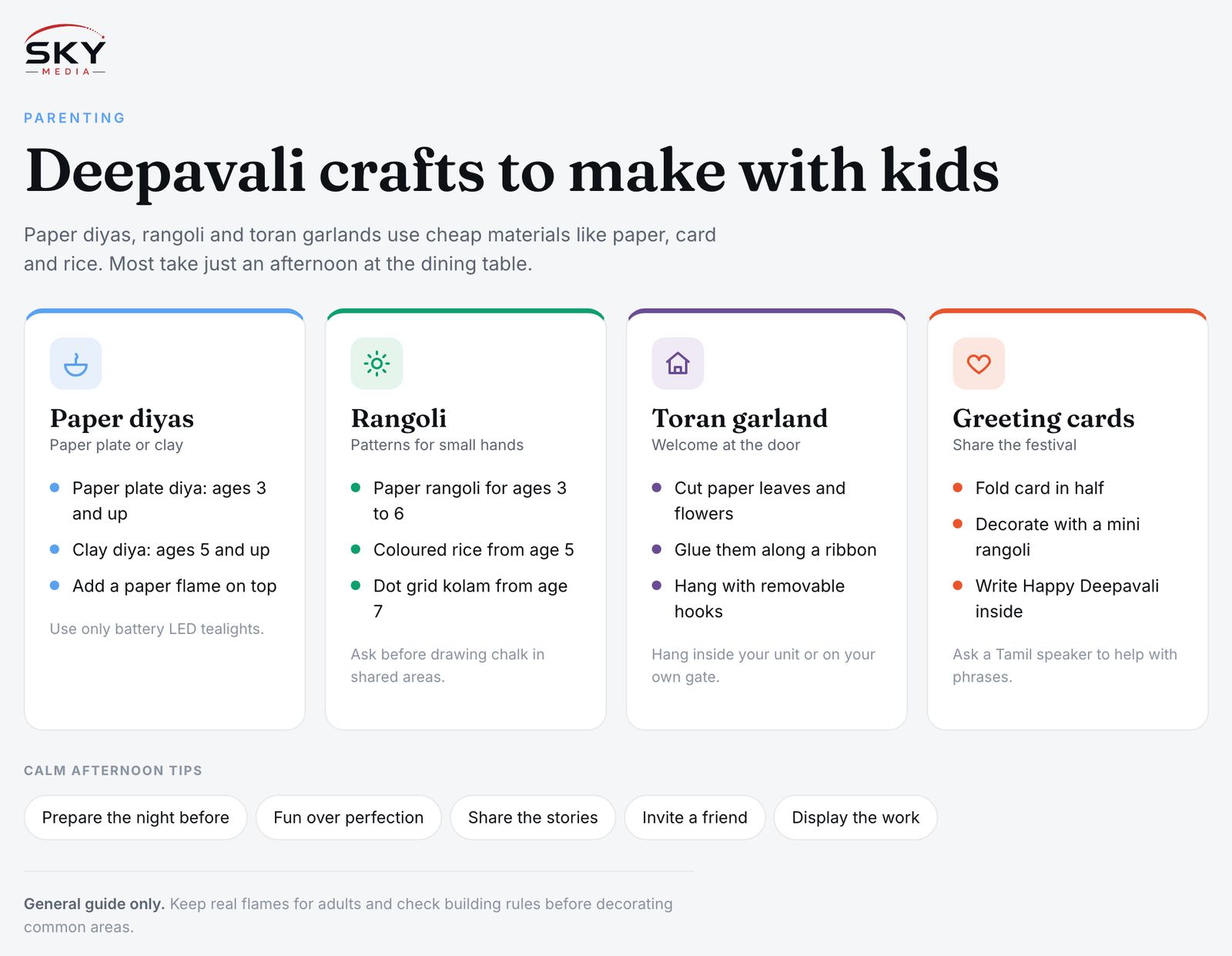
Why Crafts Are a Good Way to Explore Deepavali
Deepavali is celebrated in Singapore by many Hindus, as well as Sikhs and Jains in their own traditions, and the customs vary from family to family. Commonly seen practices include lighting oil lamps (diyas or vilakku), drawing kolam or rangoli at the entrance, hanging toran garlands over the door and sharing sweets with neighbours.
Crafting these symbols is a gentle way for children to understand them. A paper diya can lead to a chat about light overcoming darkness. A rangoli pattern can introduce the idea of welcoming guests and good fortune into the home. For children whose families do not celebrate, these projects can be a respectful first step towards appreciating a neighbour’s festival.
You do not need to get every detail “right”. Keep explanations simple, and if you are unsure about a custom, ask a friend who celebrates or visit the light-up in Little India together to see the real thing.
What You Will Need
Most supplies are already at home or available at neighbourhood stationery shops and craft stores:
- Coloured paper and thin card (yellow, orange, red, pink, green and gold work well)
- Child-safe scissors and a glue stick
- Air-dry clay or salt dough (for the clay diya option)
- Uncooked rice and food colouring, or coloured chalk
- Markers, crayons, sequins and stickers
- String, ribbon or yarn
- Paper plates
- LED tealights (battery-operated)
Lay down newspaper or an old tablecloth before you start, especially for the coloured rice.
Project 1: Paper and Clay Diyas
The diya is the symbol most children associate with Deepavali.
Paper plate diya (ages 3 and up). Fold a paper plate in half and cut along the fold. Staple or glue the curved edges of the two halves together to form a shallow boat shape. Let your child decorate the outside with markers, dots and sequins. Cut a flame shape from yellow and orange paper and glue it so it sticks up from the middle.
Clay diya (ages 5 and up). Roll a ball of air-dry clay about the size of a small orange. Press a thumb into the centre and pinch one side into a spout to make a little lamp. Let it dry fully, as the packet directs, then paint it in bright colours.
About light. Use only battery-operated LED tealights in children’s diyas. Paper and painted clay should never hold a real flame. If your family lights real oil lamps, see our guide to lighting diyas safely at home during Deepavali, and keep that job for adults.
Project 2: Rangoli Patterns for Small Hands
Rangoli and kolam are patterns drawn at the entrance of a home, often with rice flour, coloured powder or flowers. Real kolam drawing is a skilled art, explored in our feature on kolam and rangoli art in Singapore. For kids, simpler methods work best.
Paper rangoli (ages 3 to 6). Draw a large circle on card and divide it into petals or segments. Let your child fill each section with torn paper pieces, stickers or crayon. Symmetry is the key idea: whatever goes in one petal goes in the matching one.
Coloured rice rangoli (ages 5 and up). Put uncooked rice in zip bags, add a few drops of food colouring and a splash of vinegar, shake, then spread on a tray to dry. Draw a simple outline on card, spread glue over one section at a time and sprinkle coloured rice on top. Tip off the excess and move to the next colour.
Chalk rangoli (all ages). If your corridor or void deck space allows and the surface is easily washed, coloured chalk outlines are quick and wash off with water. Ask before drawing on shared areas, and clean up afterwards so neighbours are not inconvenienced.
Dot grid kolam (ages 7 and up). Older kids can try the traditional method: draw a grid of dots, then loop lines around them without lifting the pen. Start with a three by three grid and build up.
Project 3: Toran Paper Garlands
A toran is a decorative hanging placed across the top of a doorway to welcome guests. Traditional ones may use mango leaves and marigolds; a paper version is a great group project.
- Cut leaf shapes from green paper and flower shapes from orange and yellow paper. Older children can trace a template and cut their own.
- Decorate with markers, glitter glue or sequins.
- Lay a long length of ribbon or string on the table. Glue or tape leaves and flowers along it, alternating colours.
- Add small paper “bells” or folded paper fans at the ends.
- Hang it across a doorway or along a window using removable hooks.
For HDB flats and condos, hang decorations inside your unit or on your own gate rather than in common corridors unless you know it is allowed, and keep them clear of exits.
Project 4: Deepavali Greeting Cards
Making cards is a lovely way to connect with classmates, teachers or neighbours who celebrate. Fold a piece of card in half and decorate the front with a mini rangoli, a paper diya or a peacock made from torn feathers of paper. Inside, children can write “Happy Deepavali” and a short wish. If you would like to add a phrase in Tamil, ask a friend or teacher who speaks it to help, so it is written correctly.
Matching Crafts to Your Child’s Age
Use this quick guide to pick the right project.
| Craft | Best age | Adult help needed | Time |
|---|---|---|---|
| Paper plate diya | 3 and up | Cutting and stapling | Short |
| Clay diya | 5 and up | Shaping and painting cleanup | Short, plus drying time |
| Coloured rice rangoli | 5 and up | Dyeing rice in advance | Medium |
| Dot grid kolam | 7 and up | Minimal | Short to medium |
| Toran garland | 4 and up | Cutting templates for younger kids | Medium |
Making It a Calm, Inclusive Afternoon
- Prepare ahead. Dye the rice and cut templates the night before so younger children are not waiting.
- Focus on fun, not perfection. Wobbly petals and uneven lamps are part of the charm.
- Share the stories. Talk about why lights and welcoming patterns matter during the festival. Picture books from your local library can help.
- Include friends. Invite a classmate who celebrates to show your child how their family decorates, if they are happy to.
- Display the work. Children love seeing their crafts by the door when guests arrive.
If your kids enjoyed these projects, our easy National Day crafts for kids use similar materials for another festive season.
Frequently Asked Questions
Which Deepavali craft works best for a toddler? The paper plate diya and paper rangoli suit the youngest children, as both start from ages three and up in this guide. Pre-cut the shapes, keep glue sticks and chunky crayons handy, and let them stick pieces down wherever they like. Neat results are not the point.
Can I run these crafts as a class or group activity? Yes, the paper diyas, rangoli and toran garlands suit groups well. Prepare in advance by cutting templates and dyeing the rice, give each child their own tray of supplies, and keep one adult on hand for scissors and glue. Rotate tasks so nobody waits long.
How do I explain what Deepavali means to young children while we craft? Keep it simple: Deepavali is the festival of lights, and the lamps stand for light winning over darkness. Rangoli welcomes guests and good fortune, and toran garlands greet visitors at the door. If unsure of a custom, ask a friend who celebrates or borrow a picture book.
Which of these crafts is the least messy? The paper plate diya, toran garland and greeting cards are the cleanest, needing mostly paper, glue sticks and markers. Coloured rice and clay create the most mess, so lay down newspaper or an old tablecloth first, and dye the rice the night before.
How can we keep and reuse our Deepavali crafts afterwards? Store flat paper pieces such as garlands and cards between sheets in a dry box, and keep clay diyas wrapped so they do not chip. Humid weather can warp paper, so avoid damp cupboards. Photograph the work, since the coloured rice rangoli does not store well.