

In the weeks before Deepavali, the Festival of Lights, many households in Singapore are busy with lists. There are new clothes to pick out, oil lamps to replace, sweets to order and the house to brighten up before guests arrive. Deepavali shopping in Singapore is part of the festive build-up itself, and for many families the trip to the market is a tradition as treasured as the day.
This guide is about the practical side: the main categories people shop for, the kinds of places locals go, and how to handle the seasonal rush without stress. Customs vary from family to family, so treat this as a map of what is commonly bought rather than a checklist everyone follows. If you want the background on the festival first, start with Deepavali in Singapore, Explained.
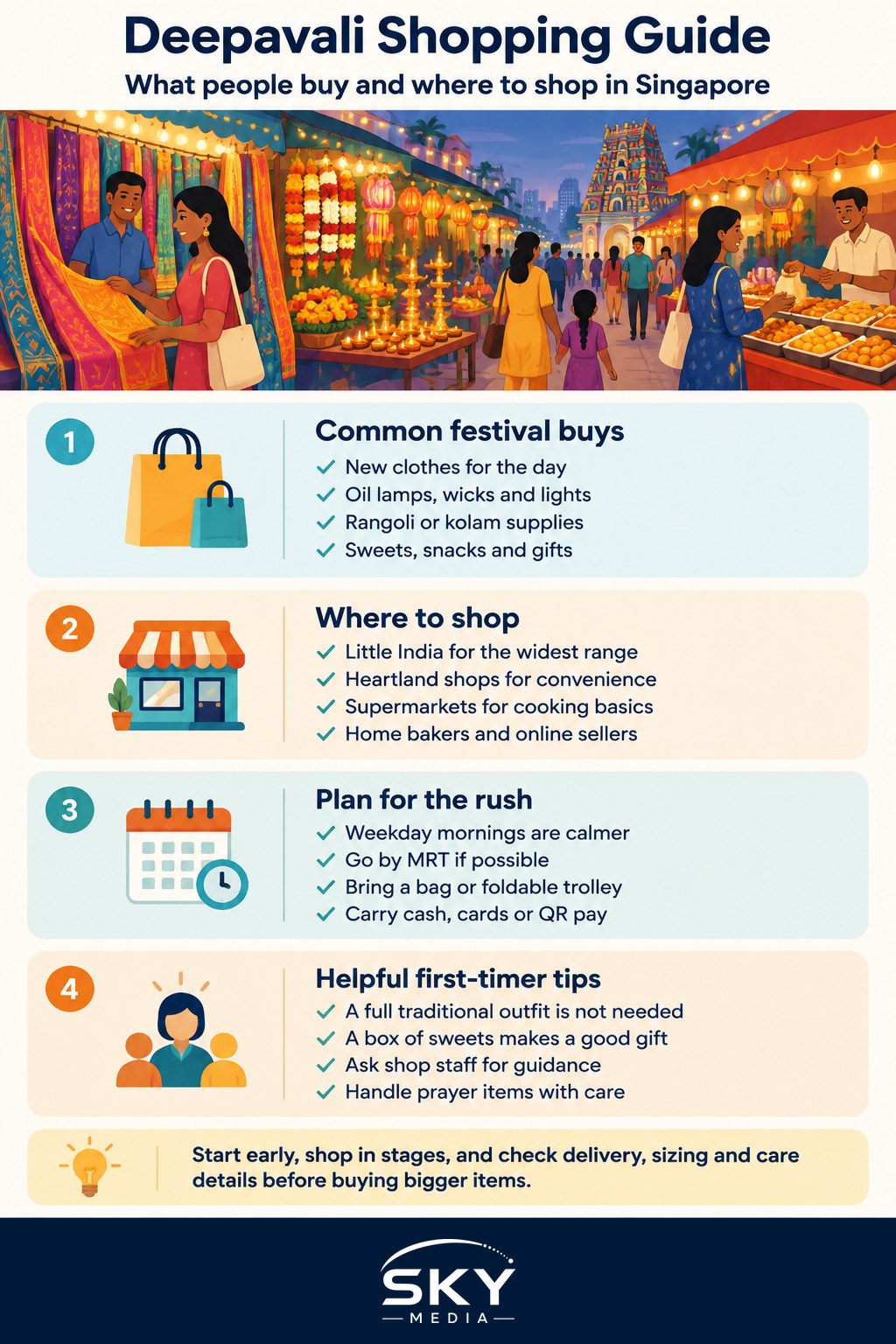
What People Commonly Buy for Deepavali
Most Deepavali shopping falls into a handful of categories. Not every family buys all of these, and some keep things simple, but these are the items you will see everywhere in the season.
- New clothes. Wearing something new on Deepavali morning is a widely loved custom. Women often shop for saris, salwar kameez or lehenga sets, and men for kurtas or veshti. Children are usually dressed up too. For style ideas, see What to Wear for Deepavali.
- Oil lamps and lights. Clay lamps known as diyas or vilakku are lit to symbolise light winning over darkness. Many families also buy wicks, ghee or lamp oil, and strings of electric lights for windows and doorways.
- Rangoli or kolam supplies. Coloured powders, rice flour, stencils and ready-made decorative pieces for the patterns drawn at the entrance of the home.
- Sweets and savoury snacks. Murukku, laddu, mysore pak and other treats are either made at home or bought in boxes to serve visitors and share with neighbours.
- Home decor. Toran door hangings, fresh or artificial flower garlands, cushion covers and small brass items to refresh the living room.
- Prayer items. Incense, camphor, flowers, fruit and other offerings for prayers at home or at the temple.
- Jewellery and accessories. Bangles, earrings, bindis and hair ornaments to complete festive outfits. Some families also mark the season with a gold purchase.
- Gifts. Boxes of sweets, dried fruit hampers and small household items to bring when visiting.
Where Locals Shop During the Festive Season
The heart of Deepavali shopping in Singapore is Little India, centred around Serangoon Road and the surrounding streets. In the run-up to the festival, the area is decorated with a street light-up and usually hosts a festive bazaar with temporary stalls selling clothes, lamps, decorations and snacks. Permanent shops along the streets and inside the larger shopping buildings in the neighbourhood stock textiles, jewellery, spices, flowers and prayer supplies all year, and expand their festive ranges in the weeks before Deepavali.
Beyond Little India, there are other good options:
- Heartland malls and neighbourhood shops. Areas with established Indian communities often have textile shops, sweet makers and grocers that stock festive items, which can save you a long trip.
- Supermarkets. Larger supermarkets typically bring in seasonal stock such as ghee, flour, lentils and boxed snacks. Our supermarket shopping guide explains how the main chains differ.
- Home-based bakers and caterers. Many families order murukku and sweets from home bakers they know through friends, community groups or social media. Order early, as popular makers close their order books well before the festival.
- Online shops. Online stores and marketplace sellers offer saris, kurtas, lamps and decor with delivery, which suits busy households. Check sizing guides and return terms carefully, since festive delivery windows get tight.
Bazaar dates, layouts and stall line-ups change every year. Check announcements from the organisers and the Little India community before you go, rather than relying on last year’s arrangements.
Comparing Your Shopping Options
Each type of shop suits a different kind of buyer. This comparison may help you decide where to focus your time.
| Where to shop | Best for | What to expect | Tip |
|---|---|---|---|
| Little India festive bazaar | Atmosphere, lamps, decor, snacks, accessories | Lively, crowded in the evenings and on weekends | Go on a weekday morning or early afternoon |
| Little India shops and textile stores | Saris, kurtas, fabric, jewellery, prayer items | Wide choice, staff who can advise on fit and fabric | Allow time if you need tailoring or alterations |
| Heartland shops and supermarkets | Cooking ingredients, boxed snacks, basic decor | Convenient, less festive buzz | Stock up on ingredients a week or two ahead |
| Home bakers and online sellers | Homemade sweets, delivered outfits and decor | Order deadlines, limited slots | Order early and confirm collection or delivery |
How to Navigate the Seasonal Rush
The final week and weekend before Deepavali are usually the busiest. A little planning makes the experience far more pleasant.
- Shop in stages. Buy clothes first, especially if anything needs alterations, then decor and lamps, and leave fresh flowers and perishable items for the last few days.
- Pick your timing. Weekday mornings tend to be calmer than evenings and weekends. If you want to enjoy the light-up, go for a separate evening stroll rather than combining it with serious shopping.
- Take public transport. Parking around Little India is limited and roads can be congested in the festive period. The MRT stations serving the area are the easier choice.
- Bring a shopping bag or trolley. Lamps, sweets and decor add up quickly, and a foldable trolley helps on crowded pavements.
- Carry a mix of payment options. Many shops accept cards and QR payments such as PayNow, but some smaller stalls may prefer cash.
- Ask about fabric and care. Silk and heavily embroidered pieces may need dry cleaning or careful hand washing. Shop staff are usually happy to explain.
- Be mindful with lamps and lights. If you live in an HDB flat or condominium, check any rules about decorations in shared corridors, and never leave oil lamps burning unattended.
Prices vary widely by quality, material and shop, so compare a few places before buying bigger items such as silk saris or jewellery. Most shops display prices clearly, and it is fine to ask politely if anything is unclear.
Tips for Newcomers and First-Time Buyers
If you are new to Singapore or shopping for Deepavali for the first time, perhaps because friends or colleagues have invited you to visit, a few pointers help.
- You do not need to buy a full outfit. Guests often wear smart clothes in bright, cheerful colours. If you do want something traditional, a simple kurta or a ready-made salwar set is a comfortable start.
- Sweets make an easy gift. A box of Indian sweets or a fruit hamper is a widely appreciated gesture when visiting a home during the festival.
- Ask shopkeepers for help. Staff in textile and sweet shops are used to first-time customers and can suggest what is suitable for adults, children or gifting.
- Respect prayer items. When browsing lamps, flowers and incense, handle items gently, as many are bought for religious use.
- Combine shopping with a visit. Once your shopping is done, take time to enjoy the street decorations and food. Our list of Deepavali things to do in Singapore has more ideas.
Making the Most of the Season
Deepavali shopping is about more than ticking off a list. It is a chance to support the small shops and home businesses that keep traditions alive, to share sweets with neighbours and colleagues, and to see one of Singapore’s most colourful festive seasons up close. Start early, shop in stages, travel light and leave room in your schedule to simply enjoy the lights and the buzz.
Explore more: Deepavali in Singapore, Explained · What to Wear for Deepavali · Deepavali Things to Do in Singapore
Frequently Asked Questions
When should I start Deepavali shopping to avoid the rush? Start a few weeks before the festival, since the final week and weekend are the busiest. Buy clothes that may need alterations first, then decor and lamps, and leave fresh flowers and perishables for the last days.
How much lead time does tailoring or altering a Deepavali outfit need? It depends on the shop and the season, so ask when you buy and allow extra time near the festival. Tailors get busy as Deepavali approaches. Buying early, or choosing ready-made pieces, avoids last-minute stress.
Can non-Indians wear Indian outfits for Deepavali? Yes, guests are generally welcome to wear them, and many hosts are pleased by the effort. A simple kurta or ready-made set is an easy start. Smart clothes in bright, cheerful colours are also perfectly fine.
How can I tell a good silk sari from a poor one before buying? Ask the shop about the fabric and care, feel the weave and check the stitching, borders and finish. Compare a few shops, because quality and prices vary widely. Heavily embroidered silk may need dry cleaning, so ask about care.
How do I set a Deepavali shopping budget without overspending? List the categories you need, such as clothes, lamps, sweets and gifts, then rank them by priority. Compare prices across a few shops before bigger purchases. Keep a small buffer for last-minute items.