

Veneers are thin shells bonded to the front of teeth to change their colour, shape, size or alignment. They are one of the most popular cosmetic dental treatments, and if you are researching veneers in Singapore you will quickly run into the main choice: porcelain or composite. The two look similar on day one but differ a lot in how they are made, how long they last, how much tooth is removed and what they cost over time.
This guide compares the two so you can have a better conversation with your dentist. It is general information, not dental advice. Only a dentist who has examined your teeth can tell you what is suitable.
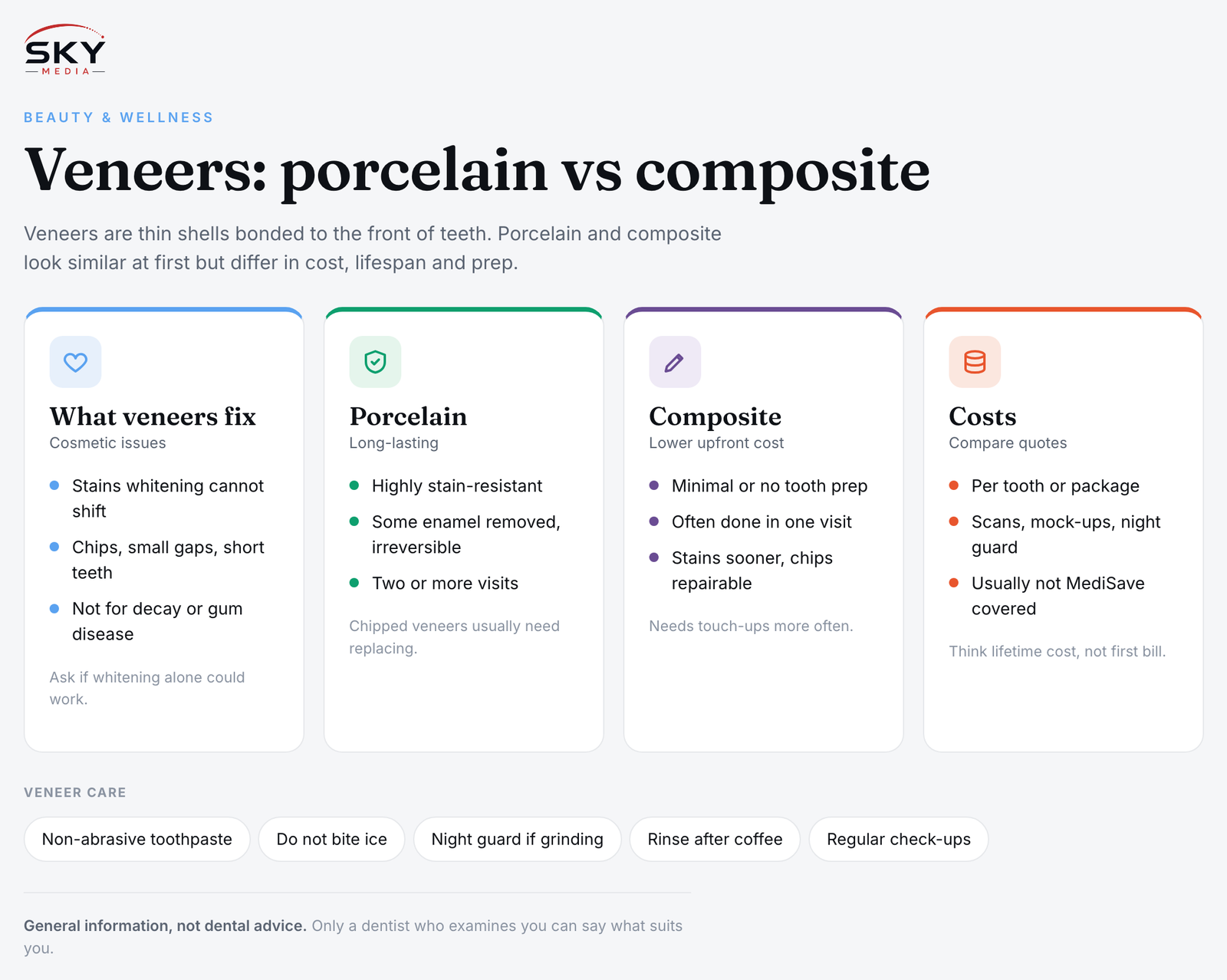
What Veneers Can and Cannot Fix
Veneers cover the visible front surface of teeth. Dentists commonly use them for:
- Stains or discolouration that whitening does not shift, such as some internal staining
- Chipped, worn or slightly uneven edges
- Small gaps between front teeth
- Teeth that are slightly misshapen or short
- Mild crookedness, where orthodontics is not wanted (though a dentist may suggest braces or aligners first)
They are not a fix for decay, gum disease, a heavy bite or a badly broken tooth. Those problems need treating first, and some may call for crowns, fillings or orthodontics instead. If your main concern is simply colour, ask whether professional whitening could achieve what you want before committing to veneers.
Porcelain Veneers: How They Work
Porcelain (ceramic) veneers are made in a dental laboratory or with in-clinic milling equipment.
The usual process:
- Consultation and planning. The dentist examines your teeth and gums, may take X-rays, photos and scans, and discusses the shape and shade you want. Some clinics show a digital preview or a trial “mock-up”.
- Tooth preparation. A thin layer of enamel is usually removed from the front of each tooth so the veneer does not look bulky. This step is irreversible.
- Impressions and temporaries. Impressions or digital scans go to the lab, and temporary veneers may be fitted.
- Bonding. At a later appointment, the finished veneers are checked, adjusted and bonded with a dental adhesive.
Strengths: porcelain is highly stain-resistant, reflects light in a natural way and is generally the more durable option. Drawbacks: it costs more, usually needs at least two visits, and a chipped porcelain veneer usually has to be replaced rather than patched.
Composite Veneers: How They Work
Composite veneers use tooth-coloured resin, the same family of material used for white fillings. Most are “direct” veneers, sculpted by the dentist straight onto your teeth.
The usual process:
- Consultation and shade matching.
- Minimal or no preparation. Often little or no enamel is removed, though this depends on the case.
- Layering and sculpting. The dentist applies resin in layers, shapes it and hardens each layer with a curing light.
- Polishing. The surface is polished to a natural shine, often in one visit.
Strengths: lower upfront cost, often completed in a single appointment, more conservative of natural tooth, and chips can usually be repaired. Drawbacks: resin stains more readily (coffee, tea and teh tarik lovers take note), loses its polish over time, and generally needs repairs or replacement sooner than porcelain.
Porcelain vs Composite at a Glance
| Factor | Porcelain veneers | Composite veneers |
|---|---|---|
| Upfront cost | Higher per tooth | Lower per tooth |
| Typical lifespan | Generally longer, often many years with good care | Generally shorter, more frequent touch-ups |
| Tooth preparation | Usually some enamel removed (irreversible) | Often minimal or none |
| Number of visits | Usually two or more | Often one |
| Stain resistance | High | Lower, can discolour over time |
| Repairs | Usually replaced if chipped | Chips can often be patched |
| Appearance | Very natural translucency | Can look natural, depends on dentist’s skill |
Lifespan depends heavily on your bite, habits and maintenance, so ask your dentist for a realistic estimate in your own case rather than relying on general figures.
Understanding Costs in Singapore
Veneer fees vary widely between clinics, dentists and cases, and they change over time, so this guide does not quote prices. When comparing quotes, check what each one includes:
- Per-tooth fee versus package. Most people get several front teeth done to keep the smile even. Confirm how many teeth the quote covers.
- Consultation, X-rays and scans. Sometimes charged separately.
- Mock-ups or digital smile previews.
- Temporaries and follow-up reviews.
- Night guard. Often recommended if you grind your teeth, and may be extra.
- Repair or replacement policy. Ask what happens if a veneer chips or debonds in the first year.
Think about lifetime cost, not only the first bill. Composite can be cheaper upfront but may need more maintenance visits, while porcelain costs more initially but tends to last longer between replacements.
Because veneers are usually cosmetic, they are generally not covered by government dental subsidies or MediSave, and most insurance plans exclude cosmetic procedures. Our guide to Dental Care Costs and CHAS Subsidies in Singapore explains what subsidies typically do cover. Check with your insurer, HR benefits team or the clinic before assuming any coverage.
Who Suits Which Option
A dentist will weigh your specific situation, but these patterns are common:
- Porcelain may suit people who want a long-lasting, stain-resistant result across several teeth, have healthy gums and enamel, and are comfortable with the irreversible preparation step.
- Composite may suit younger adults, people wanting to fix one or two chipped or gapped teeth, those who want a reversible or lower-commitment option, or anyone on a tighter budget.
- Neither may suit people with active decay or gum disease, heavy teeth grinding that is not managed, or a bite that puts a lot of force on the front teeth. These usually need treatment first.
Questions to Ask Before You Commit
- Are you a registered dentist with the Singapore Dental Council, and how often do you place veneers?
- Can I see before-and-after photos of your own cases?
- How much tooth will be removed, and is it reversible?
- What is the realistic lifespan in my case, and what will maintenance involve?
- Is whitening or orthodontics a better first step for me?
- What happens if a veneer chips, stains or comes off?
Be cautious of very cheap overseas packages or clinics that promise a full set in a single rushed visit without a thorough assessment. Follow-up care matters, and it is easier when your dentist is nearby.
Caring for Veneers
- Brush twice daily with a non-abrasive toothpaste and clean between teeth.
- Avoid biting hard objects like ice, bones, pens or bottle caps.
- Wear a night guard if you grind your teeth, and a mouthguard for contact sports.
- With composite, limit staining drinks or rinse with water after them.
- Keep regular check-ups and scale-and-polish visits.
Veneers sit on natural teeth, so the teeth and gums underneath still need care. For older family members weighing options for missing teeth rather than cosmetic changes, see Dental Implants and Bridges for Seniors.