

A home library used to feel like something only landed property could hold. In Singapore, where most of us live in HDB flats and compact condos, the reality is more flexible. A home library is less about a dedicated room and more about giving your books a proper, well planned home. Done well, a home library singapore setup can live along one wall, wrap around a study corner, or fill the awkward space beside a window. This guide walks through layout, storage, lighting, furniture, budget and the humidity concerns that matter in our climate.
Planning the layout and choosing your spot
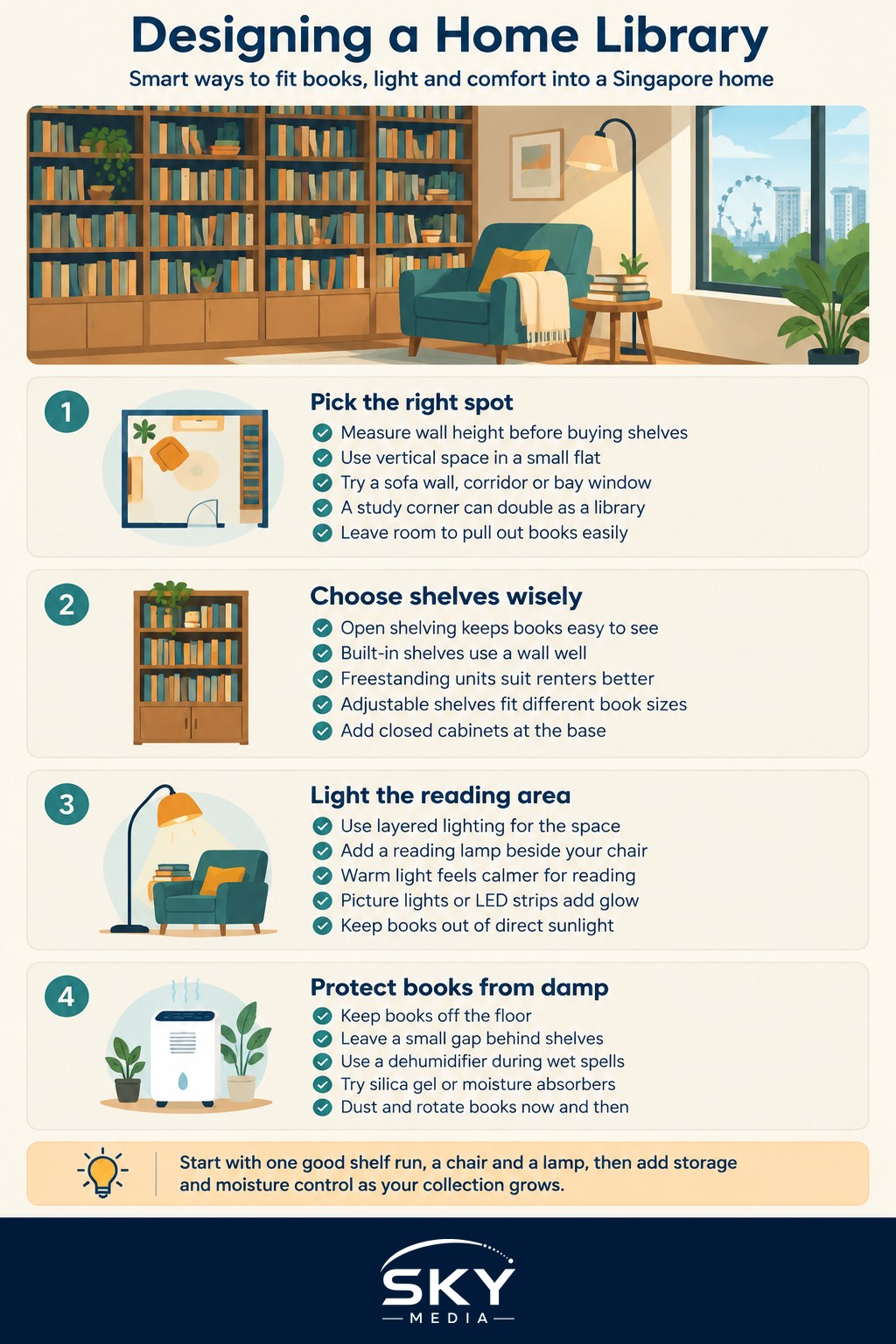
Start by being honest about how many books you own and how fast the collection grows. Measure the wall or corner you have in mind, including the height up to the ceiling, because vertical space is your best friend in a small flat. A full wall of shelving from floor to ceiling stores far more than a squat bookcase and draws the eye upward, which makes the room feel taller.
If you do not have a spare room, a home library rarely needs one. Common spots that work well include the wall behind a sofa, the stretch of corridor between bedrooms, the space under a staircase in a maisonette, or a bay window turned into a reading nook. A study corner can double as a library by running shelves above and beside the desk. If you are combining functions, our guide to home office and study corner ideas covers how to keep work and reading zones from crowding each other.
Leave a comfortable path in front of any shelving, ideally enough to pull out a book and stand back without bumping furniture. In tight flats, a shallow shelf depth of around 20 to 25 centimetres holds most paperbacks and novels while stealing less floor space than a standard deep bookcase.
Shelving and storage that earns its space
Open shelving is the classic choice and it lets you see everything at a glance. Built in shelving that runs to the ceiling makes the most of a wall, but freestanding units are far more forgiving if you rent or expect to move. Adjustable shelves matter more than they seem, because book heights vary and fixed spacing wastes room. For a deeper look at picking the right unit, see how to choose a bookshelf.
Mix in a few closed cabinets at the base. These hide clutter, protect your most valued books from dust, and give you a clean visual anchor so a big wall of spines does not feel busy. A bench with storage beneath, placed under a window, adds seating and swallows overflow at the same time.
If floor space is truly scarce, think upward and sideways. Slim shelves above doorways, a narrow column of shelving in a hallway, or a rolling ladder for a tall run can all add capacity without eating into the room. For flats where every centimetre counts, our notes on maximising storage in a small HDB apply directly to books as well.
Lighting and the reading experience
Good light turns a wall of books into a place you actually want to sit. Aim for layered lighting. General ceiling light keeps the whole area usable, while a dedicated reading lamp beside your chair prevents eye strain in the evening. A warm colour temperature feels calmer for reading than harsh white light. If you are planning the wider scheme, our guide on how to plan lighting for every room is a useful companion.
Small picture lights or a strip of concealed LED along a shelf edge highlight favourite titles and give the library a soft glow at night. Keep any reading chair near a window if you can, so you get free natural light during the day, but avoid placing books in direct, prolonged sunlight because it fades spines and dries out paper.
Protecting books from humidity
This is the part that catches many Singapore homes out. Our warm, humid air is hard on paper and can bring mould, foxing and a musty smell if books sit undisturbed. A few habits go a long way. Keep books off the floor, since the lowest level of a room traps damp, so use the base cabinet for storage and reserve open lower shelves for sturdier items. Leave a small gap between the back of the shelf and the wall so air can move.
Run a dehumidifier in the room, especially during long rainy stretches, and consider silica gel packs or a small moisture absorber inside closed cabinets. Avoid packing books so tightly that air cannot circulate. For the full picture on damp control, see protecting your home from humidity. If you dust the shelves and rotate the books occasionally, you will spot any problem early.
Furniture, budget and finishing touches
You do not need a grand budget to make this work. A single quality shelving run, one comfortable chair, a side table and a lamp already form a proper library corner. Spend where it counts, which usually means sturdy shelving that will not sag under weight, and save on decorative extras.
A footstool, a soft throw and a small rug help mark the reading zone as its own space, even inside an open plan flat. If you enjoy the idea of a quiet, tucked away spot, our piece on how to set up a reading or hobby nook has more ideas for carving one out. Build the collection over time, keep the air dry, and your home library will grow with you.
Frequently Asked Questions
How deep should bookshelves be for a small flat? Shallow shelves are usually enough. The article suggests a depth of around 20 to 25 centimetres for most paperbacks and novels, which saves floor space. Oversized art or reference books may need a deeper shelf, so measure your largest titles before buying.
Should I choose built-in or freestanding shelving if I rent? Freestanding units are the more forgiving choice for renters or anyone who expects to move, since you can take them with you. Built-in shelving makes better use of a wall but stays behind. Check your tenancy terms before fixing anything to walls.
Can books go mouldy in an air-conditioned room? They can still pick up damp if the air is humid or the room is shut for long periods. Keep books off the floor, leave a gap behind the shelf, avoid packing them tightly and consider a dehumidifier or silica gel in closed cabinets.
How do I light a reading corner without eye strain? Combine general ceiling light with a reading lamp beside the chair, and choose a warm colour temperature, which feels calmer than harsh white. A window nearby gives free daylight, but keep books out of long, direct sunlight, which fades spines.
Is it worth building a home library for a small collection? Yes if you read often, because a planned spot makes books easier to find and keeps them in better condition. It does not need a big budget: one solid shelf, a comfortable chair and a lamp already make a proper reading corner.