
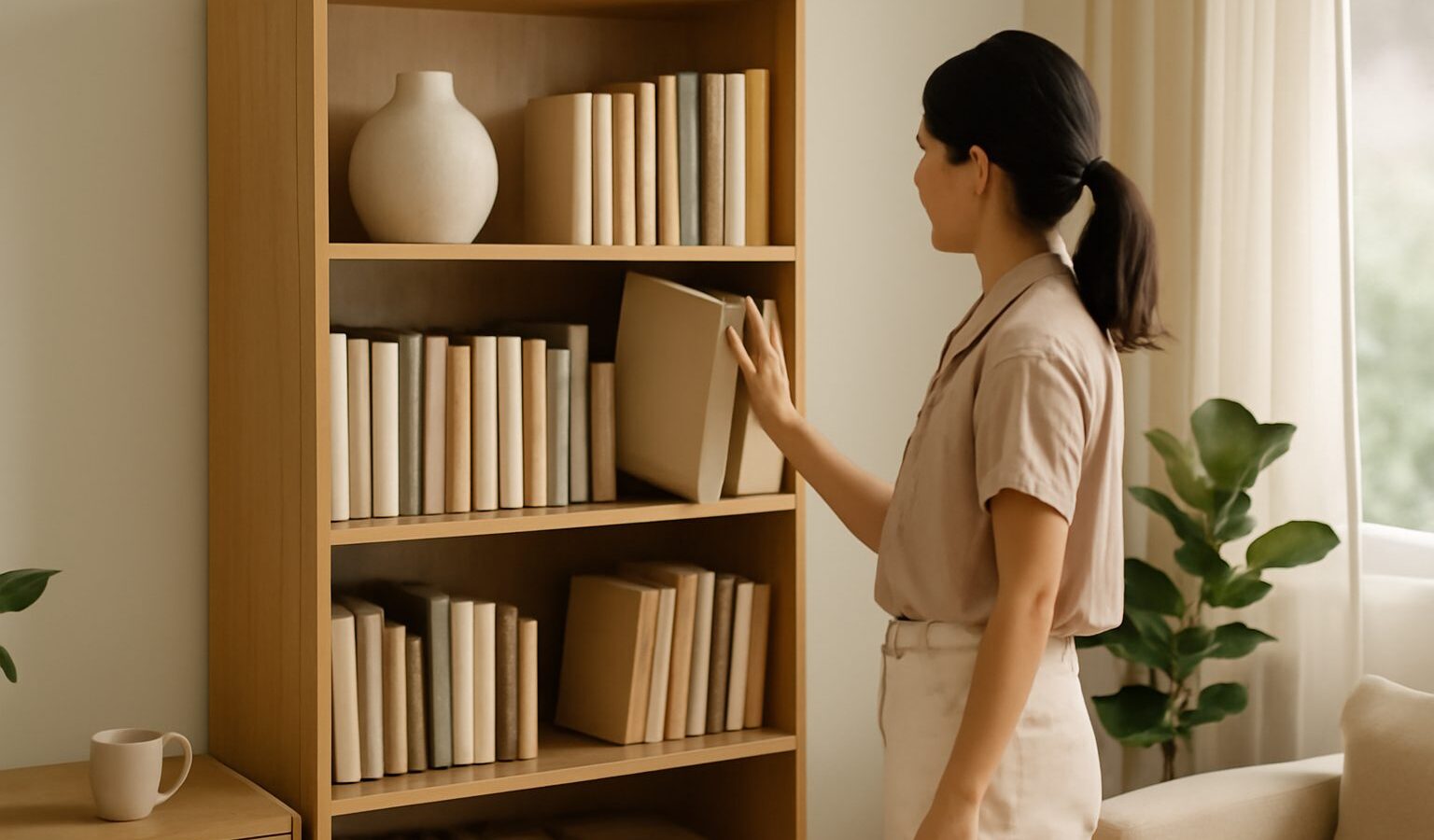
Finding the right bookshelf singapore homes can actually accommodate is less about the prettiest photo and more about matching the unit to your wall, your books and our climate. A good shelf holds weight safely, fits a compact flat without dominating the room, and copes with year-round humidity. This guide walks you through size, materials, load capacity, safety and styling in a brand-neutral way, so you can buy once and buy well. It is general information rather than professional interior advice, so measure your own space and follow the manufacturer’s instructions before you commit.
Start With the Space, Not the Shelf
Before you look at any product, measure the wall where the shelf will live. Note the width you can spare, the ceiling height, and anything that eats into the space such as skirting, air-con trunking, light switches or a window ledge. In many HDB and condo layouts the usable wall is narrower than it looks once you account for a door swing or a walkway, so a tall, slim unit often works better than a wide, low one.
Think about how the shelf will be used day to day. A reading corner needs shelves at a comfortable reaching height, while a display piece can go taller. If children use the room, keep the heavier and more-used items low and reserve the top for lighter decor.
Consider the depth too. Standard paperbacks need only a shallow shelf, but art books, box files, magazines and folders need more. A common mistake is buying a shallow unit and then finding half your collection will not sit flush.
Match the Material to Our Climate
Material affects price, weight, look and how the shelf ages in a warm, humid environment. Each option has trade-offs.
Engineered wood such as particleboard or MDF with a laminate or melamine finish is the most affordable and comes in many colours. It is light and easy to move, but the core can swell if water reaches an unsealed edge, so keep it away from wet areas and wipe up spills quickly. Look for well-sealed edges and a sturdy back panel.
Plywood is stronger than plain particleboard and handles load and humidity better, especially birch or marine-grade sheets. It costs more but resists sagging on longer spans.
Solid wood is the most durable and can be sanded and refinished over the years. It is heavier and pricier, and it needs a little care in our climate to avoid warping. Give solid timber a stable spot away from direct sun and strong draughts from the air-con.
Metal, or metal and wood combinations, resist moisture well and suit an industrial look. Check that shelves are rated for books rather than only light decor, as thin metal can bow under a full row.
Load Capacity and Sagging
Books are surprisingly heavy, and this is where cheap shelves disappoint. A packed shelf of hardbacks can weigh several kilograms per running foot, so span and thickness matter as much as the material.
The longer an unsupported shelf, the more it bows in the middle over time. If you want a wide unit, look for a centre support, thicker shelves, or a solid back panel that stiffens the frame. Adjustable shelves are useful because you can add a divider or bracket where a long span carries the heaviest row.
Always check the manufacturer’s stated load per shelf, and treat it as a limit rather than a target. Spread heavy items across lower shelves to keep the centre of gravity low and the unit stable.
Fixed, Adjustable, Open or Closed
Bookshelves come in several formats, and the right one depends on your collection and your style.
- Open shelving shows off your books and feels airy, but everything gathers dust, which matters in a dusty, humid climate. Plan to wipe it regularly.
- Closed units with doors or drawers protect contents from dust and fading, and hide clutter, at the cost of a heavier, boxier look.
- Adjustable shelves let you fit tall folders on one row and paperbacks on another, and they adapt as your collection changes.
- Modular or cube systems grow with you and can be reconfigured, which suits renters and changing needs.
The table below sets out the common types side by side to help you narrow down quickly.
| Type | Best for | Watch out for |
|---|---|---|
| Open bookcase | Everyday access and display | Dust build-up, needs frequent wiping |
| Closed cabinet | Protecting books from dust and fading | Heavier look, higher price |
| Ladder shelf | Light decor and a few books | Low load capacity, tips easily if unanchored |
| Modular cube | Renters and evolving collections | Joints can loosen if overloaded |
| Wall-mounted floating | Small flats, saving floor space | Needs the right wall and fixings |
Safety and Anchoring
A tall bookcase can topple, especially if a child climbs it or you load the top too heavily. Many quality units come with a wall-anchor strap or bracket, and using it is the single most important safety step. Fix it into a solid wall or a proper anchor rather than a hollow section, and follow the supplied instructions.
If you are in a rented flat and cannot drill, choose a lower, wider unit with a stable base, keep heavy items down low, and avoid placing tempting objects on top shelves. Check that doors and drawers have soft stops or catches so they do not swing open unexpectedly.
Humidity Care So It Lasts
Our climate is hard on furniture, and a few habits keep a bookshelf looking good for years. Keep the unit slightly off a cold external wall so air can circulate behind it and moisture does not become trapped. Avoid placing it in the direct path of strong sun, which fades spines and can warp timber over time.
Dust regularly, because dust holds moisture and encourages mould in humid weather. If you notice a musty smell or spots on the back panel, wipe with a barely damp cloth, dry it thoroughly, and improve airflow in the room. A small dehumidifier or good ventilation helps protect both the shelf and the books.
Styling and Buying Smart
Once the practical boxes are ticked, styling is the fun part. Mix vertical stacks with horizontal ones to break the rows, leave a little breathing room rather than cramming every gap, and use a few objects or plants to add depth. Keep a consistent colour story if you want a calm look, or lean into colourful spines for energy.
When you are ready to buy, view the unit in person if you can, push gently on a shelf to feel for flex, and check that edges, joints and the back panel feel solid. Buy the depth and load capacity you genuinely need rather than the cheapest option, anchor it properly, and your bookshelf will earn its place for a long time.
Explore more
Best Furniture Stores
Caring for Wood Furniture in a Humid Climate
Reducing Dust and Allergens at Home
How to Choose a Sofa