
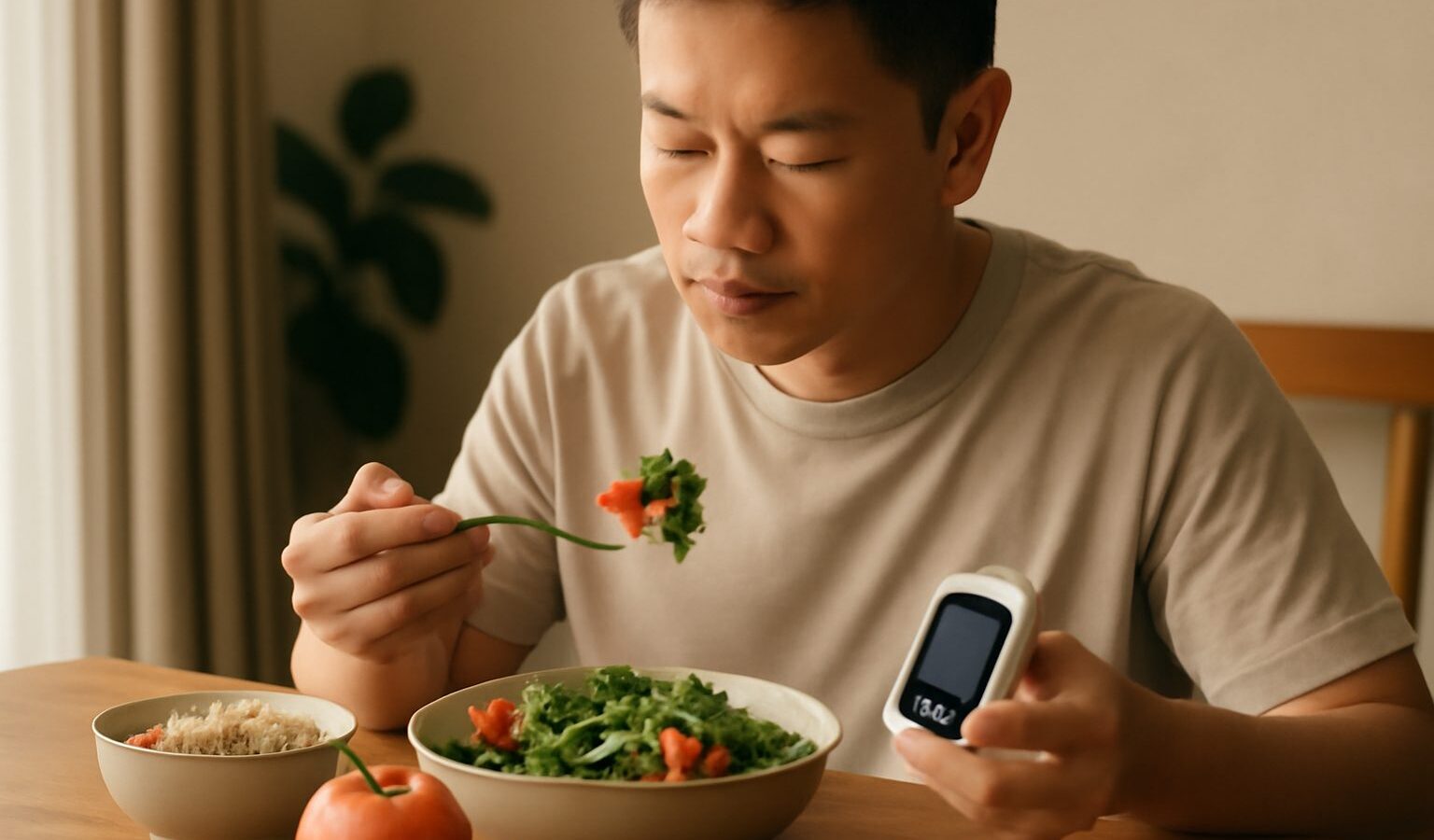
Eating out is a huge part of life in Singapore, and being mindful of blood sugar does not mean giving it up. With a little knowledge, you can make choices at hawker centres, food courts and coffee shops that are more supportive of steady blood sugar while still enjoying the food you love. This is general information about lower glycaemic index and portion aware eating, not medical or personalised nutrition advice.
Please note clearly, this article offers general guidance only. It is not a treatment plan and is not a substitute for professional care. People living with diabetes should speak to their own doctor or a dietitian, because individual needs, medication and health conditions vary widely, and advice must be tailored to you. Nothing here should replace that.
General principles for steadier blood sugar
A few broad ideas guide most diabetic friendly eating, and they apply well to local food.
The first is portion awareness, especially with carbohydrates. Rice, noodles, bread and other starches raise blood sugar the most, so being thoughtful about how much of them you eat in one sitting is often the single most useful habit. This is not about cutting them out but about right sizing them.
The second is balance on the plate. Pairing carbohydrates with protein, vegetables and some healthy fat tends to slow how quickly sugar enters the bloodstream compared with eating a large portion of carbohydrate on its own. A plate with vegetables and a protein alongside a smaller serving of rice generally behaves more gently than a big plate of plain fried noodles.
The third is being mindful of added sugar and refined carbohydrates, particularly in drinks. Sweetened beverages can add a surprising amount of sugar quickly, so this is a common and impactful area to adjust.
None of this requires demonising any food. Local favourites can absolutely fit into a considered way of eating. It is about frequency, portion and combination rather than forbidden lists.
Making hawker and food court choices
Singapore’s hawker fare offers plenty of room for blood sugar aware choices once you know what to look for.
Consider asking for less rice or noodles and, where possible, adding more vegetables. Many economy rice and mixed rice stalls let you build a plate, which makes it easy to load up on vegetables and a lean protein while keeping the rice portion modest. Steamed, boiled, braised and grilled dishes are often gentler choices than heavily battered, deep fried or thickly sauced ones.
Soup based dishes with plenty of vegetables and a protein can be satisfying without a large carbohydrate load, though it is worth being mindful of very starchy or sweetened broths. When it comes to protein, options such as steamed fish, tofu, eggs, skinless chicken and lean meats are useful building blocks.
Cooking method makes a real difference. Choosing something steamed or grilled over something deep fried, or asking for sauce and gravy on the side so you control how much you add, are small adjustments that add up over time.
Drinks deserve particular attention, since local kopi, teh and many bottled beverages are often served sweet by default. Asking for drinks with less sugar or no sugar, or choosing water or plain tea, is one of the simplest changes with a meaningful effect. Our guide to eating healthily at hawker centres has more practical ideas along these lines.
Portioning, pacing and everyday habits
Beyond what you order, how you eat also matters.
Serving sizes at many stalls are generous, so it is reasonable to eat part of a portion, share a dish, or ask for less of the starchy component. Eating vegetables and protein first, then the carbohydrate, is a simple ordering trick some people find helpful for blunting the rise in blood sugar, though individual responses vary.
Regular, spaced out meals rather than long gaps followed by very large meals can help some people keep things steadier, but the right pattern for you depends on your own circumstances and any medication, which is exactly the kind of thing to discuss with your healthcare team.
It also helps to plan ahead. Knowing that a food court usually has a mixed rice stall, a soup option or a yong tau foo style stall where you can pick vegetables and protein means you always have a manageable choice available. For more structured ideas on assembling meals, building a balanced plate and low-carb eating in Singapore are useful companions, and eating out on a diet covers related habits for dining out mindfully.
Finally, be kind to yourself about it. One meal does not define your health, and the goal is a sustainable pattern of mostly steady choices rather than perfection. Enjoying local food and looking after your blood sugar are not opposites.
To close, a reminder worth repeating. This has been general guidance about lower glycaemic index and portion aware eating when dining out, not medical advice. Diabetes management is individual, medication and needs differ, and your doctor or dietitian is the right person to help you build a plan that fits you. Use these ideas as a starting point for conversations, not as a replacement for professional care.