
One of the small culture shocks that catches many newcomers off guard is not the food itself but the moment the bill arrives. In mainland China, the end of a meal can turn into a warm, insistent tussle over who gets to pay, a ritual of generosity where reaching for your wallet is almost rude. In Singapore, the norm among friends and colleagues is quieter and more matter-of-fact: people often simply split. Getting comfortable with bill splitting etiquette Singapore style will save you awkward standoffs and help you read social situations correctly, so you never over-pay, under-offer, or accidentally cause offence. This guide walks through who usually pays, how locals settle up in seconds, and the table manners that make shared meals here feel easy and warm.
Splitting the Bill Is the Everyday Default
Among friends, casual colleagues and classmates, the most common approach is to “go Dutch”, meaning everyone covers their own share. This is not seen as stingy or cold here; it is regarded as fair and low-pressure, a way to eat out often without anyone feeling burdened or indebted. You will hear people say “let’s split”, “same-same lah”, or “just PayNow me” as naturally as ordering a drink.
Splitting usually takes one of a few shapes:
- Even split. The total is divided equally, common when everyone ate roughly the same amount at a hawker centre or casual restaurant.
- Pay for your own. In bigger groups or when orders differ a lot, people tally what each person had. Nobody minds a bit of quick mental maths.
- One person pays, the rest transfer. To keep things smooth at the counter, one friend settles the whole bill and everyone sends their share on the spot.
The key mindset shift for a mainland newcomer is that offering to split is polite, not shameful. Insisting too hard on paying for a large group of casual acquaintances can even feel a little overwhelming to locals, who may worry about owing you a return favour. When in doubt, offer your share and let the group guide you.
When Someone Treats, and What It Signals
Splitting is the default, but treating still has its warm place. Locals absolutely do pick up the tab, just in more specific situations, and knowing when helps you respond gracefully. A birthday person is often treated by friends, or the reverse, where the celebrant treats the group; a senior colleague or boss may pay for a team lunch; parents and older relatives almost always insist on paying for younger family members; and a host inviting you specifically to a nicer meal usually intends to cover it.
The Singaporean version of “fighting to pay” is gentler than the mainland one. Someone might quietly settle the bill while you visit the washroom, or say “this one my treat, next time you belanja” (“belanja” is local slang for treating). The graceful move is to thank them warmly, not to physically wrestle the receipt away, and then to reciprocate on another occasion. That reciprocity, taking turns to treat over months, is how many friendships here keep a comfortable balance without anyone keeping a strict ledger.
If you genuinely want to treat, a light touch works best. Offer once or twice sincerely, and if the other person clearly prefers to split, respect it rather than pushing. Reading that cue correctly is itself a sign of good manners in the local style.
Paying in Seconds: PayNow, PayLah and Settling Up
Where mainland life runs on WeChat Pay and Alipay, Singapore runs on PayNow and bank apps, and they make splitting almost effortless. PayNow lets you transfer money instantly between bank accounts using just a mobile number, so “PayNow me” has become shorthand for “send me your share”. PayLah, DBS’s popular wallet app, and other bank apps do the same, and many can generate a QR code for the group to scan.
A few practical tips for settling up smoothly:
- Send your share promptly, ideally before you leave the table, so nobody has to chase you later.
- If you paid for the group, share your mobile number or a QR code and let people transfer. A quick message with the amount each owes is normal and appreciated.
- Round up rather than quibble over a few cents; generosity in small sums builds goodwill.
- For regular groups, some use simple split apps, but PayNow alone covers most situations.
Cash still works everywhere, and at hawker centres many stalls now accept PayNow QR too. You do not need a foreign wallet app; a local bank account with PayNow set up will handle nearly all your social payments.
Sharing Dishes and Table Manners Across Cultures
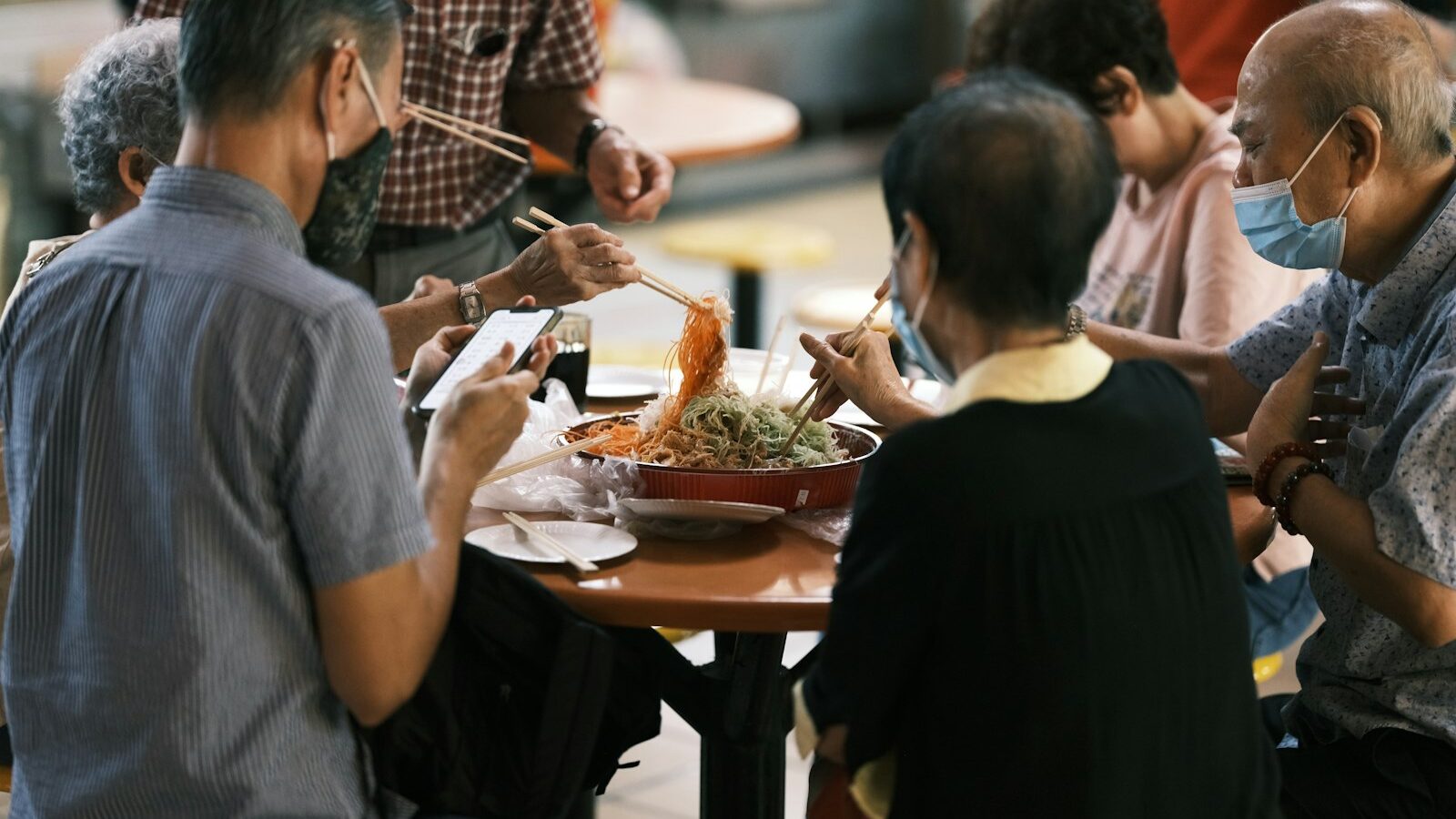
Singapore’s food culture is communal in a way that will feel familiar and comforting. Ordering several dishes “to share” (zi char spreads, steamboat, dim sum) is the norm, and a shared meal is as much about the company as the food. A few table courtesies smooth the experience:
- Use the serving spoon or the reverse end of your chopsticks for communal dishes rather than your own utensils.
- Offer to serve elders and guests first; topping up someone’s tea or plate is a warm gesture appreciated across Chinese, Malay and Indian tables alike.
- Be mindful that dining companions may be halal, vegetarian or have other needs, so ask before ordering pork or alcohol for the table.
- At hawker centres, clearing your own tray to the return points is now expected, and leaving the table tidy is basic courtesy.
Because Singapore is multicultural, manners flex with the setting. A Malay colleague may eat with the right hand at a casual meal, an Indian celebration may be fully vegetarian, and a Chinese family dinner may run on lazy-Susan sharing. Watching and mirroring your hosts is always the safest, warmest approach.
A Quick Map of Who Pays
The table below lines up common situations with the usual local norm, so you can navigate your first months with confidence.
| Situation | Common local norm in Singapore |
|---|---|
| Casual lunch with colleagues | Go Dutch, split evenly or pay for your own |
| Catching up with friends | Split the bill, settle via PayNow on the spot |
| A birthday meal | Friends treat the celebrant, or the celebrant treats |
| Boss or senior hosting a team meal | The senior usually pays; thank them, reciprocate small |
| Family meal with elders | Elders or parents almost always insist on paying |
| Someone invites you to a nicer restaurant | The host generally intends to cover it |
| Splitting a shared hawker spread | Even split, or one pays and others PayNow |
Settling In Around the Table
The thread running through Singapore’s dining etiquette is ease over ceremony. Splitting the bill is not a sign that people care less; it is a practical, respectful way for a busy, diverse society to eat together often without anyone feeling in debt. Treating still happens, warmly and generously, just in the moments where it truly means something. As a newcomer from the mainland, you do not need to abandon your instinct for generosity, only to channel it in the local rhythm: offer sincerely, accept graciously, reciprocate over time, and let PayNow handle the rest. Do that, and the table stops being a place of quiet confusion and becomes one of the fastest ways to feel at home.
Explore more
Want to keep building on these warm habits? Read our guide to gift-giving etiquette in Singapore to understand reciprocity beyond the dinner table, then take the next step with making local friends beyond the Chinese community so shared meals turn into lasting friendships.