
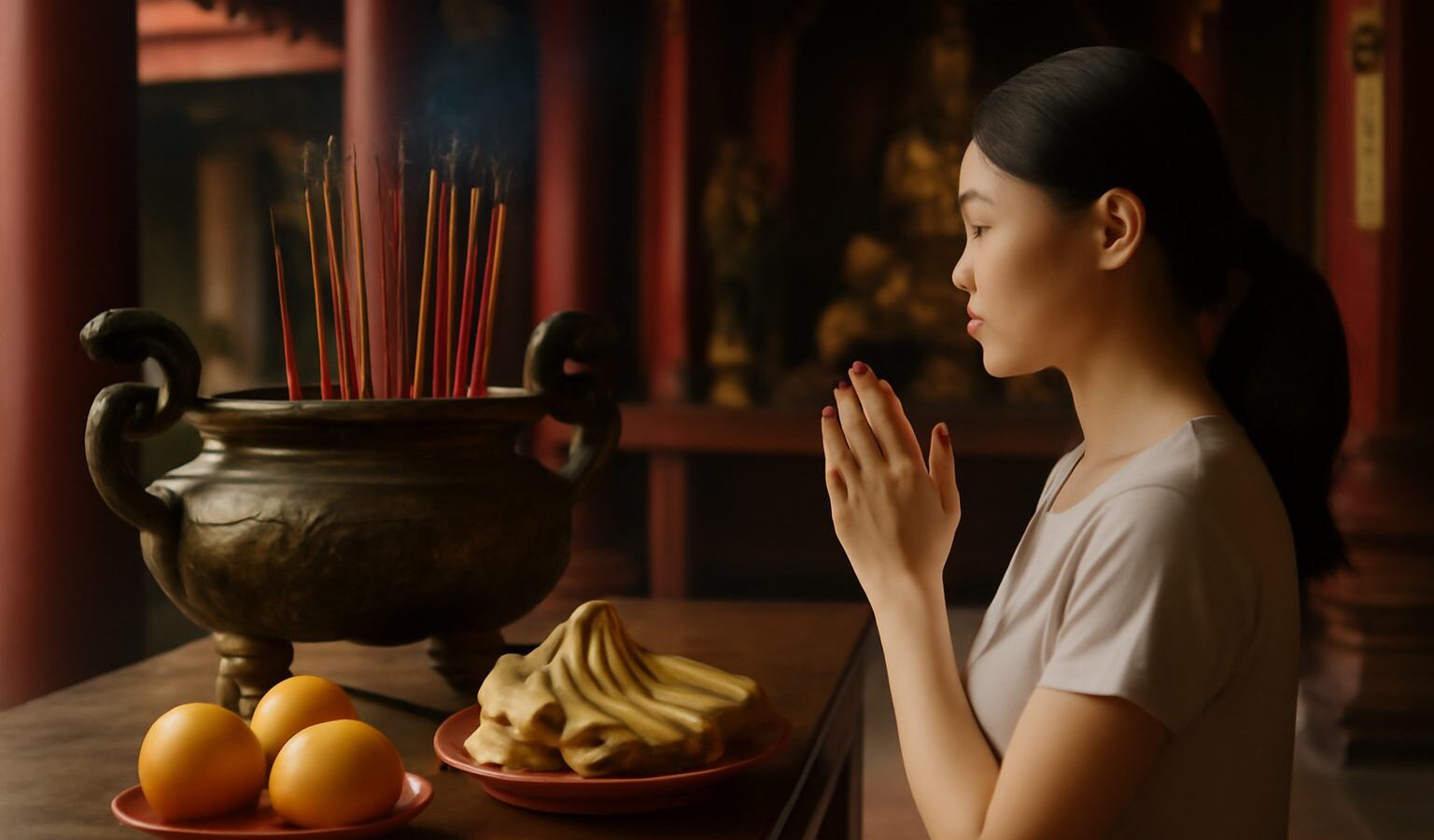
If you have recently moved from the mainland, stepping into a Chinese temple in Singapore can feel both familiar and a little different. The incense, the red lanterns and the quiet bows will remind you of home, yet the customs vary from one temple to the next. Understanding chinese temple etiquette singapore helps you visit with confidence, show respect to the community and enjoy these beautiful spaces without worry. This guide walks you through the basics, from offering joss sticks to dressing modestly, while always reminding you to follow each temple’s own guidance.
Singapore is home to many Chinese temples, some more than a century old, blending Taoist, Buddhist and folk traditions. Because practices differ by temple and by tradition, treat the notes below as a gentle starting point rather than fixed rules. When in doubt, watch what regular worshippers do, or simply ask a temple volunteer. Most are happy to help a newcomer.
Before You Go: Dress and Mindset
Dressing modestly is the simplest way to show respect. Choose clothing that covers your shoulders and knees. Avoid very short shorts, singlets or revealing tops. Comfortable shoes help, since you may need to remove them before entering certain halls, especially in Buddhist temples. Keep a calm, quiet manner once inside. Lower your voice, silence your phone and move gently around people who are praying.
There is no need to feel nervous if you are not sure what to do. Temples in Singapore are used to visitors of all backgrounds. Arrive with an open and respectful heart, and the rest tends to follow naturally. If you are visiting simply to admire the architecture rather than to pray, that is welcome too, as long as you remain quiet and mindful of worshippers.
Photography rules vary. Some temples allow photos in the courtyard but not of the main altar or deities. Look for signs, and when unsure, ask before raising your camera. Never use flash near people at prayer, and avoid posing playfully in front of altars.
Offering Joss Sticks: The General Order
Offering joss sticks, or incense, is the heart of many temple visits. The exact number and order can differ, so the following is a common pattern rather than a strict formula.
First, collect your joss sticks, often available near the entrance. Light them from the shared flame or candle provided. If the flame catches strongly, gently wave the sticks to lower it rather than blowing with your mouth, which some consider disrespectful. Hold the joss sticks with both hands at about chest or forehead height, bow slightly, and offer a quiet prayer or good wish.
At a Taoist or folk temple, worshippers often begin with the main altar facing the entrance, then move to the side altars, offering incense at each in turn. The heavenly deity or the temple’s principal god is usually honoured first. At a Buddhist temple, the focus is often on the Buddha in the main hall, with three joss sticks representing the Buddha, the teaching and the community. After offering, place the joss sticks upright in the central urn or censer, using your left hand if you wish to follow a common custom, though this too varies.
Because the order truly does change from temple to temple, the kindest approach is to follow the temple’s guidance. Many temples post instructions, and volunteers often guide first-time visitors quietly and warmly.
A Quick Reference Table
| Situation | A respectful approach | Gentle reminder |
|---|---|---|
| Dress | Cover shoulders and knees, plain and modest | Remove shoes where asked |
| Lighting joss sticks | Use the shared flame, wave gently to lower the fire | Do not blow with your mouth |
| Holding incense | Both hands, at chest or forehead, bow slightly | A quiet prayer is enough |
| Order of altars | Main altar first, then side altars | Varies by temple and tradition |
| Photography | Ask first, avoid altars and flash | No playful poses |
| Offerings of food or fruit | Follow the temple’s designated area | Do not touch others’ offerings |
Fire Safety with Joss Sticks
Joss sticks carry a real flame and glowing embers, so handle them with care. Keep the lit ends away from your clothing, hair and other people, especially in crowded halls during festivals. Carry them pointing slightly upward and away from anyone beside you. Never leave burning joss sticks unattended, and place them fully into the sand of the urn so they stand upright and stable.
During busy periods such as Chinese New Year or a deity’s birthday, temples can be packed. Move slowly, mind children around open flames, and dispose of any packaging in the bins provided. Some temples now limit the number of joss sticks per person for air quality and safety reasons, and a few encourage incense-free prayer altogether. Respect these measures, as they protect both worshippers and the historic buildings.
Other Customs You May Notice
You may see worshippers shaking a cylinder of numbered bamboo sticks, a practice linked to seeking guidance. If you are curious, watch quietly rather than joining in without understanding it. You may also notice people burning paper offerings in a designated furnace, bowing a set number of times, or leaving fruit and flowers. These acts carry meaning within their tradition, so observe them with the same respect you would wish for your own customs.
Making a donation is common and entirely optional. Donation boxes are usually near the entrance or the main hall. Give what feels comfortable, and there is no expectation for visitors to contribute.
If a ceremony or chanting session is underway, stand to the side and wait rather than walking through the middle. Monks, nuns and temple elders are treated with courtesy. A small nod or slight bow is a kind gesture, though not required of visitors.
Bringing Children and Guests
Temples welcome families. Explain to children beforehand that this is a quiet, sacred place, and keep them close, particularly near open flames and altars. If you bring friends who are unfamiliar with Chinese culture, a few words about respectful behaviour before you enter will help everyone feel at ease.
For newcomers building a life in Singapore, visiting a temple can become a gentle anchor, a place to mark the festivals, to pause during a busy week, or to feel connected to home. With a little care and an open heart, you will find these spaces welcoming.
Remember that every temple has its own character. What holds true at one may differ at another, so keep watching, keep asking, and follow the temple’s guidance. That, more than any single rule, is the essence of good chinese temple etiquette singapore.
Explore more
Chinese Tea Culture in Singapore
Mid-Autumn Festival in Singapore
Chinese Bookstores and Libraries in Singapore