
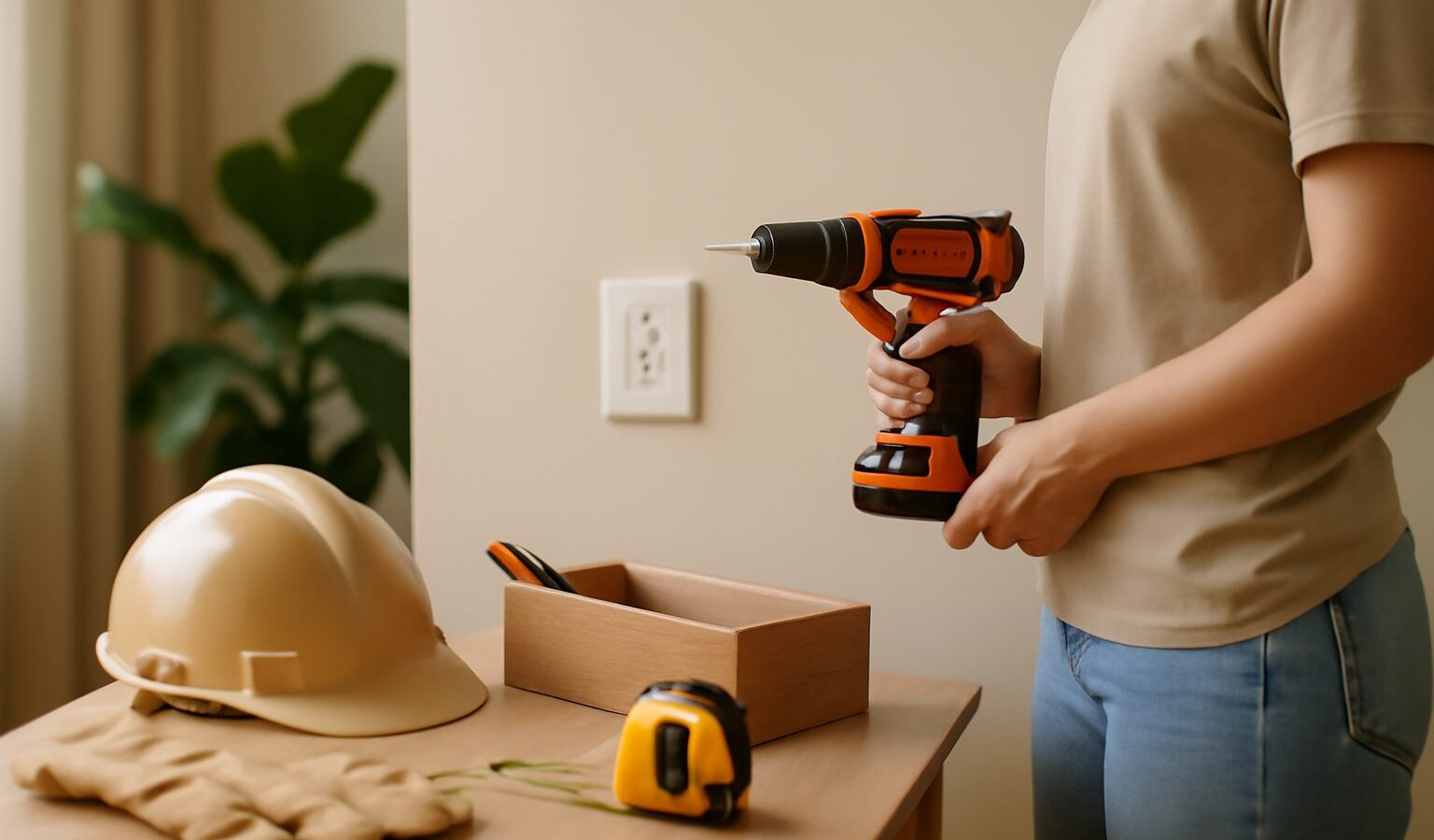
Picking up a drill or a paint roller for the first time is exciting, and a little bit of home DIY can save you money and give you real satisfaction. It can also send you to A&E if you rush. The good news is that most home accidents are easy to avoid once you know the DIY safety basics and build a few simple habits. This guide is written for total beginners and renters in HDB flats and condos, and it walks through protecting yourself, working safely around walls and power, and knowing the moment to put the tools down and call a professional.
Why Safety Comes Before Skill
It is tempting to jump straight to the fun part, but the drill or saw does not care that you are a beginner. Cuts, eye injuries, falls off wobbly stools and breathing in fine dust are the most common home DIY mishaps, and every one of them is preventable. Slowing down for two minutes to set up properly is never wasted time.
A calm, tidy work area is your first safety tool. Clear the floor so you cannot trip, keep children and pets out of the room, and make sure you have enough light to see what you are doing. In a small flat, that might mean moving a chair or clearing the dining table before you start rather than working in a cramped corner. Never DIY when you are rushed, tired or distracted, and never after a drink. Read the instructions that come with any tool or product before you switch it on, because the manufacturer knows things about that specific item that you do not.
Protect Your Body: Eyes, Lungs, Hands and Ears
Basic protective gear is cheap, sold in every local hardware shop, and far kinder than a hospital visit. Get into the habit of putting it on before the tool comes out, not after something has already flicked into your eye.
- Eye protection. Safety glasses or goggles whenever you drill, cut, hammer, sand or work above your head. Concrete and tile throw sharp chips, and dust falls straight down into upturned eyes.
- Dust mask or respirator. Sanding walls, cutting timber, drilling masonry and old paint all create fine dust that you should not breathe. A simple dust mask helps; a proper fitted respirator is better for bigger or longer jobs.
- Gloves. They protect against splinters, sharp edges and chemicals such as strong cleaners, sealant and paint stripper. Take them off for anything with a fast spinning bit, though, because a glove can snag and drag your hand in.
- Ear protection. Loud tools like a hammer drill or circular saw can damage hearing over time. Cheap earplugs or earmuffs are enough for short home jobs.
- Sensible clothing. Tie back long hair, roll up loose sleeves, remove dangling jewellery and wear covered shoes rather than slippers.
Singapore is hot and humid, so ventilate the room when you use paint, sealant, adhesive or solvents. Open the windows, run a fan, and take breaks in fresh air. If a product smells strong or the label warns about fumes, that warning is real.
Working Safely Around Walls, Dust and Power
Drilling into an HDB or condo wall is one of the most common DIY jobs, and it comes with a hidden risk: concealed electrical wiring and water pipes run inside walls, especially near switches, power sockets and wet areas like kitchens and bathrooms. Hitting a live cable or a pipe is dangerous and expensive.
Before you drill, use an inexpensive cable and pipe detector, sold at DIY stores, to scan the spot. As a rule, avoid drilling directly above, below or beside sockets and switches, and keep well away from wet walls. Never hack, chisel or alter a structural or reinforced concrete wall, and always follow HDB renovation rules and permitted working hours so you do not disturb neighbours or breach the rules of your block.
Anything electrical needs extra respect. You can safely handle plug-and-play items such as lamps, plug tops and tidying low-voltage AV or network cables. For anything beyond that, switch off at the mains or the relevant isolator first, and if you are in any doubt, stop. Fixed wiring, rewiring a socket or altering the consumer unit is not a DIY job in Singapore. That work must be done by a Licensed Electrical Worker, and electrical safety is regulated by the EMA. When in doubt, power down and call a pro.
Ladders, Heights and Heavy Lifting
Falls are among the most serious home DIY injuries, and they usually happen from a height most people think is safe. Standing on a dining chair, a bar stool or a stack of boxes to reach a ceiling or high shelf is asking for a fall.
Use a proper step ladder or step stool on a firm, level floor, and follow a few simple rules:
- Open the ladder fully and check the locks are engaged before you climb.
- Keep three points of contact, so two feet and a hand, and face the ladder.
- Do not stand on the very top step or overreach to the side; climb down and move the ladder instead.
- Keep your hips within the ladder’s side rails at all times.
- Have someone steady the base for anything more than a couple of steps up, and never climb with tools in your hands. Use a pouch or pass them up.
For heavy items, lift with your legs and keep your back straight, and get a second person for anything awkward or heavy such as a mattress, wardrobe panel or large mirror. When mounting a TV, shelf or cabinet, match the wall plug and anchor to the wall type and respect the stated weight limit, because a heavy item pulling out of a wall can injure someone below.
When to Stop and Call a Professional
Knowing your limits is a skill, not a weakness. Some jobs are genuinely dangerous or legally restricted, and the honest, money-saving move is to hire the right licensed person. Here is a simple guide to what a beginner can tackle and what to hand over.
| Job | DIY-friendly? | Call in a pro |
|---|---|---|
| Hanging a picture or light shelf | Yes, with the right anchors | Only if unsure about the wall |
| Changing a tap washer or cartridge | Yes, water shut off first | Licensed plumber for pipework or heaters |
| Repainting a room | Yes, with ventilation | Not usually needed |
| Rewiring a socket or fixed wiring | No | Licensed Electrical Worker (EMA) |
| Concealed pipes or water heater | No | Licensed plumber |
| Hacking or altering a wall | No | HDB-registered contractor |
The pattern is clear. Cosmetic and reversible jobs are great for building confidence. Anything involving mains electricity, concealed or pressurised plumbing, gas, or the structure of the building is not a place to learn on the job. For plumbing, shut off the water supply before minor fixes such as a tap washer or a toilet flush mechanism, and stop the moment a job reaches pipework, concealed pipes or a water heater, which need a licensed plumber. For any permitted renovation work, use an HDB-registered contractor.
Renters, take note: get your landlord’s written permission before drilling or making any permanent change, and favour damage-free options such as adhesive hooks and tension fittings where you can. Whether you own or rent, the safest DIYer is the one who knows exactly where their skills end and picks up the phone instead of taking a risk.
Explore more
Before you start, put together a basic home toolkit and read up on the essential DIY tools for every home. When you are ready to drill, see how to use a power drill safely, and for the trickier decisions, read when to DIY and when to hire a professional.