
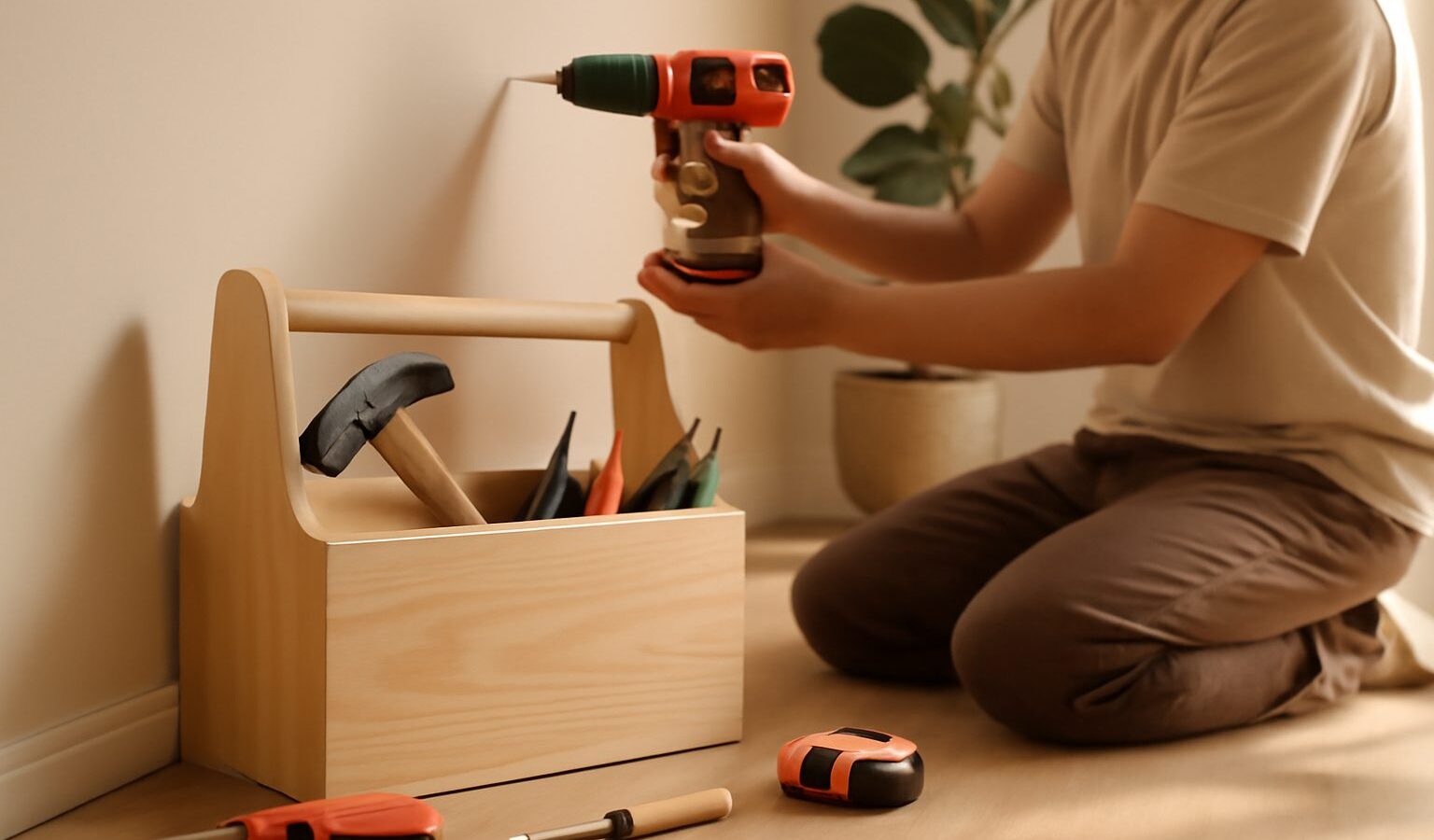
A small set of the right DIY tools turns “I’ll wait for the handyman” into “I’ll sort it out this weekend”. You do not need a garage full of gear to hang a picture, tighten a wobbly hinge or put up a shelf. This guide covers the essential DIY tools every home in Singapore should own, why each one earns its place, and how to use them safely in an HDB flat or condo. It is a general overview for beginners and renters, not professional advice, so defer to a licensed trade for anything involving mains wiring or concealed pipes.
Why A Basic Kit Beats A Big One
Beginners often overbuy, then leave half the box untouched. The smarter move is to start small, learn each tool properly, and add only what a real job demands. A tight kit is cheaper, easier to store in a compact flat, and far less intimidating.
Think in terms of jobs rather than gadgets. Most home tasks fall into a handful of buckets: fixing (tightening, unscrewing), fixing things to walls (drilling, plugging, screwing), measuring and marking, and cutting or trimming. A tool that covers a whole bucket is worth more than a novelty that does one clever thing once a year.
Buy the best you can comfortably afford for the tools you will use most, especially anything you grip or that spins. Cheap screwdrivers round off screw heads and cheap tape measures lie to you. For the rare, heavy jobs, borrowing or renting often beats buying.
The Core Hand Tools To Start With
These are the quiet workhorses. None need a power point, all are safe for total beginners, and together they handle the majority of small repairs around the home.
- Screwdrivers: at minimum a Phillips (cross-head) and a flathead, or a single driver with swappable bits. They tighten hinges, assemble flat-pack furniture and open battery compartments.
- Claw hammer: for tapping in nails and pulling them out. A medium weight suits most people; too heavy and your aim suffers.
- Tape measure: a 3m to 5m one is plenty for a flat. Measuring before you buy furniture saves painful returns.
- Spirit level: a small level, or a level app as a rough backup, keeps shelves and frames straight. A crooked shelf is obvious the moment it goes up.
- Pliers: combination pliers grip, bend and snip light wire. Long-nose pliers reach into tight spots.
- Utility knife: a retractable blade opens boxes, trims sealant and scores materials. Always cut away from your body and retract the blade after use.
- Adjustable spanner: for nuts and bolts, including the odd plumbing fitting under a sink.
- Allen keys (hex keys): flat-pack furniture lives and dies by these; a folding set keeps them together.
Add a few consumables to the same box: an assortment of screws and nails, wall plugs (the plastic sleeves that let a screw grip a masonry wall), and picture-hanging hooks. Buying these in a small mixed pack from a local hardware shop is cheaper than one late-night dash for a single screw.
Adding A Power Drill Without Fear
The drill is the one power tool that genuinely changes what you can do at home, because so many HDB and condo walls are hard concrete or reinforced concrete (RC) that ordinary hand pressure cannot penetrate. A cordless combi drill (one that both drills and drives screws) is the sensible first buy for most homes.
A few basics make it far less daunting:
- Bits matter. Use masonry bits for concrete and brick, and wood or general-purpose bits for timber. A drill is only as good as the bit in it.
- A hammer setting helps on tough concrete, adding a light pounding action so the bit bites instead of skating.
- Pilot holes (a small guide hole drilled first) stop wood from splitting and keep bigger holes on target.
- Wall plugs finish the job. Drill, blow out the dust, tap in the right plug, then drive the screw so it grips.
Before drilling any wall, check for concealed wiring and pipes. Avoid drilling directly above or below switches and sockets, keep away from wet walls near kitchens and bathrooms, and use an inexpensive cable and pipe detector if you have one. Never hack, chisel or alter a structural or RC wall, and follow HDB renovation rules and permitted hours. If you are renting, get your landlord’s written permission before you make any hole. For the full method, see the drill and wall guides linked at the end.
Matching The Tool To The Job
Buying in the right order stops you spending on tools you will not touch for months. This table maps common first jobs to the tools that actually do them, so you can grow your kit as needed.
| Common home job | Tools you actually need | Nice to have later |
|---|---|---|
| Assemble flat-pack furniture | Screwdriver or drill-driver, Allen keys | Clamps |
| Hang a light picture on a wall | Tape measure, spirit level, hammer, hooks | Laser level |
| Put up a shelf on concrete | Drill with masonry bit, wall plugs, screwdriver | Stud and cable detector |
| Fix a loose cabinet hinge | Screwdriver | Cordless drill-driver |
| Reseal a bathroom or kitchen edge | Utility knife, silicone and sealant gun | Sealant smoothing tool |
| Tighten a dripping tap fitting | Adjustable spanner, pliers | Basin wrench |
Safety, Storage And Knowing Your Limits
Good habits protect you and your flat. Wear eye protection whenever you drill or cut, a dust mask when sanding or drilling concrete (the fine dust irritates lungs), and gloves for rough or sharp work. Use a stable step stool or ladder rather than a chair, and read the instructions that come with any tool or product. When using paint, sealant or solvents, open windows and let air move, which matters more in our humid, closed-up flats.
Store your kit in one sturdy box or a small bag so nothing wanders off, and keep sharp tools capped or retracted. Keep everything well out of children’s reach. A pinch of silica gel or a dry cupboard helps stave off the rust that humidity loves to bring.
Most of all, know when a job is not yours to do. Call a pro if:
- The work touches mains or fixed wiring. Only a Licensed Electrical Worker (LEW) should handle that; switch off at the mains first and defer to EMA and your town council.
- It involves concealed pipes, a water heater or pipework behind walls. Shut off the water and call a licensed plumber.
- You need to alter a structural or RC wall, or the job needs a permit, which calls for an HDB-registered contractor.
- Anything feels unsafe, unstable or beyond your confidence. Stopping is the skilled choice, not a failure.
Start with the core hand tools, add a drill when a wall job demands it, and let your kit grow one honest need at a time. With a handful of essential DIY tools and a careful, unhurried approach, most everyday fixes become a satisfying half-hour rather than a week-long wait.