
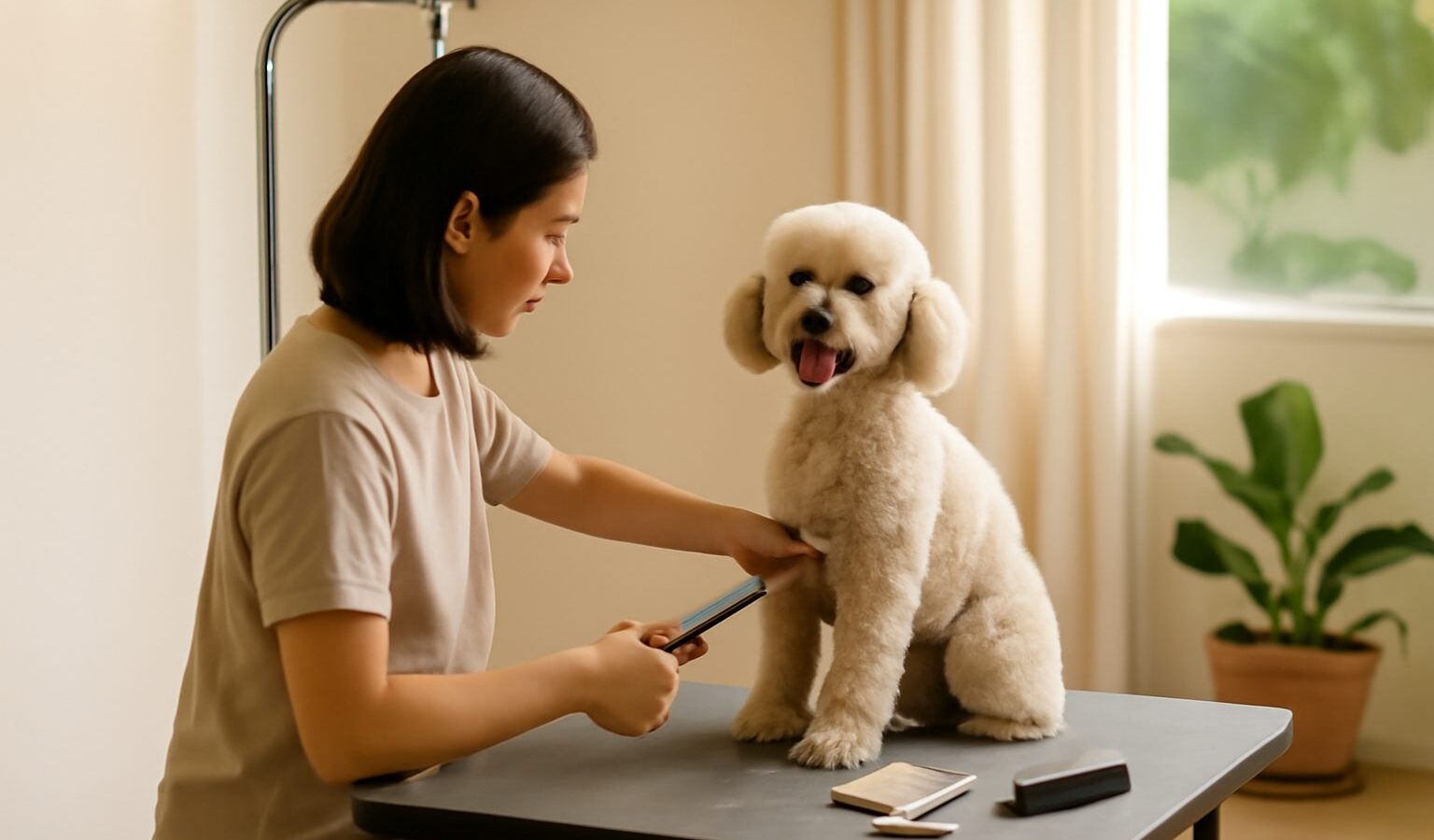
Grooming is not about looks. In a city that sits near the equator, keeping your dog clean, brushed and comfortable is part of everyday welfare. Good dog grooming in Singapore means working with the heat and humidity rather than against them: managing coats that trap moisture, spotting skin trouble early, and keeping the whole routine calm enough that your dog does not dread it. This guide walks through what most dogs need at home, when a professional helps, and how to choose someone you trust. It is general information to help you care for your dog day to day, not veterinary advice. For skin conditions, parasites or anything that looks wrong, see a licensed vet.
Why Our Climate Changes The Grooming Game
Singapore is warm and damp all year, so a dog’s coat rarely gets a chance to fully dry out on its own. Trapped moisture against the skin, especially in folds, armpits and between paw pads, can lead to irritation and a smell that shampoo alone will not fix. Dogs also pick up dust, grass and the odd hitchhiking tick on walks through parks and void decks.
That means grooming here is less about seasonal shedding and more about consistency. Regular brushing keeps air moving through the coat, bathing at sensible intervals keeps skin healthy without stripping it, and drying thoroughly matters as much as washing. A dog that comes home wet from rain or a bath and stays damp is more prone to itchy, uncomfortable skin. Think of grooming as ventilation and hygiene, not pampering.
Matching Grooming To Your Dog’s Coat
Different coats need very different routines, and breed type is the best starting point. A short, single-coated dog is low effort. A curly or continuously growing coat mats quickly in humidity and needs frequent, structured care. Double-coated breeds hold heat, so their grooming is really about airflow and never shaving down to the skin, which can harm how the coat protects them.
Use the table below as a general guide to how much work each coat type tends to need. Every dog is an individual, so adjust to what you actually see and feel in the coat.
| Coat / breed type | Example breeds | Typical grooming needs |
|---|---|---|
| Short single coat | Beagle, Dachshund, many local mixes | Weekly brush, occasional bath, easy to keep cool |
| Double coat | Pomeranian, Husky types, Corgi | Frequent brushing to remove loose undercoat, never shave to skin, watch for heat |
| Long silky coat | Shih Tzu, Yorkshire Terrier, Maltese | Daily or near-daily brushing, regular trims, prone to matting |
| Curly or wool coat | Poodle, Bichon, many doodles | Frequent professional clipping, brushing to prevent tight mats |
| Wiry coat | Schnauzer, some terriers | Regular tidying, brushing, occasional hand-stripping or clipping |
The Home Grooming Basics
Most grooming happens between salon visits, and a simple home routine keeps your dog comfortable.
- Brushing: Brush according to coat type, from a quick weekly pass for short coats to daily work for long or curly ones. Brushing spreads natural oils, lifts loose hair and lets you feel for lumps, mats and ticks. Work gently to the skin, not just the top layer, where mats actually form.
- Bathing: Bathe when your dog is genuinely dirty or on a schedule that suits their coat and skin, using a shampoo made for dogs. Human products can upset a dog’s skin. Rinse fully, because leftover shampoo causes itch.
- Drying: This is the step people rush. Towel well, then dry the coat through in our humidity so the skin underneath is not left damp. Pay attention to ears, folds and between the toes.
- Ears: Check ears regularly for dirt, redness or odour and clean only the visible part gently. Do not push anything deep into the ear canal.
- Nails: Trim or file nails before they get long enough to click loudly or splay the toes. If you can hear them tapping on the floor constantly, they are likely overdue.
- Teeth: Introduce tooth brushing with dog-safe products as part of the routine. Dental care is easy to forget and easy to keep up once it is a habit.
Go slowly, keep sessions short at first, and pair grooming with praise and a treat so your dog learns it is nothing to fear.
Ticks, Fleas And Skin: What To Watch
Our green spaces are lovely, and they are also where dogs meet ticks and fleas. After walks in grassy or wooded areas, run your hands over your dog and check warm, hidden spots: ears, neck, armpits, groin and between the toes. Grooming time is the natural moment to do this because you are already handling the whole body.
Parasite prevention itself is a health matter, and the right product and schedule depend on your dog. Ask your vet which prevention suits your dog and follow their guidance rather than guessing. If you find a tick, notice persistent scratching, hair loss, red or flaky skin, a bad smell, or your dog seems itchy and unsettled, treat these as red flags and see a licensed vet. Skin issues are common in this climate and usually more manageable when caught early. None of this is a diagnosis, and it does not replace a vet examining your dog.
Keeping Cool Without Shaving To The Skin
People often assume the kindest thing in the heat is to shave a dog right down. For many coats, that backfires. A double coat actually helps regulate temperature and shields skin, so shaving it can leave a dog worse off. A sensible summer approach is a neat, shorter trim that reduces bulk while leaving enough coat to protect the skin, kept tidy and free of mats so air can move.
Comfort in the heat also comes from the basics around grooming: fresh water, shade, walks at cooler times of day, and a dog that is brushed out rather than carrying a thick, matted layer. If you want a specific style, talk it through with your groomer, who can advise what suits your dog’s coat rather than clipping to a fixed length by default.
Groomer, Mobile Or DIY
You have three broad options, and many owners mix them: a quick home tidy between fuller grooms at a salon. Choose based on your dog’s coat, temperament and how they cope with travel and handling.
- Professional salon: Good for clipping, tricky coats and a thorough job. Your dog travels to the salon and may wait alongside other dogs.
- Mobile groomer: Comes to you, which suits dogs who find travel or busy salons stressful, and keeps everything one-to-one.
- DIY at home: Cheapest and builds your bond, but needs the right tools, patience and honesty about coats you cannot safely manage yourself.
When choosing a groomer, look for someone calm and patient who handles dogs gently, keeps a clean space, is happy to explain their process, and does not force a frightened dog through it. Ask how they manage a nervous or older dog. A groomer who prioritises your dog’s comfort over speed is worth keeping. Trust your instinct: if your dog comes home consistently stressed, it is fair to look elsewhere.
Explore More
Grooming works best as a shared routine between home and the salon. For hands-on technique, see our guide to grooming your pet at home in Singapore, and when you are ready to book help, compare your options in pet grooming services in Singapore. A little consistency keeps your dog cooler, cleaner and happier all year.