
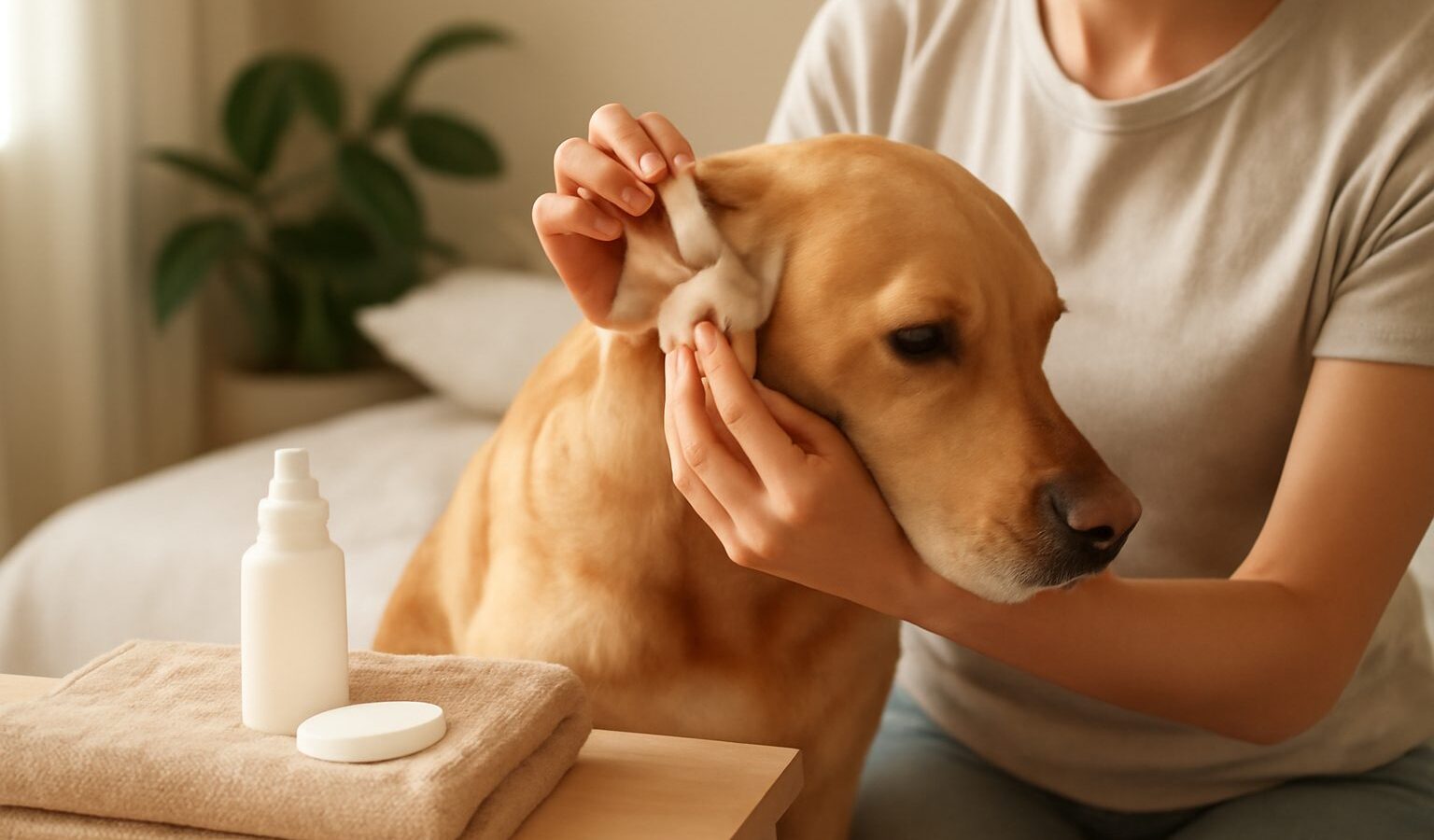
Singapore’s warm, humid climate is hard on dogs’ ears. Moisture and heat create ideal conditions for yeast and bacteria, which is why ear problems are such a common reason for vet visits here. Regular, gentle cleaning helps keep the ears healthy and lets you spot trouble early. Cleaning dog ears at home is straightforward once you know the safe method, but done wrongly it can push debris deeper or irritate a sensitive canal.
This guide covers which dogs need cleaning and how often, the correct step-by-step technique, what you should never put in an ear, and the warning signs that mean it is time to see a licensed vet rather than reaching for the cleaner.
Which Dogs Need Regular Ear Cleaning
Not every dog needs frequent ear cleaning. In fact, over-cleaning a healthy ear can cause irritation, so the goal is to clean when needed, not obsessively.
Some dogs are more prone to build-up and need closer attention:
- Floppy-eared breeds, whose ear flaps trap heat and moisture against the canal.
- Dogs with hairy ear canals, which hold debris and reduce airflow.
- Water-loving dogs and any dog bathed often, as trapped water encourages infection.
- Dogs with allergies or a history of ear problems, who often need a routine set by their vet.
A healthy dog ear is pale pink inside, with little smell and only a small amount of wax. If your dog’s ears look and smell fine, a quick weekly check may be all that is needed. Let what you see guide how often you clean.
Drying the ears well after any water exposure is one of the most useful habits in our climate. After a bath or a swim, gently dab the entrance of the canal and the inside of the flap with a soft towel or cotton wool, and let the ears air dry rather than trapping moisture under a wet flap. This simple step removes much of the dampness that yeast and bacteria thrive on, and for many dogs it does more good than frequent cleaning.
What You Need and What to Avoid
Using the right products protects the delicate ear canal. Using the wrong ones can do real harm.
Reach for these:
- A vet-recommended dog ear cleaning solution. Ask your vet which product suits your dog, especially if the ears are often troublesome.
- Cotton wool or gauze pads to wipe the outer ear and flap.
- A towel, because most dogs shake vigorously afterwards.
Never use these:
- Cotton buds inside the canal. They can push debris deeper and risk injuring the ear drum.
- Water, alcohol, hydrogen peroxide or vinegar mixes. These can sting, irritate or leave moisture behind. Do not use human ear drops or homemade solutions.
- Any product not made for dogs, unless your vet has specifically advised it.
If you are ever unsure what is safe for your dog, check with a licensed vet before putting anything into the ear.
Cleaning Your Dog’s Ears Step by Step
Choose a calm moment and somewhere easy to wipe down, as this can get messy. Reward your dog throughout to keep the experience positive.
- Gently lift the ear flap and take a quick look inside for redness, discharge or a bad smell before you start.
- Fill the canal with the ear cleaner as directed on the product, holding the flap up.
- Gently massage the base of the ear for a few seconds. You may hear a soft squelching sound, which means the cleaner is loosening debris.
- Let your dog shake its head, which brings loosened debris up and out.
- Use cotton wool or gauze to wipe away debris and cleaner from the visible part of the ear and the flap, without pushing into the canal.
- Repeat on the other ear, then praise and reward your dog.
Stop if your dog shows pain, pulls away sharply or the ear looks red and sore, and speak to your vet instead. Never force cleaning into a painful ear, as you could be dealing with an infection that needs treatment.
How Often, By Dog Type
Frequency depends on the dog. Use this as a starting point and adjust with your vet’s guidance.
| Dog type | Typical cleaning frequency | Watch for |
|---|---|---|
| Healthy upright ears | Occasional, only when dirty | Over-cleaning irritation |
| Floppy or hairy ears | Regular checks, clean as advised | Trapped moisture and odour |
| Frequent swimmers or bathers | After water exposure | Lingering wetness in the canal |
| Allergy or infection-prone | As directed by your vet | Recurring redness and discharge |
When in doubt, clean less rather than more, and let your vet set the routine for a dog with ongoing ear trouble.
Red-Flag Signs That Need a Vet
Cleaning maintains a healthy ear, but it does not treat an infection, and using cleaner on an already infected or injured ear can make things worse. This article is general information and not veterinary advice. See a licensed vet promptly if you notice any of the following.
- A strong or yeasty smell coming from the ear.
- Redness, swelling or a hot ear flap.
- Brown, yellow or bloody discharge, or a lot of dark wax.
- Constant head shaking, scratching at the ear or rubbing it along the floor.
- A head tilt, loss of balance, or signs of pain when the ear is touched.
- A swollen ear flap, which can be a blood blister that needs treatment.
These often point to an ear infection, ear mites, allergies or a foreign object such as a grass seed, all of which need proper diagnosis. Your vet can look deep into the canal, identify the cause and prescribe the right treatment. Recurring ear problems, common in our humid climate, are worth investigating rather than simply cleaning again and again.
Handled gently and not too often, ear care becomes a quick routine that keeps your dog comfortable and helps you catch problems while they are still small.
Explore more
Ear cleaning is one part of a good at-home health routine, so pair it with our guides to dog dental care at home and trimming your dog’s nails safely. A relaxed dog tolerates handling far better, so keep yours settled and content with our dog enrichment ideas.