
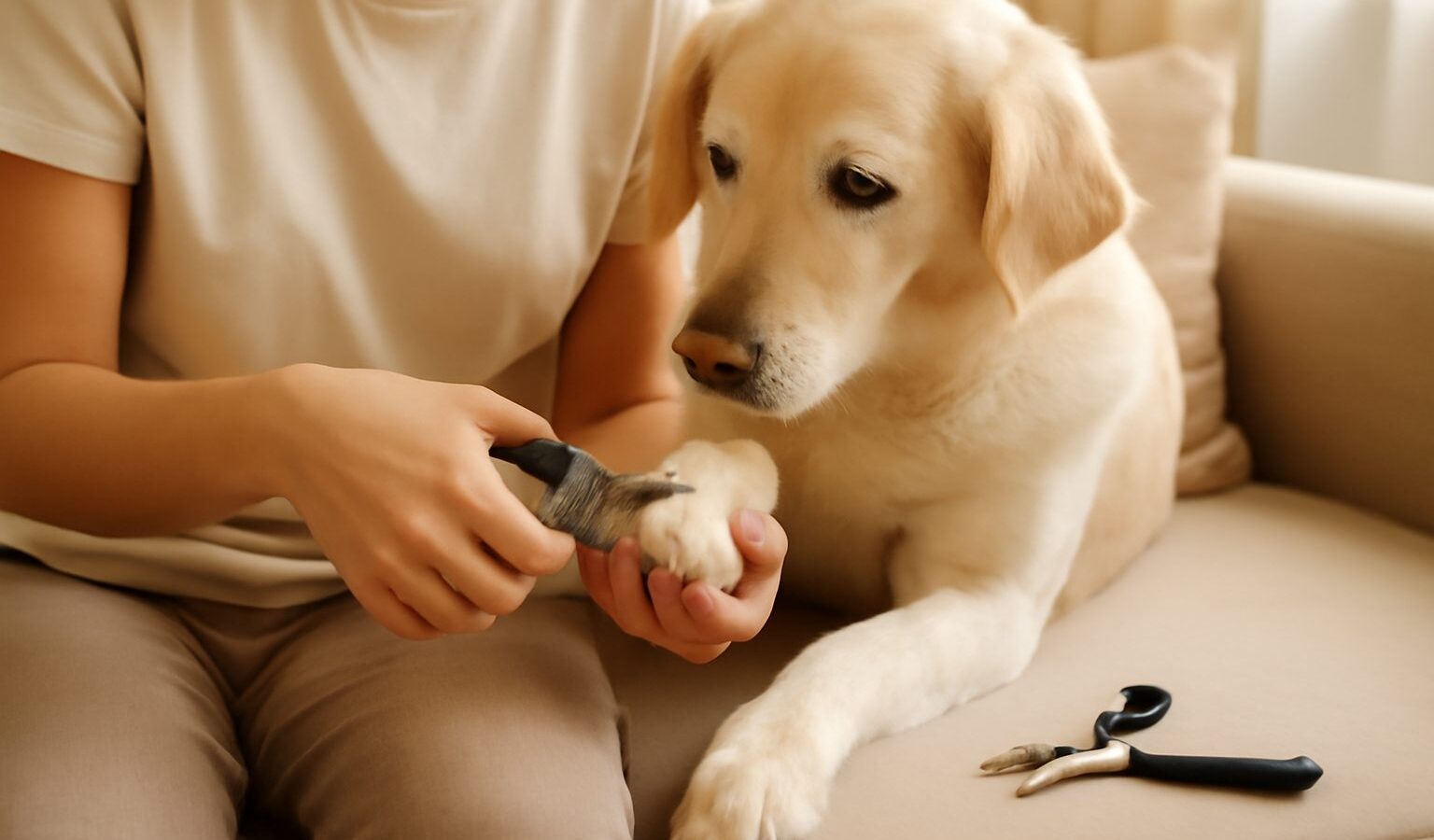
Few grooming jobs make owners as nervous as trimming dog nails, and understandably so. Cut too far and you hit the sensitive quick, which bleeds and stings. Yet overgrown nails are a genuine welfare problem, changing how a dog stands and walks and, in bad cases, curling into the paw pad. With the right tools and a calm, patient approach, most owners can learn to keep their dog’s nails in good shape at home.
This guide explains how to find the quick, choose your tools, trim little and often, and recognise when the job is best left to a vet or groomer. Take it slowly, especially the first few times, and there is no prize for rushing.
Why Nail Length Matters
Nails that are too long do more than look untidy. When a nail touches the ground, it pushes back into the toe with every step, which is uncomfortable and can strain the joints over time. Long-term, overgrown nails can change a dog’s posture and gait.
A few pointers help you judge length:
- On a dog standing on a hard floor, the nails should not click loudly or touch the ground when at rest.
- The dew claws, higher up on the inner leg, do not wear down naturally and can curl right around into the skin if ignored.
- Dogs walked mostly on grass or carpet wear their nails down far less than those on pavement, so many Singapore dogs need regular trims.
If you can hear a steady clicking as your dog crosses the kitchen, the nails are probably due for a trim.
Understanding the Quick
The quick is the living core of the nail, containing blood vessels and nerves. Your goal is to trim the hard outer nail without cutting into it.
On pale or white nails, the quick shows as a pink area inside the nail, so you can see how far to go and stop short of it. On dark or black nails you cannot see it, which is why many owners find dark nails harder. The trick there is to trim a very small sliver at a time and look at the cut surface. As you get close to the quick, a small grey or pink dot appears in the centre of the cut face. Stop as soon as you see it.
The quick grows longer as the nail grows longer. That is why regular, small trims are better than occasional big ones: frequent trimming encourages the quick to recede over time, letting you keep the nails shorter and safer.
Tools and Getting Your Dog Ready
You do not need much, but the right tools make a real difference.
- Clippers. Scissor-style or plier-style clippers suit most dogs. Choose a size that matches your dog, and keep them sharp, as blunt clippers crush and split the nail.
- A grinder is a rotary tool that files the nail down gradually. Some dogs prefer it, and it gives a smooth finish, though the noise and vibration take getting used to.
- Styptic powder to stop bleeding quickly if you nick the quick. Keep some within reach before you start, just in case.
Preparation matters as much as tools. Handle your dog’s paws often when you are simply relaxing together, so touch becomes normal rather than a warning sign. Reward calm behaviour with praise or small treats, and pick a quiet time when your dog is already tired and settled.
Trimming Step by Step
Work in good light and stay relaxed, as dogs read our tension. If either of you is stressed, stop and try again another day.
- Sit somewhere calm and gently hold one paw, supporting it without squeezing.
- Locate the quick, or on dark nails, plan to remove only a small tip.
- Hold the clippers at a slight angle and trim a small amount from the end of the nail.
- On dark nails, take thin slices and check the cut surface after each, stopping at the first sign of the grey or pink dot.
- Do not forget the dew claws if your dog has them.
- Trim just a few nails, then take a break or finish for the day if your dog is unsettled.
Little and often beats one stressful marathon session. If your dog has clear nails, doing two or three paws a week keeps everything manageable and low pressure.
When to Trim Yourself and When to Get Help
Home trimming suits many dogs, but not every dog or every owner, and there is no shame in outsourcing it.
| Situation | Trim at home | See a vet or groomer |
|---|---|---|
| Calm dog, visible pale quick | Yes | Not needed |
| Dark nails, confident owner | Yes, small slices | If unsure of the quick |
| Very long or curled nails | No | Yes, may need staged trims |
| Dog that struggles or snaps | No | Yes, for everyone’s safety |
| Nail cut into the pad or infected | No | Yes, treat as a vet issue |
A professional groomer or vet nurse can also show you the technique in person, which is often the fastest way to build confidence.
If Things Go Wrong: Bleeding and Red Flags
Even careful owners occasionally catch the quick. If a nail bleeds, stay calm, apply styptic powder or press clean gauze firmly against the tip for a minute or two until it stops. Most minor nicks settle quickly. This article is general information and not veterinary advice.
Contact a licensed vet if any of the following happen.
- Bleeding that does not stop after steady pressure for several minutes.
- A nail that is torn, split down into the toe, or hanging.
- Swelling, heat, discharge or a bad smell around a nail or toe, which can signal infection.
- Limping, licking the paw constantly or obvious pain.
- A nail that has grown into the pad.
Any of these deserve a professional look rather than more home trimming. Handled patiently, though, nail care becomes a quick, routine part of keeping your dog comfortable and sound on their feet.
Explore more
Nail trims go better with a settled, well-exercised dog, so try our dog enrichment ideas to burn off restless energy first. Keep the rest of your home grooming routine on track with our guides to dog dental care at home and cleaning your dog’s ears at home.