
A dog licking paws for a minute after a walk is normal grooming. A dog licking paws for long stretches every evening, leaving wet, rust-coloured fur and a faint biscuity smell, is telling you something. In Singapore, where humidity rarely drops and grass, floors and air-conditioned rooms swing between damp and dry, persistent paw licking is one of the most common reasons owners end up at the vet.
This guide covers the main causes, what to check at home, and when to book an appointment. It is general information, not veterinary advice, so treat your vet’s examination as the final word.
Why Paw Licking Is So Common in Singapore
Paws are where a dog meets the environment. In a tropical climate they spend much of the day slightly damp: wet grass in the morning, mopped floors at home, rain on the way back from the void deck. Moisture trapped between the toes and pads softens the skin and gives microbes an easy place to grow.
Add year-round pollen from grasses, dust mites thriving in humid homes, and floor cleaners that leave residue, and you have plenty of triggers. Many owners first notice the habit through saliva staining: in light-coloured dogs, the enzymes in saliva turn fur between the toes a reddish brown. The same process causes facial tear stains in white dogs.
The Four Main Causes of Dog Licking Paws
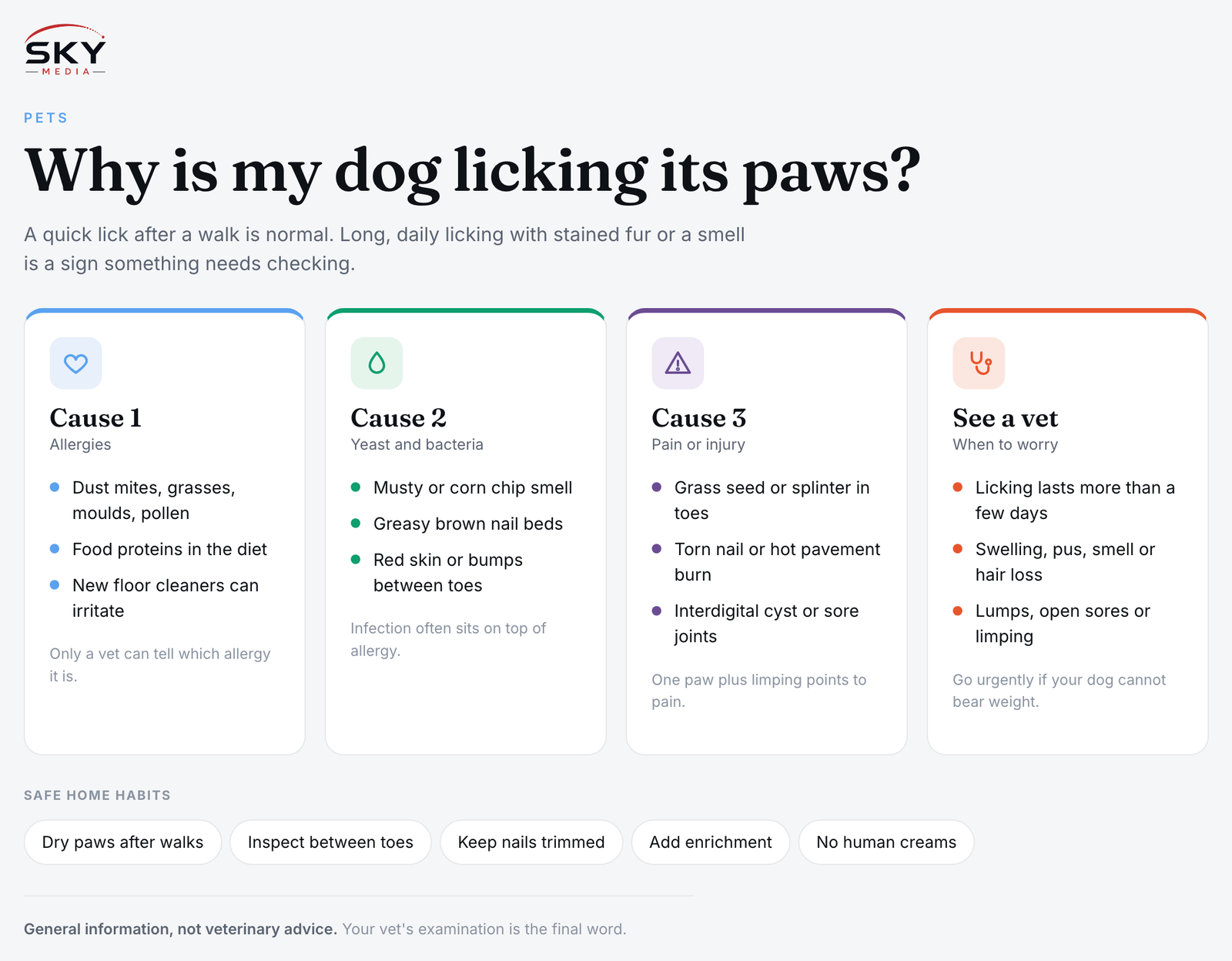
1. Allergies (the most frequent culprit)
Itchy paws are a classic sign of allergy in dogs. Two broad types matter:
- Environmental allergies (atopy): reactions to dust mites, grasses, moulds and pollens. In Singapore these can flare at any time of year rather than in one season. Dogs often also lick their bellies, scratch their ears or rub their faces on the sofa.
- Food-related allergies or intolerances: a reaction to a protein in the diet. These usually cause itching that does not change much with the weather, sometimes alongside ear problems or soft stools.
Contact irritation is a third, simpler possibility: a new floor cleaner, fertiliser on a lawn, or chemicals on a condo walkway can irritate the skin directly.
Only a vet can work out which allergy type is involved, usually by ruling things out. Food trials must be run strictly to be useful, so do not swap brands every week on your own.
2. Yeast and Bacterial Infections
Constant licking keeps the paw wet, and a warm, wet paw is ideal for yeast (often Malassezia) and bacteria. This creates a loop: the itch causes licking, licking feeds the infection, the infection causes more itch.
Signs that point towards infection include:
- A musty, sour or “corn chip” smell from the feet
- Greasy, brown discharge in the nail beds or between the toes
- Red, swollen skin, or darkened, thickened skin in long-standing cases
- Small pimples or bumps between the toes
Infections usually sit on top of another problem, often allergy, so treating the infection alone may only give temporary relief.
3. Pain or Injury
Some dogs lick one paw because it hurts. Look out for:
- A grass seed, splinter or small stone lodged between the toes
- A torn or cracked nail, or a nail that has grown into the pad
- A cut or burn on the pad, especially after walking on hot surfaces at midday
- An interdigital cyst, a painful lump that forms between the toes
- Joint pain, such as arthritis in older dogs, where licking over a sore wrist or toe joint is a comfort behaviour
If the licking is focused on one foot and your dog is limping or flinching when you touch it, pain is high on the list. For burns and pad damage from hot ground, see our guide to dog paw care and hot pavements.
4. Boredom, Anxiety and Habit
Licking can become self-soothing. Dogs left alone for long hours, adjusting to a new home, or stressed by renovation noise and thunderstorms may lick out of boredom or anxiety. Over time this can cause a lick granuloma, a stubborn, raised sore usually on the front leg or paw.
Behavioural licking is usually a diagnosis made after medical causes are ruled out, not before.
How to Tell the Causes Apart
The pattern of licking gives useful clues to share with your vet.
| Pattern you notice | More likely cause | Helpful next step |
|---|---|---|
| All four paws, plus ears, belly or face itch | Environmental or food allergy | Note when it flares and book a vet check |
| Smelly, greasy feet with brown nail beds | Yeast or bacterial infection, often on top of allergy | Vet examination and skin tests |
| One paw only, sudden start, limping | Injury, foreign body, nail problem or cyst | Inspect gently, then see a vet promptly |
| Licking mostly when alone or bored, no skin changes at first | Boredom, anxiety or habit | Enrichment, exercise and a vet or behaviourist review |
| Older dog licking over a joint, stiff after rest | Joint pain or arthritis | Vet assessment for pain management |
What You Can Safely Do at Home
These steps support your dog while you work out the cause. They do not replace treatment.
- Inspect the paws in good light. Spread the toes and check between the pads, the nail beds and the underside of each pad. Look for redness, seeds, cuts, swelling or discharge.
- Dry paws properly after walks and baths. Use a towel and get between the toes. In humid weather this simple habit makes a real difference.
- Wipe off allergens. A gentle wipe with plain water or a pet-safe wipe after grass walks can reduce what sits on the skin. Ask your vet before using any medicated product.
- Check your floor cleaner. If the licking started around the time you changed products, rinse floors with plain water and see whether it settles.
- Keep nails trimmed so they do not split or curl into the pads.
- Add enrichment. Longer sniff walks in the cooler hours, puzzle feeders, chew items your vet considers safe and short training sessions can reduce boredom licking.
Things to avoid:
- Do not use human creams, essential oils or antiseptics on paws. Some are toxic if licked off, and others sting broken skin.
- Do not give any human medicine for itch or pain. Several common human painkillers are dangerous for dogs.
A soft cone or a dog bootie can stop licking for short periods while you arrange a vet visit, but it does not treat the cause.
When to Worry and See a Vet
Book a vet appointment if you notice any of the following:
- Licking that lasts more than a few days, or keeps coming back
- Redness, swelling, bleeding, pus, a bad smell or hair loss on the paw
- Limping, or your dog pulling the foot away when touched
- A lump between the toes, or a lump anywhere that is growing (our guide on finding a lump on your pet explains what vets look for)
- A raw, open sore from licking
- Licking alongside other signs such as ear infections, vomiting, lethargy or loss of appetite
Seek urgent care if your dog cannot put weight on the foot, has a deep cut or bleeding that will not stop, or the paw is very hot and swollen.
At the visit, your vet may examine the skin, take a tape or swab sample to look for yeast and bacteria under the microscope, and ask about diet, routine and timing. For allergies, they may suggest a structured food trial or discuss longer-term itch management. Bring notes on when licking started, whether it is one paw or all, and any changes to food, cleaners or routine. Fees and treatment options vary between clinics, so ask for an estimate before tests if cost is a concern.
Preventing Paw Problems Long Term
Chronic paw licking often comes from an allergy that needs ongoing management. Consistent habits keep flare-ups small:
- Dry paws after every walk, especially during the wetter months
- Keep up with any parasite prevention your vet recommends, as fleas can worsen itch
- Feed a consistent diet and introduce changes slowly
- Wash dog bedding regularly to reduce dust mites
Catching the habit early, before the skin becomes infected and thickened, usually means quicker, simpler relief for your dog.