
Books are one of the hardest things to throw away, and one of the easiest to give a second life. If you plan to donate books in Singapore during a year-end clear-out, the key is matching each pile to the right place. A charity shop wants clean, saleable titles. A kindergarten wants picture books in good shape. A community shelf wants anything people will enjoy reading. Damaged books belong in recycling, not in a donation box.
This guide walks through the main options, what each one tends to accept, and how to prepare your books so they are actually used rather than discarded on arrival.
Sort Your Books Before You Donate
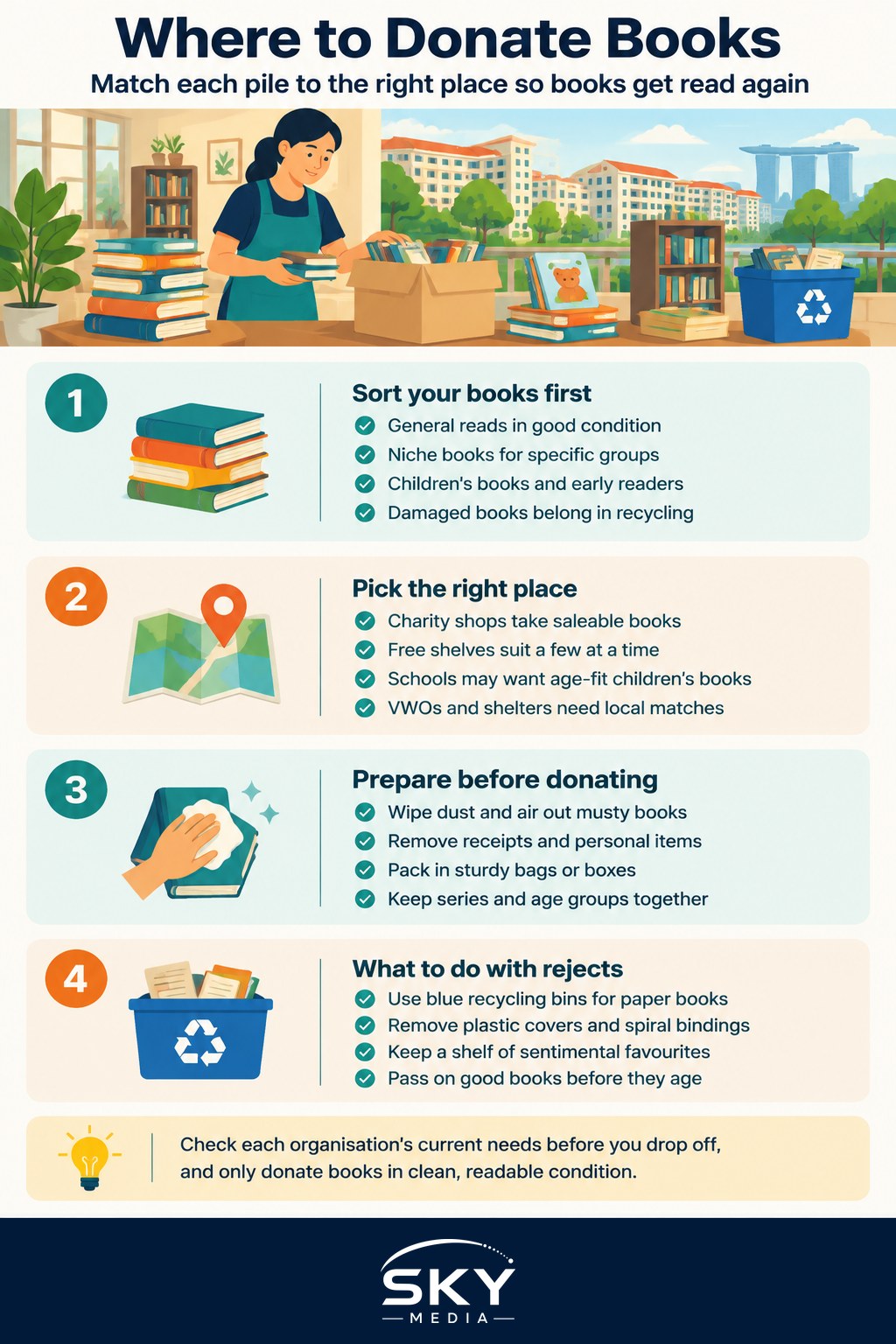
A quick sort saves you trips and saves volunteers time. Make four piles:
- Good condition, general interest: novels, cookbooks, travel guides, popular non-fiction, children’s storybooks
- Specialist or niche: textbooks, professional manuals, religious texts, language-learning books, books in Chinese, Malay or Tamil
- Children’s and early readers: picture books, board books, graded readers, activity books that are not filled in
- Damaged or outdated: water-stained, mouldy, torn, heavily written in, or very old editions of reference books and guidebooks
Most donation points will turn away the last pile. Singapore’s humidity means mould is common in books kept in cupboards, and a mouldy book can spread spores to others in storage. Check the edges and spine for spots and a musty smell before you pack.
Where to Donate Books: Your Main Options
Each type of recipient has its own needs. Use the table below to decide where each pile should go, then confirm the details with the organisation before dropping off.
| Option | Best for | What they usually accept |
|---|---|---|
| Charity thrift shops | General adult and children’s books | Clean, saleable books; most decline encyclopaedias, old textbooks and damaged copies |
| Community book exchanges and free shelves | Light reads, magazines, children’s books | Books in readable condition; space is limited, so bring a few at a time |
| Schools, kindergartens and student care centres | Children’s books, graded readers | Age-appropriate books in good condition; ask what reading levels they need |
| Voluntary welfare organisations and shelters | Books for specific groups such as seniors, youth or migrant workers | Titles suited to their residents, often in particular languages |
| Overseas book drives | Children’s and English-learning books | Varies by drive; often has strict lists to keep shipping worthwhile |
Charity thrift shops
Several charities in Singapore run secondhand shops that sell donated goods to fund their programmes. Books are a common item. Because the books are resold, shops prefer clean, recent, popular titles. Check the charity’s website for its current list of accepted items and drop-off hours, as these change. Some shops have limited space and may pause book donations when they are overstocked.
Community book exchanges and free shelves
You may spot free book shelves at community centres, residents’ network corners, condo clubhouses, cafes and some workplaces. These run on a simple “take one, leave one” idea. They are ideal for paperbacks, travel reads and children’s books. Ask the person managing the shelf before leaving a large box, since most can only take a handful at a time. If your estate does not have one, a residents’ committee or condo management may welcome the idea.
Schools, preschools and student care
Kindergartens, childcare centres, student care centres and tuition centres sometimes welcome good children’s books, especially picture books, early readers and bilingual titles. Call or message first. Many have limited shelf space and specific needs, such as books for a certain age or in Mother Tongue languages. Old school textbooks are a different matter, as they are usually best passed to families using the same edition through school book sales or parent groups.
Welfare homes, hospitals and shelters
Some voluntary welfare organisations (VWOs), eldercare centres, hospices and shelters accept books for residents. Seniors may enjoy large-print books, Chinese-language titles or familiar classics. Migrant worker support groups sometimes look for books in Bengali, Tamil, Burmese or other languages, plus English-learning materials. Needs change often, so ask what they currently want rather than turning up with a box.
Public libraries
The National Library Board (NLB) has its own rules on donations, and libraries generally have strict criteria because every book must be catalogued and fit the collection. Check the NLB website for the current policy before bringing books to a branch. Do not leave books in the return chutes, as these are only for borrowed items.
Overseas book drives
Some community groups, schools and churches organise drives that send children’s books or English-learning books to schools in the region. These usually publish a specific list of wanted titles or types. Follow it closely, since shipping unsuitable books wastes the organisers’ funds.
How to Prepare Books for Donation
A few minutes of preparation makes the difference between a donation that gets used and one that gets binned.
- Wipe dusty covers with a dry cloth and air books out of direct sun if they smell slightly musty
- Remove bookmarks, receipts, photos and anything with personal details written inside
- Tear out or blank any page with your name, address or phone number if you prefer privacy
- Pack in sturdy bags or boxes that one person can carry, not overfilled cartons
- Group children’s books by age and label the bag, which helps busy volunteers
- Keep sets together, such as a full series, since they are more appealing as a bundle
Avoid donating:
– Books with mould spots, insect damage or heavy water stains
– Old encyclopaedias, outdated computing manuals and expired guidebooks
– Workbooks and colouring books that are already filled in
– Magazines older than a few months, unless a specific recipient asks for them
What to Do With Books Nobody Wants
Not every book will find a new reader, and that is fine. Paper books can go into the blue recycling bins found at HDB blocks and many condos. Remove plastic covers, laminated dust jackets and spiral bindings where you can, since these interfere with paper recycling. Hardcovers with heavy glued spines are less easy to recycle; check the National Environment Agency (NEA) guidance on what can go into the blue bin.
If a book has sentimental value but no practical use, consider keeping one shelf as a small family library and letting the rest go. You might also sell good titles you no longer need, then donate the rest. For other household items in the same clear-out, see Where to Donate Used Items in Singapore.
Make Book Giving a Habit
Rather than a single big clear-out each December, many families keep a small “pass it on” box near the bookshelf. When a book is finished and no one will reread it, it goes in the box. When the box is full, it goes to the next donation point. This keeps shelves manageable and gets books to new readers while they are still current.
You can also swap books with friends, join a reading group that trades titles, or start a shelf at your workplace. Our guide to Book Clubs in Singapore has ideas for finding readers who love to share. And if your clear-out includes more than books, see Where to Donate or Recycle Old Toys in Singapore for the next pile.
Frequently Asked Questions
Where can I donate books in Chinese, Malay or Tamil? Eldercare centres, community groups and some voluntary welfare organisations look for books in particular languages, as do some migrant worker support groups. Ask what titles they currently want before turning up with a box. Many general charity shops accept only popular, saleable titles.
Can I claim a tax deduction for donating books? Tax deductions normally relate to approved donations to approved recipients, and rules about what qualifies, including donations of goods, can differ. Check the latest IRAS guidance, and ask the organisation whether it can issue a receipt before you assume anything.
How do I handle a large book collection from a relative’s estate? Take time to sort first. Keep what the family treasures, set aside saleable titles, and separate specialist, damaged and outdated ones. Contact the organisation beforehand to ask whether they can take a bulk donation, since many cannot accept large boxes without warning.
Can I arrange for someone to collect my donated books? Some organisations may arrange pickups for larger donations, but many only accept drop-offs at set hours. Ask before you pack. If you must carry them yourself, use sturdy bags or boxes that one person can manage, and group children’s books by age.