

Most households end up with food they will not finish: a carton of instant noodles from a bulk deal, festive hampers, duplicate groceries after a move, or extra bread after a party. If you want to donate food in Singapore rather than let it expire in the cupboard, there are two main routes: food banks, which collect and redistribute packaged food at scale, and community fridges, which let neighbours share smaller amounts directly. Each has its own rules about what it can accept.
This guide explains what typically goes where, how to prepare items so they are actually usable, and the common mistakes that turn a kind gesture into extra work for volunteers. It is different from using food-rescue apps to buy discounted surplus: here, you are giving food away.
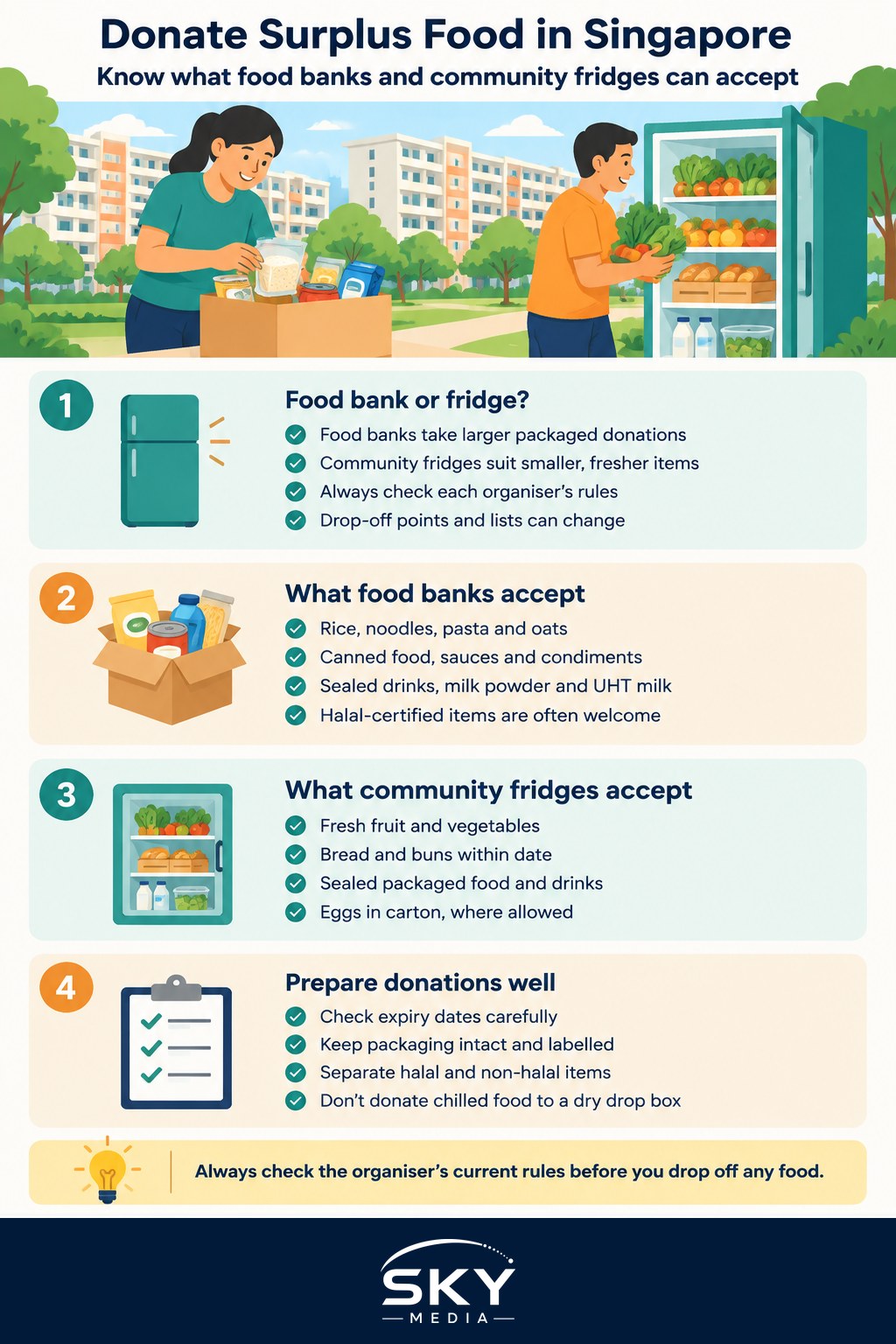
Food Banks Versus Community Fridges
Food banks are organised charities or community groups that collect donations, sort them in a warehouse or store, and pass them to beneficiary organisations such as family service centres, eldercare homes, migrant worker groups and welfare charities. The best-known is the national food bank charity, Food Bank Singapore, and there are also smaller ground-up groups, religious organisations and town council initiatives that run food drives.
Community fridges are refrigerators placed in public or semi-public spots, often at void decks, community spaces or outside religious buildings, where anyone can leave food and anyone in need can take it. They are usually run by volunteers or a residents’ group who check the fridge regularly.
| Point of comparison | Food banks and food drives | Community fridges |
|---|---|---|
| Best for | Larger quantities of packaged, shelf-stable food | Small amounts of fresh or chilled food to share quickly |
| Typical accepted items | Rice, noodles, canned food, oil, biscuits, cereal, sealed drinks | Fresh fruit and vegetables, bread, sealed chilled items, packaged snacks |
| Shelf life expected | Usually a comfortable margin before expiry, often a few months | Short, but items must still be within date and safe |
| How food reaches people | Sorted and distributed through partner charities | Taken directly by anyone in need, anonymously |
| Where to check rules | The organisation’s website or donation page | Notice on the fridge or the organiser’s social media page |
Always check the specific organisation’s current list before you go, because accepted items, drop-off points and minimum expiry periods change from time to time.
What Food Banks Usually Accept
Most food banks focus on non-perishable, commercially packaged food. Commonly welcomed items include:
- Staples: rice, dry noodles, pasta, oats, flour
- Canned food: fish, meat, beans, vegetables, soups, fruit
- Cooking basics: cooking oil, sauces, condiments, salt, sugar
- Breakfast and snacks: cereal, biscuits, crackers, bread spreads in sealed jars
- Drinks: milk powder, UHT milk, sealed packet drinks, coffee and tea sachets
Items that are usually not accepted at food banks:
- Anything expired or very close to expiry
- Opened, partly used or repacked food
- Home-cooked or homemade food
- Items with damaged, dented, bloated or leaking packaging
- Alcohol, and often raw meat or seafood unless the organisation has cold storage arrangements
- Food without labels showing ingredients and expiry date
Many beneficiaries have dietary needs, including halal requirements, so many food banks welcome halal-certified items and some ask donors to keep halal and non-halal items separate. Clearly marked halal food is easier to distribute widely.
What Community Fridges Usually Accept
Community fridges suit food that needs eating soon. Rules are set by each organiser and are normally posted on or near the fridge. Commonly:
- Accepted: whole fresh fruit and vegetables, bread and buns within date, sealed packaged food and drinks, eggs in their carton (where allowed)
- Often not accepted: home-cooked dishes, opened packets, raw meat and seafood, alcohol, expired items and anything that needs freezing
Some community fridges allow cooked food only under strict conditions, such as being sealed, labelled with the time it was prepared and removed after a short period. If the posted rules do not mention cooked food, assume it is not allowed.
If you grow your own vegetables or herbs, community fridges can be a natural home for a glut. See our guide on sharing surplus homegrown produce for other ways to pass on a good harvest.
How to Prepare Your Donation
A little preparation makes your donation far more useful:
- Check every expiry date. Leave items with plenty of time remaining. Food that expires in a few days may never reach a family in time once it passes through sorting and delivery.
- Keep packaging intact. Do not split multipacks unless each unit has its own label with the expiry date and ingredients.
- Separate halal and non-halal items into different bags, and note which is which if asked.
- Group similar items so sorters can process them quickly.
- Do not donate items that need refrigeration to a food bank drop box. Only bring chilled items to places with proper cold storage, such as a community fridge, and put them in straight away.
- Think nutrition, not just leftovers. Food banks often appreciate staples and protein-rich items over sweets and snacks.
Where and How to Drop Off
Common ways to donate food in Singapore include:
- Food bank drop-off points or bins, sometimes located at supermarkets, offices, schools or community centres. The food bank’s website usually lists current locations.
- Organised food drives run by schools, companies, residents’ committees or religious groups, especially around festive periods.
- Community fridges in your neighbourhood, often found through residents’ groups or social media.
- Bulk donations by arrangement, for businesses, events or households with a large amount of unopened stock. Contact the food bank first so they can plan collection or delivery.
For businesses such as caterers, hotels and supermarkets, the Singapore Food Agency (SFA) has published food donation guidelines covering safe handling of surplus food. Check the SFA website for the current version before setting up a regular donation arrangement.
If you would like to do more than give food, our guide on volunteering with food banks and free meal programmes explains how to help with sorting, packing and delivery.
Common Mistakes to Avoid
- Dropping off expired food “just in case”. Volunteers have to throw it away, which costs them time and disposal effort.
- Leaving food outside a closed centre. It may spoil, attract pests or go missing. Only use proper drop-off points during stated hours.
- Overfilling a community fridge. If it is full, try another day or another fridge, rather than stacking items on top.
- Mixing food with non-food items. If you also want to pass on toiletries, clothes or household items, follow those organisations’ own rules. Our guide on where to donate used items can help.
Reducing Surplus in the First Place
Donating is good, but buying closer to what you need is better for both the planet and your wallet. Check your cupboard before grocery runs, rotate older items to the front, and be realistic about bulk deals. When you do end up with surplus, giving it away while it still has a long shelf life is the kindest option.
Donating food in Singapore is easy once you know the rules. Check the organisation’s current list, give items that are sealed, labelled and well within date, and your surplus can become a meal for someone who needs it.
Frequently Asked Questions
Can I donate opened packets or home-cooked food to a food bank? Generally no. Food banks usually do not accept opened, partly used, repacked or home-cooked food, nor items with damaged, dented or leaking packaging. Stick to sealed, labelled food with ingredients and expiry date shown, and check the organisation’s current list first.
How close to expiry is too close for a food donation? Leave plenty of time remaining. Food that expires in a few days may never reach a family once it passes through sorting and delivery. Food banks usually expect a comfortable margin, often a few months, while community fridges accept shorter dates if the food is still safe.
What is the right way to donate halal food? Put halal-certified items in a separate bag from non-halal items and note which is which if asked. Many beneficiaries have halal needs, and clearly marked halal food is easier to distribute widely. Check the food bank’s own guidance on how it prefers donors to sort.
Can a business or caterer donate surplus food regularly? Yes, but check SFA’s food donation guidelines on safe handling of surplus food before setting up a regular arrangement. For bulk donations, contact the food bank first so they can plan collection or delivery, rather than turning up with a large amount unannounced.
What should I avoid doing when leaving food at a community fridge? Do not overfill it, stack items on top or leave home-cooked dishes unless the posted rules allow them. If the fridge is full, try another day or another fridge. If the rules do not mention cooked food, assume it is not allowed.
Official sources: Singapore Food Agency (SFA)
Further reading: How to Share Surplus Homegrown Herbs in Singapore · What to Do With Expired Food